Iran war becomes contest of who can take most pain

The war on Iran, for all its complexity and global effects, boils down to a single question: Who can take the pain the longest?
A surge in oil prices points to what may be Iran’s most effective weapon and the United States’ biggest vulnerability in continuing the campaign: Damaging the world economy.
A sharp rise in gas prices has rattled consumers and financial markets, and international travel and shipping have been severely disrupted. US President Donald Trump appears aware of the danger. As oil jumped to nearly USD 120 a barrel on Monday, the highest since 2022, he suggested the war would be “short-term.” That helped reassure markets, and the price eased to around USD 90 — even as Trump, nearly in the same breath, vowed to keep up the war and the punishment on Iran.
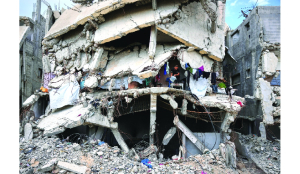
On the other side, Iran has to endure a near-constant stream of American and Israeli airstrikes it can’t defend against. So far, the Islamic Republic has been able to keep its leadership and military cohesive and in control. The Iranian public, which already rose up against its theocracy in nationwide protests in January, still boils in anger but has stayed home as they try to survive the heavy bombardment. Security forces have been on the street every day to ensure no anti-Government demonstrations form. The pressure is on US allies as well.
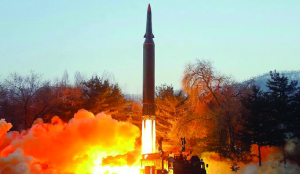
Gulf Arab states, while still not combatants in the war, face seemingly unending and occasionally fatal Iranian fire targeting oil fields, cities and critical water works. And Israel, while boasting of inflicting heavy damage on Iran’s missile program and other military targets, continues to be targeted by increasingly sophisticated Iranian missiles that send a buckshot-like bouquet of high explosives raining down on its cities.
Frequent air-raid sirens have disrupted daily life, closed schools and workplaces and created a tense atmosphere across the region. No off-ramps seen in fighting There’s no immediate end to the war in sight - nor in the rhetoric coming from both America and Iran, whose bad blood extends back decades to the 1979 Islamic Revolution and the US Embassy hostage crisis.
“We’ve already won in many ways, but we haven’t won enough,” Trump said in a speech Monday in Doral, Florida. “We go forward, more determined than ever to achieve ultimate victory that will end this long-running danger once and for all.” Iranian Foreign Ministry official Kazem Gharibabadi offered a mirror image comment from Tehran, boasting that the Islamic Republic had rejected contacts about a ceasefire that he said had come from China, France, Russia and others.