What the Jauhar debate reveals about our fear of complex agency
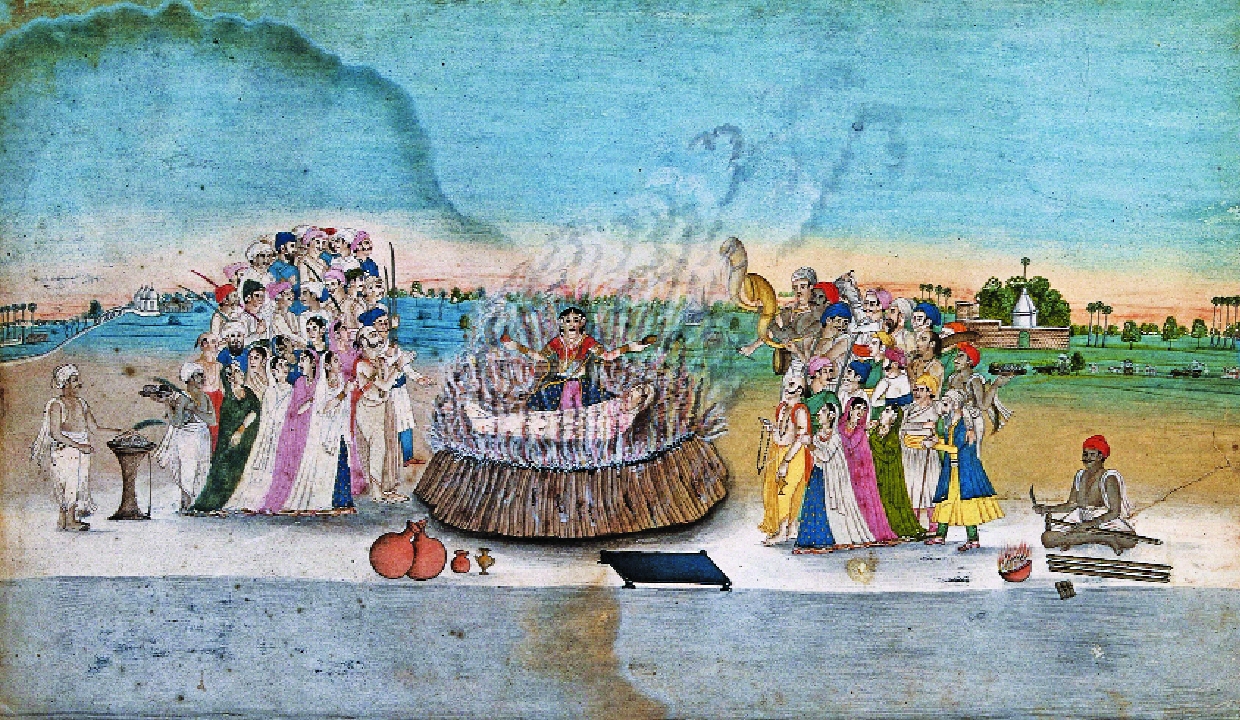
Recently, there has been a conversation. A controversy. Over a movie scene from almost a decade ago. An apples-to-oranges comparison made in an attempt to sound like a staunch feminist. But the take is so problematic that it does a huge disservice to women. And yes, it is important enough to debunk it, lest it become an ill-informed idea to propagate - about an act of Jauhar in the 14th century to a rape survivor in the 21st-century context.
There is a peculiar irony in some contemporary conversations about women’s agency. We say we want women to have the right to choose. And then, when some women in history made that choice — a decision that we find uncomfortable in this day and age — we decide that they could not possibly have been making choices at all, but were coerced into it.
Let us begin with something that should require no qualification whatsoever:
A woman who survives rape has a right not just to live, but to thrive. And not just to live, but to live a life of dignity.
She does not become impure, dishonoured, damaged or less worthy of love, marriage, motherhood, work or happiness. The shame and criminal act is that of the accused who has committed the crime, and the dishonour is for him to bear — our laws must ensure that.
I can’t imagine I have to literally spell it out because some made it about a rape survivor choosing life over death, by comparing the 21st-century nation-state situation, which is constitutionally governed with recourse available, to a 14th-century princely statehood choice, where women chose Jauhar — choosing death over life in the face of impending defeat, captivity and sexual violence.
Firstly, they are not the same choice, if it isn’t already obvious.
But in case it still isn’t obvious to some brainwashed idea which was spoken recently and is being justified repeatedly — in one case, a woman is subjected to violence against her will. In the other, we are talking about women confronted with an extraordinarily brutal circumstance in which they knew capture could mean enslavement, sexual violence and the loss of control over their own lives and bodies. You can find that choice tragic. But to say that the women who chose Jauhar were simply victims of patriarchy is not just misplaced but also an insincere argument.
Worse still, equating Jauhar to sati, as though they were interchangeable manifestations of one identical practice. They were not.
Sati was associated with the death of a widow following her husband’s death on the same funeral pyre as her husband, an abhorrent idea developed within particular social and cultural contexts. Jauhar belonged to the context of war, siege, defeat and anticipated captivity.
One was connected to widowhood — the other to warfare.
Sati was not just abolished but identified as a criminal act against women once India became a republic. And rightly so.
If we flatten every historical practice involving women’s bodies into one convenient category called “patriarchy”, we stop understanding history and start using history as a prop for contemporary arguments.
Talking of contemporary history, not too long ago, in 2014, during the genocide in Iraq’s Sinjar region, many Yazidi women and girls chose to take their own lives rather than submit to systematic rape, torture and forced conversion by ISIS militants.
The idea that a rape survivor’s honour is destroyed by sexual violence against her is itself an obscene form of victim-blaming.
But does defending the right of a rape survivor to live require us to declare that a woman who chose Jauhar was wrong to make that choice?
A woman who survives rape in the 21st century or earlier is choosing life after an assault she did not choose. A woman who chose Jauhar, in the historical circumstances, was choosing death rather than anticipated captivity and violence.
Those are radically different circumstances.
One simple fact: a woman’s agency does not disappear simply because we dislike the choice. We cannot say a woman is empowered when she makes the choice we approve of and brainwashed when she makes the choice we don’t.
I would rather ask a much harder question. Why is it that all through history, a woman’s body has been made a battlefield on which victorious armies asserted power?
Why is it that women have had to contemplate death as an alternative to captivity?
Those are profoundly feminist questions. And it isn’t definitely an illiterate argument that we have been subjected to.
The tragedy of Jauhar, or in the case of Yazidi women, is not that women chose death. Perhaps the tragedy is that the world in which they lived gave them only that one terrible choice to deal with. The question should not be of the women but the mindset of such invaders who looked at women as acquisitions to do as they pleased with them.
Also, to put sati, Jauhar and rape survivors into one basket is to construct a contemporary analogy out of three profoundly different circumstances.
Sati was a practice that needed to end. Which we did.
Similarly, women who chose Jauhar should not have their agency erased merely because we, living centuries later, would make a different choice. Rape survivors have an absolute right to live. No woman should ever be told that her life is less valuable because of sexual violence.
There is no contradiction in holding all three positions. In fact, I would argue that this is what a genuinely feminist reading of history demands.
The goal of feminism cannot be to tell women what the correct choice is. It must be to build a world in which women have choices that do not involve choosing between their lives and their dignity.
That is the world we should be fighting for.
Not rewriting the choices of women who lived in another one.
The writer is a former Member of Parliament (Rajya Sabha) and currently heads Women Led Futures at ORF; Views presented are personal.