What No One Tells You About Starting Gaming With Single-Player Games or Live-Service Play
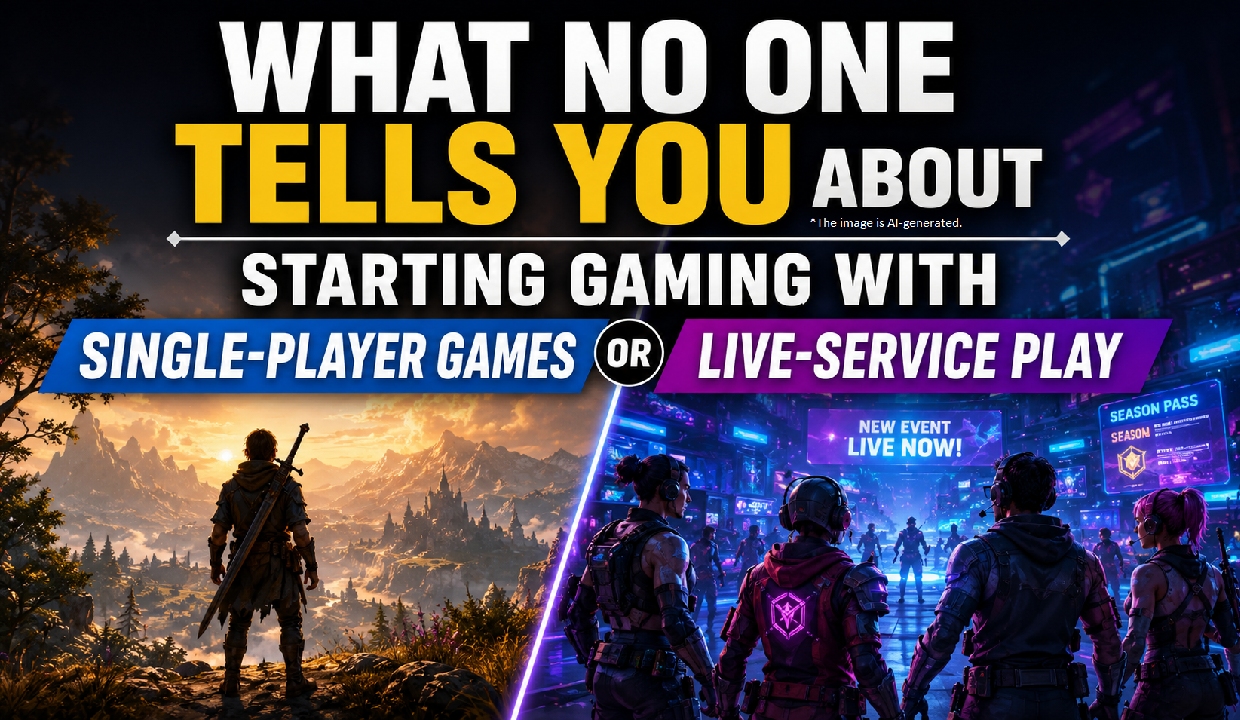
The first game sets a personal rhythm, not a permanent identity as a player. A newcomer who values quiet exploration and stop-anytime sessions faces a different fit from someone drawn to shared challenges and fresh activity. Popularity alone cannot reveal which style will feel comfortable in a first week. Comparing those paths before downloading anything turns an overwhelming catalogue into a useful starting decision. It removes early guesswork for newcomers.
Digital gift cards work by sending a redeemable code that a buyer or recipient enters on the relevant service, through its redemption page or at checkout. For Android purchases, a Google Play voucher can add value to a Google Play balance for eligible Play Store purchases, provided the account region and card currency match. Eneba is one strong option for this route, with region-specific digital products that give buyers useful region clarity.
A calmer route through a defined experience
Single-player games generally offer a self-contained experience at the player’s preferred pace. Tutorials can be repeated, unfamiliar controls can be practised, and a session can pause without a teammate waiting for an answer. There is no need to read another player’s pace or coordinate a shared plan. This controlled setting helps a beginner focus on systems, goals, and personal progress.
This route suits people who want a clear endpoint or like spending time with a game’s story. It also fits irregular schedules, since progress can usually resume without arranging a group or arriving for a timed activity. A defined arc gives each return a familiar place to begin. The value lies in room to learn, rather than in treating solo play as the only sensible first step.
Live-service play and an evolving routine
Live-service games take a different approach. They continue after launch with updates, events, balance changes, or added content, and their communities can give a newcomer regular reasons to return. Recurring challenges and social groups may create a welcome routine for players who enjoy an active shared space. Regular change can keep the experience active across separate sessions.
That ongoing structure can also feel less predictable than a defined single-player path. A beginner benefits from considering comfort with online interaction, interest in competition, and willingness to keep up with changes over time. Reviewing a game’s current structure before committing time keeps the choice practical. These games can suit a player seeking connection and variety, without becoming a daily obligation.
A steady habit begins with personal patterns
Build the habit around a realistic window, then stop at a natural checkpoint instead of treating play as a task to complete. Short sessions may fit one person, while another prefers longer stretches; the useful choice is the one that leaves room for responsibilities. Keep the plan flexible: a first title is simply a test of preferences, so changing genre after a few sessions is a sensible part of discovery. Notice if solitary progress or shared activity feels more rewarding.
Smart purchasing supports the same measured approach. A digital marketplace like Eneba offers game keys, gift cards, and other digital products through verified merchants; checking the listed platform and regional compatibility helps match the purchase to the intended account. It also leaves space to reassess a game choice as personal tastes become clearer. Choosing the right format, then buying with those details in view, keeps a new gaming routine focused on play rather than pressure.