West Asia ceasefire in peril as Israel pounds Lebanon
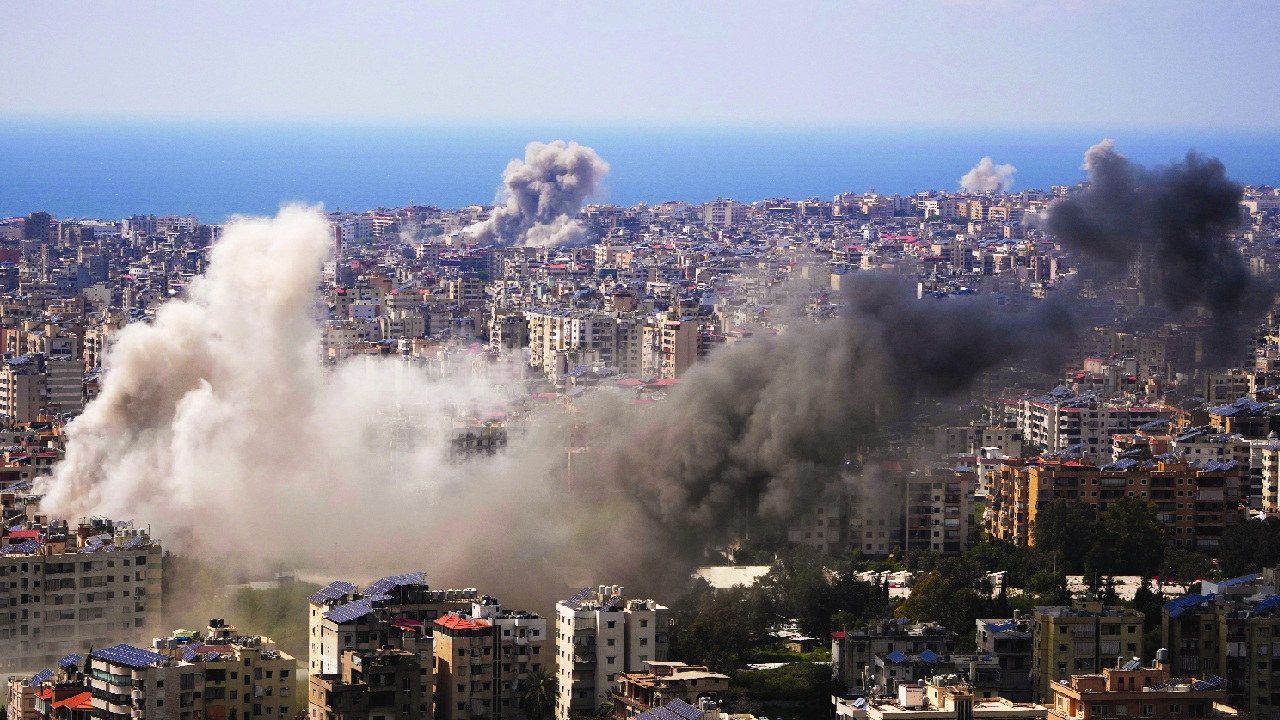
Israel’s intensive bombardment of Lebanon immediately following the announcement of a US-Iran ceasefire has triggered global condemnation, casting serious doubts on the fragile truce. Reports indicate that over 200 people were killed in strikes on densely populated areas, including attacks with heavy munitions, prompting global outrage.
Israeli Prime Minister Benjamin Netanyahu asserted that Lebanon was not included in the ceasefire pledging continued strikes against Hezbollah targets. Israeli forces reportedly killed a senior aide to Hezbollah leader Naim Qassem. Backing Israel’s position, US Vice President JD Vance described the exclusion of Lebanon as a “misunderstanding” and said the US had never formally agreed to cover Lebanon in the truce.
Iran’s President Masoud Pezeshkian condemned the attacks, warning that continued strikes would render negotiations meaningless and reaffirming support for the Lebanese people. Pakistan, which has played a central mediating role, maintained that Lebanon had been included in the ceasefire. Former US envoy Robert Malley suggested that the current escalation reflected US inconsistencies and a temporary green light for Israel to continue strikes.
As the ceasefire’s future appeared increasingly precarious, former President Trump issued a social media ultimatum threatening renewed US attacks (“Shootin’ Starts”) unless Iran fully reopened the Strait of Hormuz and abandoned nuclear weapons, without referring to Lebanon.
Global allies, including the UK, EU, Canada, and Japan, have called for a comprehensive ceasefire encompassing Lebanon. EU foreign policy chief Kaja Kallas condemned Israel’s heavy-handed approach, while France’s Jean-Noël Barrot and UK Foreign Secretary Yvette Cooper described the strikes as “unacceptable” and “deeply damaging,” warning of regional destabilisation.
Diplomatic efforts are also focused on reopening the strategically vital Strait of Hormuz, which channels a fifth of global oil and LNG supplies. In the 24 hours following the ceasefire, only 11 ships-four Iranian, four Greek, one Chinese, one Omani, and one of unknown nationality-were allowed passage, leaving roughly 1,400 vessels stranded and sending oil prices climbing toward $100 a barrel amid mounting uncertainty.
Pakistan to host US-Iran talks
New Delhi: Pakistan will host high-level, in-person talks between the US and Iran in Islamabad on Friday, aimed at strengthening a fragile ceasefire and preventing further escalation.
Iran’s Ambassador to Pakistan, Reza Amiri Moghadam, confirmed participation despite concerns over alleged ceasefire violations. The US delegation is reportedly to be led by Vice President JD Vance but officially it has not been announced.
Both sides are expected to discuss key disputes and explore the possibility of turning temporary truce into a longer-term framework. Discussions are expected to focus on sanctions relief, regional security, and Iran’s nuclear programme. Pakistan has tightened security, with road closures and heightened preparedness across its capital.