Ukraine war: NATO’s proxy war against Russia hurts India’s interests
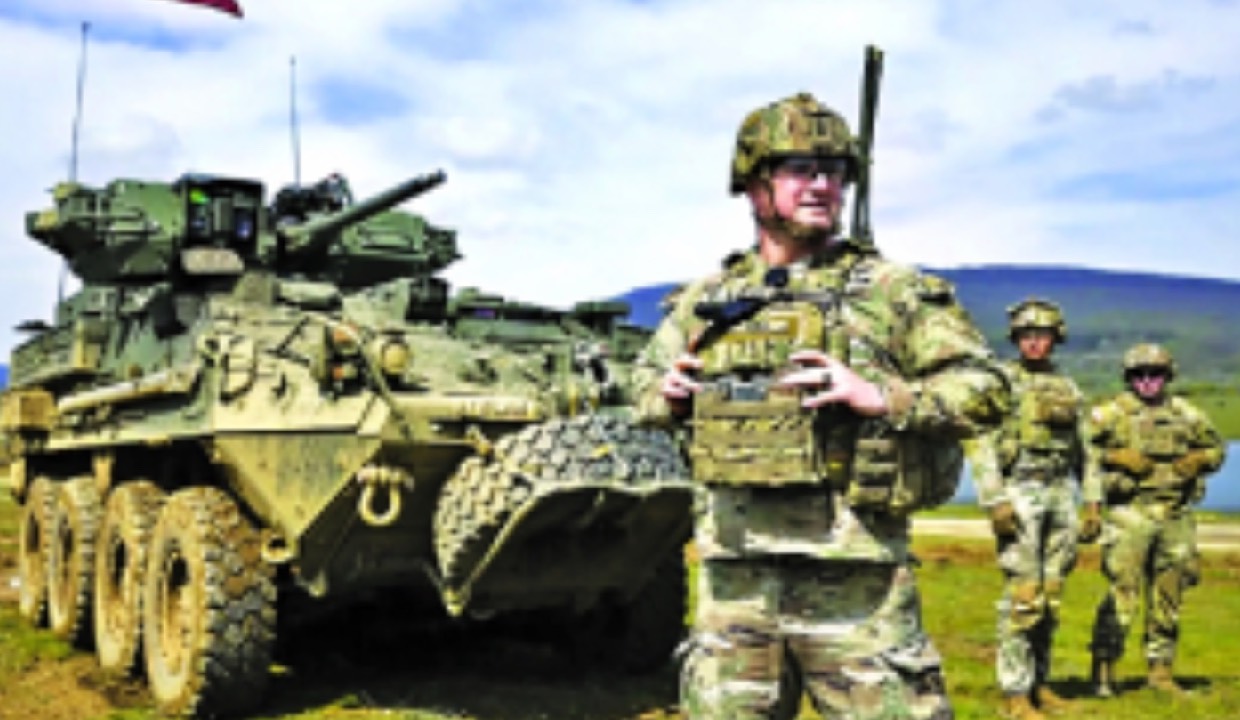
A summit of the North Atlantic Treaty Organisation (NATO) from 7-8 July in Ankara has delivered an expected outcome: the allies reaffirmed their commitment to continuing their campaign against Russia in Ukraine. It was too much to hope that they would learn from their past mistakes of provoking that conflict in the first place by never-stopping NATO’s eastward expansion contrary to earlier understandings, supporting a bloody coup d’état in Kyiv in February 2014 and the toppling of Ukraine’s legitimate President Viktor Yanukovich — all in an ongoing effort to turn Ukraine into a Western bulwark against Russia. NATO’s ambition to dominate the security space in Europe and its blatant disregard for Russia’s vital interests in its near abroad are at the heart of the current geopolitical conflagration. Described as “brain dead” by French President Emmanuel Macron as recently as 2019, NATO has now found a new lease on life in its confrontation with Russia. But is this moment sustainable or a contrived unity of allies in Ankara is only fleeting?
After WWII, the first Secretary General of NATO, an India-born British General Hastings Ismay, anecdotally formulated the alliance’s purpose as “to keep the Russians out, the Americans in, and the Germans down”. While his dictum had been respected in the past, nowadays all of its three pillars are being challenged.
When the Cold War ended with the breakup of the Soviet Union, the then US Undersecretary of Defense Paul Wolfowitz, one of the leading neocons of his time, developed a policy which came to be known as the Wolfowitz doctrine. In no uncertain terms, it advised that to preserve America’s hegemony, Russia should never be allowed to rise again. Earnestly engaging with Moscow and integrating it with the West, like it was done before with the former American adversaries, Nazi Germany and Imperial Japan, was ruled out of the question. Yet Russia has re-emerged from the ruin of the Soviet collapse and re-joined the ranks of the great powers. It is evidenced by the fact that for over four years of the Ukraine conflict, Russia has been tackling the combined might of the entire Western coalition and countering all its attempts at achieving escalation dominance. It is a fair assessment that after the fall of communism in Eastern Europe, NATO had squandered an historic opportunity to re-engage with Moscow on equal terms. And since then, by crossing the reddest of Russia’s geopolitical red lines, it has now found itself embroiled in a proxy war against it in Ukraine. Instead of ensuring security in the Euro-Atlantic area, NATO’s leaders, in their folly, have provoked the bloodiest military conflict on the continent since WWII.
Having become entangled in a giant mess of their own creation, NATO’s leadership are now facing a real prospect of their alliance breaking up - not only because US President Donald Trump wants to take over Denmark’s Greenland but also because he seeks a radical redistribution of burden sharing in NATO by ending a long-standing European habit of freeloading at American expense. It is not unreasonable to imagine that President Trump may choose to hold in abeyance America’s defence commitment to those NATO countries that he considers underdelivering or politically at odds with Washington. A relevant example of the latter case is the suspension of the US’s obligation to New Zealand under the ANZUS security treaty after Wellington annoyed the Reagan administration with its anti-nuclear policy. The Trump administration is no longer convinced in continuing its sizeable European military commitment and would like to be rid of the European problems irrelevant to America’s core interests. The European force posture review now conducted by US Secretary of War Pete Hegseth will likely result in the reduction of American troops stationed there. Ultimately, the Trump administration wants to geopolitically pivot to the Pacific and for that, it needs to release the capabilities currently assigned to NATO and other resources wasted in the conflict in Ukraine. Worse still for the Europeans, Donald Trump favours negotiating a deal with Russia to end the bloodshed. European warmongers are aghast at this prospect because, absent US support, their own position vis-à-vis Russia becomes weak - America has traditionally provided a vital structural strength to NATO through its command and staff element, strategic enablers such as intelligence, surveillance and reconnaissance, precision deep strike, and extended nuclear deterrence. Deprived of these strategic assets, the Europeans will likely have to accommodate Russia.
Finally, what about keeping the Germans down? For the first time since the end of WWII, Germany’s massive investment in its military outpaces both Britain’s and France’s expenditure: in the four years since 2022, the German defence budget has risen twofold and by 2030 it is projected to again double to nearly 160 billion euros, which will be almost as much as what London and Paris spend combined. Should this happen, redistribution of power in Europe will inevitably follow. There is already an emerging discussion in the West about the long-term implications of Germany’s rapid rearmament. This question should be of particular interest to Germany’s neighbours, some of which are still harbouring grievances dating back to WWII, such as Warsaw’s demand (rejected by Berlin) of paying wartime reparations. For the time being, the European elites mostly welcome Germany’s military buildup in the hope of directing it against Russia. Yet they tried the same tack in the 1930s and it blew up in their face. They have to be careful what they wish for.
There are two India-relevant observations arising from the geopolitical drama playing out in Europe.
First, with European states heavily committed to confronting Russia, they make poor security partners for India because their capabilities are tied down thousands of miles away with little to nothing to spare for upholding balance in the Indian Ocean and beyond. Their continental strategy, as the British historian Michael Howard would have put it, is likely to have implications similar to what happened to the British Empire before WWII when it chose to bolster the defence of Europe at the expense of cutting back on its deployments in the Pacific. With the Ukraine conflict raging on, unfunded and unsubstantiated European Indo-Pacific strategies bring little of real value to India’s table.
Secondly, it is broadly accepted among India’s foreign policy and national security community that a strong, independent and prosperous Russia is vital for maintaining a balance of power favourable to India in Eurasia. Contrary to this, the dogged pursuit of Russia’s defeat by European elites pushes in the opposite direction, thereby complicating New Delhi’s balancing act and reducing its options.
With these down-to-earth considerations in mind, it is logical to assume that an early termination of the Ukraine conflict and the rebuilding of normalcy between Russia and the West would be conducive to India’s external strategy. Prime Minister Narendra Modi’s message that “today’s era is not the era of war” clearly articulated to European capitals, would go a long way to achieving that objective.
Vladimir Ladanov is Chargé d’affaires of Russia in India; Views presented are personal.