Trump rattles Europe, renews Greenland takeover demand

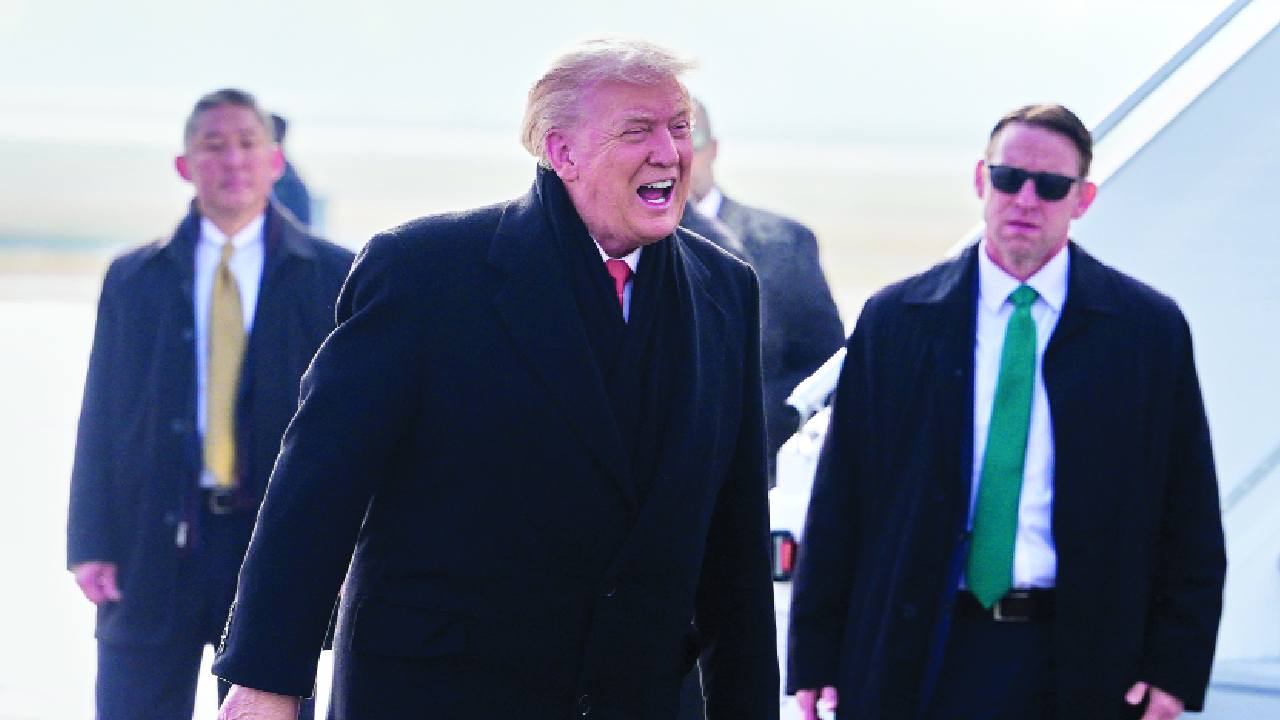
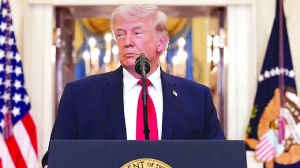
US President Donald Trump insisted he wants to "get Greenland, including right, title and ownership," but said he wouldn't employ force to achieve that - using his speech Wednesday at the World Economic Forum to repeatedly deride European allies and vow that NATO shouldn't try to block US expansionism.
"What I'm asking for is a piece of ice, cold and poorly located," Trump said, declaring of NATO: "It's a very small ask compared to what we have given them for many, many decades."He urged NATO — which has held firm since the dawn of the Cold War but now is facing an unprecedented test given Trump's demands - to allow the US to take Greenland from Denmark. The Republican president even added an extraordinary warning, saying alliance members can say yes "and we'll be very appreciative. Or you can say, No,' and we will remember."Despite that, Trump acknowledged, "We probably won't get anything unless I decide to use excessive strength and force where we would be frankly unstoppable. But, I won't do that. OK?"
"I don't have to use force," he said. "I don't want to use force. I won't use force." Instead, he called for opening "immediate negotiations" for the US to acquire Greenland. "This enormous unsecured island is actually part of North America," Trump said, "That's our territory."
Trump has spent weeks saying that the US will get control of Greenland no matter what it takes - but his comments at the gathering of global elites were startling in how much further he went on just how he plans to do it.
He also argued that the US is booming compared with Europe and its economy.
“I love Europe, and I want to see Europe go good, but it’s not heading in the right direction,” Trump said. He added, “We want strong allies, not seriously weakened ones.” He also said of European countries, “When America booms the whole world booms,” and, “You all follow us down, and you follow us up.”
Trump turning the Davos gathering upside down began even before he got there. His arrival in the Swiss Alps community of Davos was delayed after a minor electrical problem on Air Force One had forced a return to Washington to switch aircraft.
As Trump’s motorcade headed down a narrow road to the speech site, onlookers, including some skiers, lined the route. Some made obscene gestures, and one held up a paper cursing the president.
Billionaires and business leaders nonetheless sought seats inside the forum’s Congress Hall, which had a capacity of around 1,000, to hear Trump. By the time he began, it was standing room only. Attendees can use headsets to listen to the speech in six languages besides English. Attendees mostly stood and offered applause, some merely polite, as Trump took the stage.
Trump is also expected to have around five bilateral meetings with foreign leaders, though further details weren’t provided. There are more than 60 other heads of state attending the forum.
Trump came to the international forum on the heels of threatening steep US import taxes on Denmark and seven other allies unless they negotiate a transfer of the semi-autonomous territory - a concession the European leaders indicated they won’t make.
Trump said the tariffs would start at 10 per cent next month and climb to 25 per cent in June, rates that would be high enough to increase costs and slow growth, potentially hurting Trump’s efforts to tamp down the high cost of living.
The president in a text message that circulated among European officials this week also linked his aggressive stance on Greenland to last year’s decision not to award him the Nobel Peace Prize. In the message, he told Norway’s prime minister, Jonas Gahr Støre, that he no longer felt “an obligation to think purely of Peace.”
His designs on Greenland could tear relations with European allies apart. Before Trump spoke, British Prime Minister Keir Starmer vowed during his weekly questioning in the House of Commons, “Britain will not yield on our principles and values about the future of Greenland under threats of tariffs, and that is my clear position.”
French President Emmanuel Macron in his address to the forum made no direct mention of Trump but urged fellow leaders to reject acceptance of “the law of the strongest.”
“It’s clear that we are reaching a time of instability, of imbalances, both from the security and defence point of view, and economic point of view,” Macron said.
European Commission President Ursula von der Leyen warned that should Trump move forward with the tariffs, the bloc’s response “will be unflinching, united and proportional.” She pointedly suggested that Trump’s new tariff threat could also undercut a US-EU trade framework reached this summer that the Trump administration worked hard to to seal.
“The European Union and the United States have agreed to a trade deal last July,” von der Leyen said in Davos. “And in politics as in business - a deal is a deal. And when friends shake hands, it must mean something.”
On Thursday, Trump plans talk about the “Board of Peace,” meant to oversee the end of the Israel-Hamas war in Gaza and possibly take on a broader mandate, potentially rivaling the United Nations.
Fewer than 10 leaders have accepted invitations to join the group, including a handful of leaders considered to be anti-democratic authoritarians. Several of America’s main European partners have declined or been noncommittal, including Britain, France and Germany.