Open Hormuz or face consequences: Trump
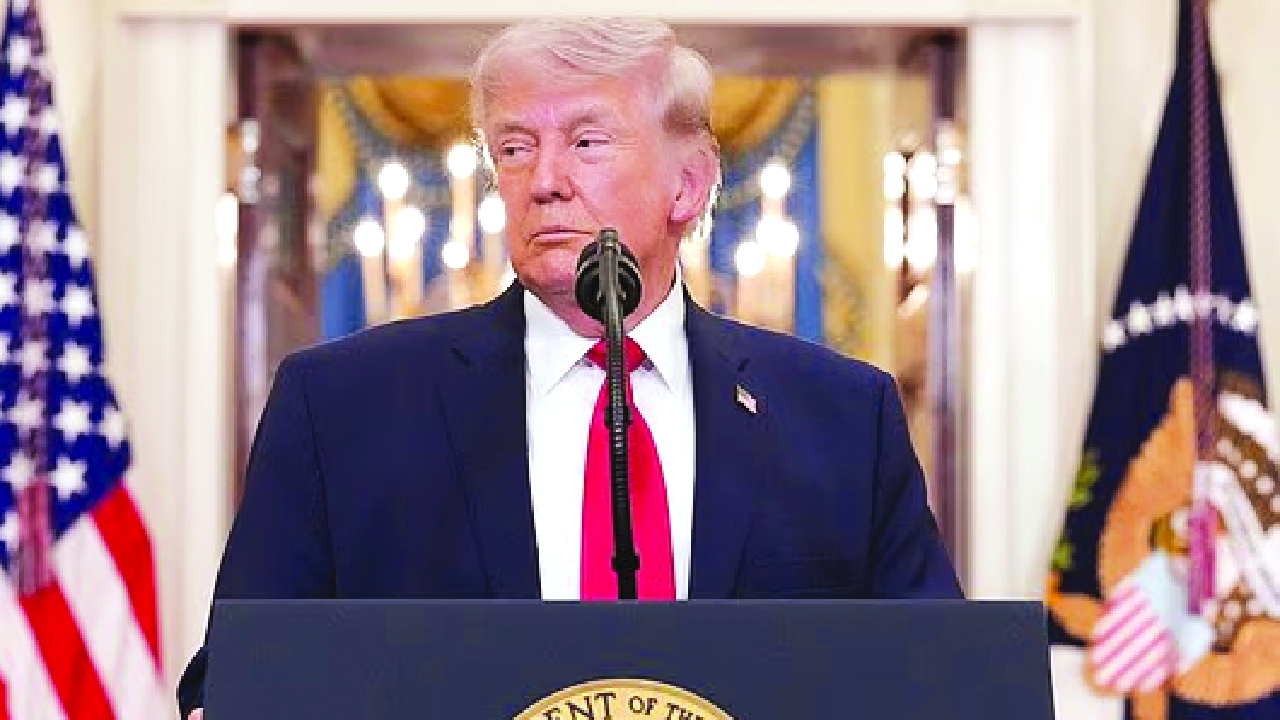
US President Donald Trump on Sunday sharply escalated tensions with Iran, issuing a strongly worded warning demanding the reopening of the strategically vital Strait of Hormuz. In a series of posts on Truth Social, Trump warned of severe military consequences if Tehran failed to comply within a tight deadline.
In a sharply worded post on Truth Social, US President Donald Trump on Sunday warned Iran to reopen the strategically crucial Strait of Hormuz or face serious consequences, setting an effective deadline for Tuesday. Using unusually harsh language, he cautioned Tehran of severe repercussions if the passage remains closed.
Describing Tuesday as a decisive moment, Trump indicated potential strikes on key Iranian infrastructure, referring to it as “Power Plant Day and Bridge Day.” His remarks, laced with aggressive language, underscored the intensifying rhetoric between Washington and Tehran, raising fears of imminent military confrontation.
The US President reiterated that Iran had been given a 48-hour ultimatum to either reopen the crucial maritime passage or face punitive action.
The Strait of Hormuz remains one of the world’s most critical transit routes, through which a significant portion of global oil supplies passes, making the standoff particularly sensitive for international markets.
Amid the escalating crisis, Trump also announced that a US fighter jet crew member, missing for two days after Iran shot down the aircraft, had been successfully rescued in what he described as one of the most “daring operations” in US history. The airman, a colonel, sustained injuries but is expected to recover, according to the President.
The aircraft involved was a US F-15 fighter jet that had been downed earlier in the week, prompting a complex rescue operation deep inside Iranian territory. Trump highlighted the risks involved, calling the mission unprecedented in both scale and execution.
However, Iranian authorities presented a starkly different account. According to Iran’s Islamic Revolutionary Guard Corps, at least five individuals were killed during the US operation, and several aerial assets, including a transport aircraft, were destroyed. These claims, reported by Iranian media, could not be independently verified.
Tehran swiftly rejected Trump’s ultimatum, with officials dismissing his remarks as “unbalanced” and vowing not to yield to pressure. Senior commanders from the Khatam al-Anbiya Central Headquarters criticised the US President’s statements as provocative, warning that any military action would trigger severe retaliation.
The exchange of threats marks a significant deterioration in US-Iran relations, with both sides adopting increasingly confrontational positions. Analysts warn that any disruption in the Strait of Hormuz could have far-reaching consequences for global energy security and regional stability.
Trump is expected to address the media alongside senior military officials at the White House, where further details of the rescue operation and Washington’s next steps are likely to be outlined.
Jaishankar speaks to Qatari PM
New Delhi: External Affairs Minister S Jaishankar spoke with Qatari Prime Minister Sheikh Mohammed bin Abdulrahman bin Jassim Al Thani on Sunday to discuss the West Asia conflict and its impact on global energy supplies.
The External Affairs Minister also held a phone conversation with the Foreign Minister of the United Arab Emirates (UAE), Sheikh Abdullah bin Zayed Al Nahyan.
Jaishankar's phone conversations with the Qatari Prime Minister and the UAE Foreign Minister came amid a spike in tensions in West Asia after US President Donald Trump renewed an ultimatum to Tehran, threatening to destroy Iranian power plants and bridges if the Strait of Hormuz is not reopened for shipping.