Sabarimala case: Hindu Shree Foundation moves SC to protect temple autonomy
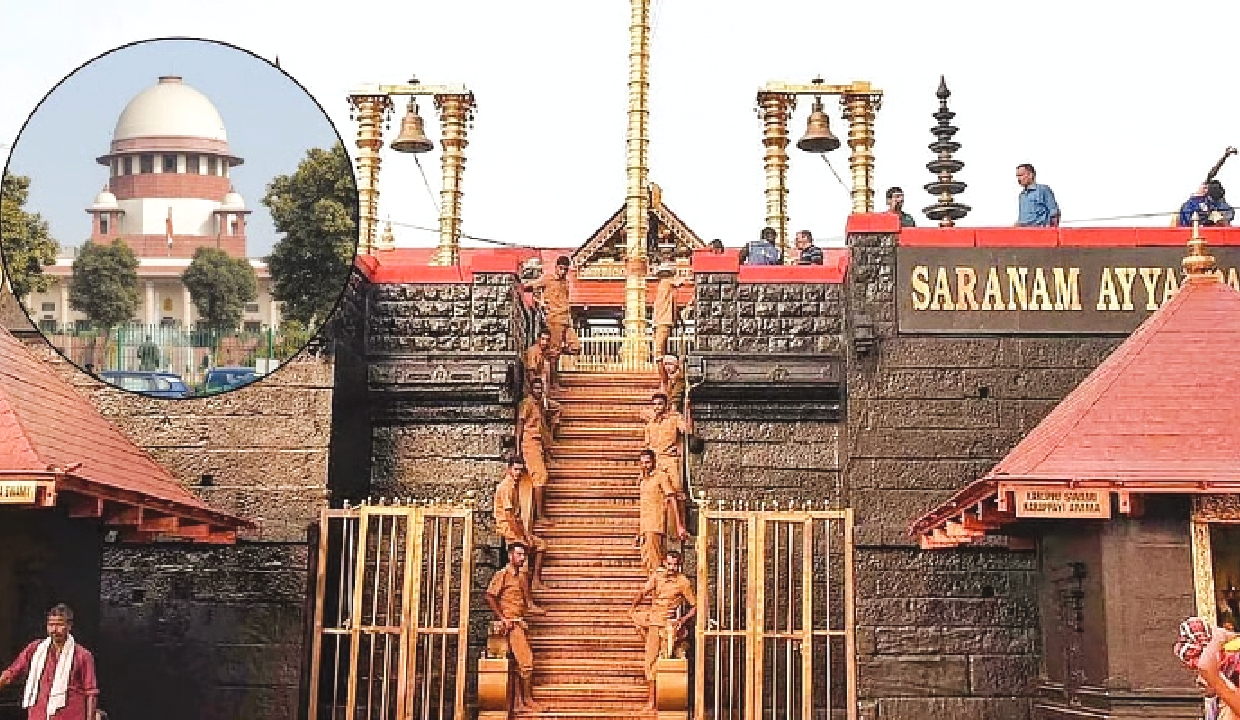
The Hindu Shree Foundation, a premier non-political charitable organisation dedicated to the restoration of India’s ancient temple traditions, has filed an intervention application before the Supreme Court in the Sabarimala case, which will be heard by a 9-judge constitutional bench on Tuesday.
According to a Press release, the foundation seeks to address critical constitutional questions regarding the autonomy of religious denominations and the limits of judicial review over essential religious practices. The case is related to a PIL challenging the centuries-old practice at the Sabarimala temple in Kerala that barred women between 10-50 years of age from entering the shrine.
In its submission, the foundation argues that the determination of what constitutes an “Essential Religious Practice” must be left to the believers and the religious denomination itself, rather than being subjected to judicial scrutiny.
It further asserts that Articles 25 and 26 of the Constitution of India grant religious bodies the right to manage their own affairs.
“The Hon’ble Court ought to defer to the belief of the concerned community,” the Foundation states in its plea. “The real test is whether the denomination looks upon a practice as essential to its faith, however irrational it may appear to those outside that faith.”
The foundation contends that the ‘Essential Religious Practices’ test is a judicially created mechanism not found in the original text of the Constitution. By applying this outside standard, the Foundation warns that the judiciary risks ‘rationalising’ faith — a process that undermines the very protection the Constitution seeks to provide.
A significant portion of the intervention focuses on the maintainability of Public Interest Litigations (PILs) filed by individuals who do not belong to the faith they are challenging. The Hindu Shree Foundation argues that a person who is a stranger to a religious denomination has no locus standi to question its internal practices.
“If this threshold is not met, any busybody or interloper could approach the Court to strike down practices they have no concern with,” the plea reads. The Foundation highlights that while PILs were designed to protect the marginalized, they should not be weaponised by “outsiders” to interfere with the religious rights of a community.
Citing the notable dissenting opinion of Justice Indu Malhotra in the Sabarimala case, the Hindu Shree Foundation emphasises that courts should not impose secular rationality upon forms of worship. The PIL further suggests that if any constitutional interference is required, it must only occur after extensive consultation with eminent religious scholars and bodies of the concerned faith.
The Hindu Shree Foundation is a registered charitable organisation working towards the preservation, restoration, and autonomy of India’s temple traditions, aiming to restore their role as centres of national consciousness, added the Press release.