The Enduring Relevance of the Apad Dharma Principle
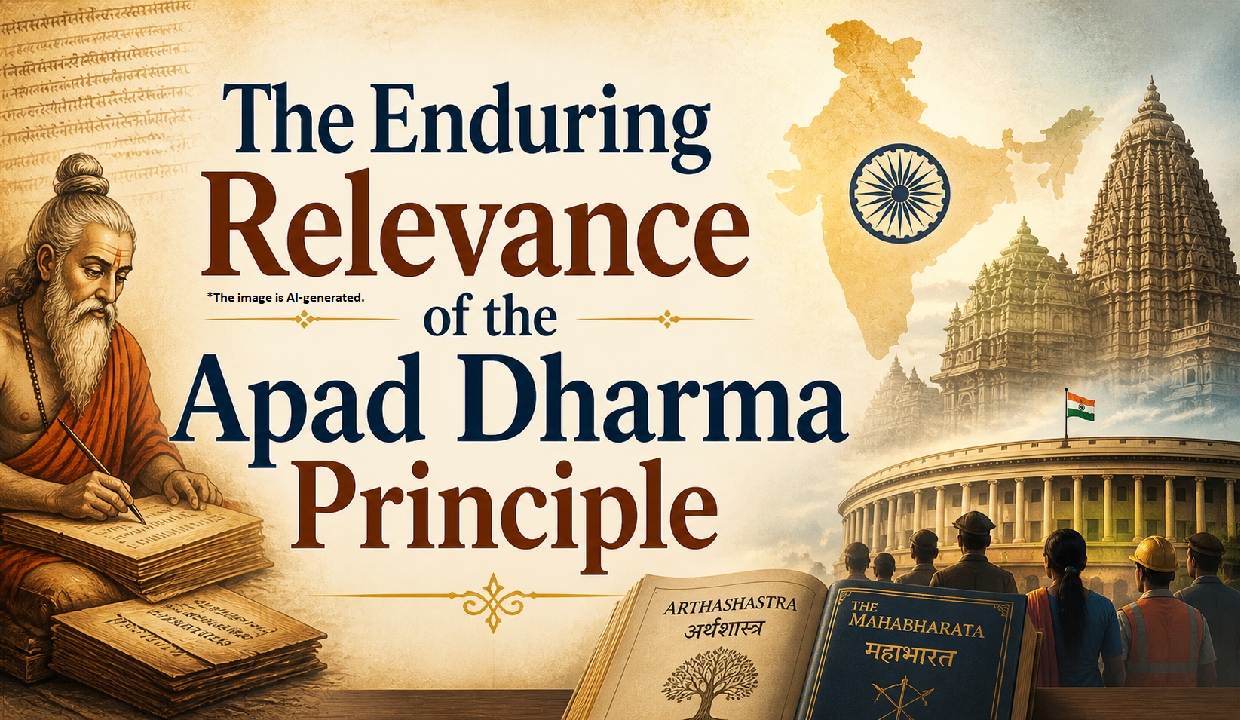
The theory of apad dharma, or duty in times of emergency, adversity or distress, constitutes one of the most refined contributions of ancient Indian thought to the ubiquitous issue of governance under extraordinary circumstances. It represents a framework of adaptive governance where rigid norms are temporarily relaxed to preserve life, stability and social order. This principle of conditional flexibility can be observed across domains, from social organisation to fiscal policy in ancient texts such as the Dharmashastras, Arthashastra and the Mahabharata. In contemporary governance, similar principles are reflected in emergency provisions, market interventions and crisis- driven welfare policies. Apad dharma implies reciprocal obligation between the leader and the people, where, while the leader strove through different measures to ensure the well-being of the people, the latter with their participation and cooperation, aided the state in times of crisis.
The articulation of the modalities of governance in periods of crisis assumes special significance in the post-COVID world. India’s response to COVID-19 reflected decisive leadership, citizen participation and the administration of over 2.2 billion free vaccines in record time. The incredible spirit of cooperation and resilience demonstrated by determined Indians proved to be an exemplary model for the entire globe. A thread of continuity can be traced from the apad dharma concept of ancient times to the modern constitutional emergency provisions. Its importance also lies in the fact that it aligns with our fundamental duty to serve the country whenever called upon in times of emergency.
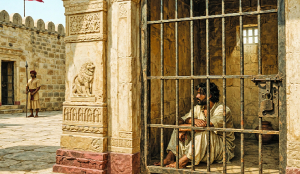
The Mahabharata’s Shanti Parva tells the story of sage Vishvamitra’s struggle during a period of extreme adversity. Referring to apad dharma, it illustrates how even the most righteous may be forced to transcend conventional norms to survive. Faced with the desperation of a twelve-year famine, Vishvamitra argued that the preservation of life was the ultimate priority.
Life is superior to death. By living, one can eventually attain dharma. Therefore, one who desires life should not be discouraged by the (temporary) nature of their actions.
Besides the social sphere, apad dharma also applied to the economic domain. Since Kautilya considered Artha (material wellbeing) as the foundation of prosperity and the most important of all the purusharthas or goals of life, the treasury (kosha) was the most crucial element for the state.
That which accumulates and preserves the resources of the master in both adversity and prosperity is called a treasury (kosha)
A state facing great financial difficulty that may have been caused by famine, drought, or an expensive operation like a war could collect additional revenue through special taxes which could be levied on all occupational groups within the population. If enough resources were not garnered by the above given means, the rich could also be asked to make voluntary donations of gold. Honours and status symbols were bestowed on them in return for gold. Bhishma, in his advice to Yudhishthira on good governance, emphasises that taxation should not be a ‘uniform across the board’ policy. A virtuous government must adapt its demands based on three critical factors- place (desha), time (kala) and capacity (bala) guided by dharma and public welfare. Apad dharma justifies exceptional fiscal measures for state survival. However, such emergency extractions were transient and conditional, bound with the obligation of later remission.
In addition to special levies, the Kautilyan state actively regulated grain markets to prevent hoarding, black-marketing and artificial scarcity. Price controls ensured that the poor continued to afford food. The state supervised markets through officials like the panyadhyaksha (superintendent of trade). Merchants who sought higher profit margins, for every additional 5 per cent, the penalty was 200 panas. If the merchants were found conspiring to hoard food grains with the aim of selling at a higher price, they were to pay a fine of 1000 panas. If brokers and middlemen were caught accumulating stock in excessive quantities authorised by the chief controller, the excess was to be seized. These norms in the Arthashastra are similar to the Essential Commodities Act, 1955 which shields the consumers from dishonest traders by empowering the Government to control or prohibit the production, supply, and distribution of essential commodities. In the ancient period, famines hugely burdened the state economy. Kautilya viewed famine as a major calamity of the state and prescribed proactive state intervention. He suggested that the state should grant relief to the subjects by distributing seeds and food.
In phases marked by an acute shortage of food, besides the distribution of seeds and grains, food-for-work projects such as building forts or irrigation works were initiated. The PM’s Garib Kalyan Anna Yojana, which has been distributing free food grains to over 800 million needy Indians, began as an emergency welfare measure at the time of the pandemic. The main objective of this scheme is to provide food security and protect the most vulnerable sections of society during economic adversity.
As implied earlier, the principles underlying apad dharma are not confined to ancient texts. They find continued relevance in contemporary governance, particularly in the way the state responds to crises through regulatory flexibility and targeted intervention. A case in point is the conflict in the Middle East. India happens to be the world’s second-largest importer of LPG, almost 90 per cent of which is sourced from the Middle East. As a response to the disturbance in the global energy supply networks caused due to the conflict, the Government invoked emergency powers under the Essential Commodities Act, 1955 and promulgated measures for equitable distribution in order to prevent a shortage of domestic cooking gas supplies for over 33 crore households that are dependent on LPG. The Government also ordered all oil refiners across the country to maximize LPG production, prioritising domestic consumption. This is the theory of apad dharma in practice.
The theory of apad dharma offers a conceptually rich and ethical framework for governance in times of crisis. While the state takes the required steps to support its citizens, the people also must willingly accept necessary restrictions, treating it as a part of their duty to cooperate in the national interest. Our fundamental duty, enshrined in the constitution, which refers to the duty of every citizen to defend the country and render national service when called upon, truly reflects the principle of apad dharma.
RK Pachnanda, Former Chairman, Haryana Public Service Commission; Former Chairman, Haryana Electricity Regulatory Commission; Former DG-ITBP; Former DG-NDRF; Commissioner of Police. Kolkata; Director, Bharat ki Soch; Views presented are personal.
Dr Prachi Sharma, Sr. Research Fellow, Bharat Ki Soch; Views presented are personal.