Tarique Rahman calls polls a turning point for Bangladesh
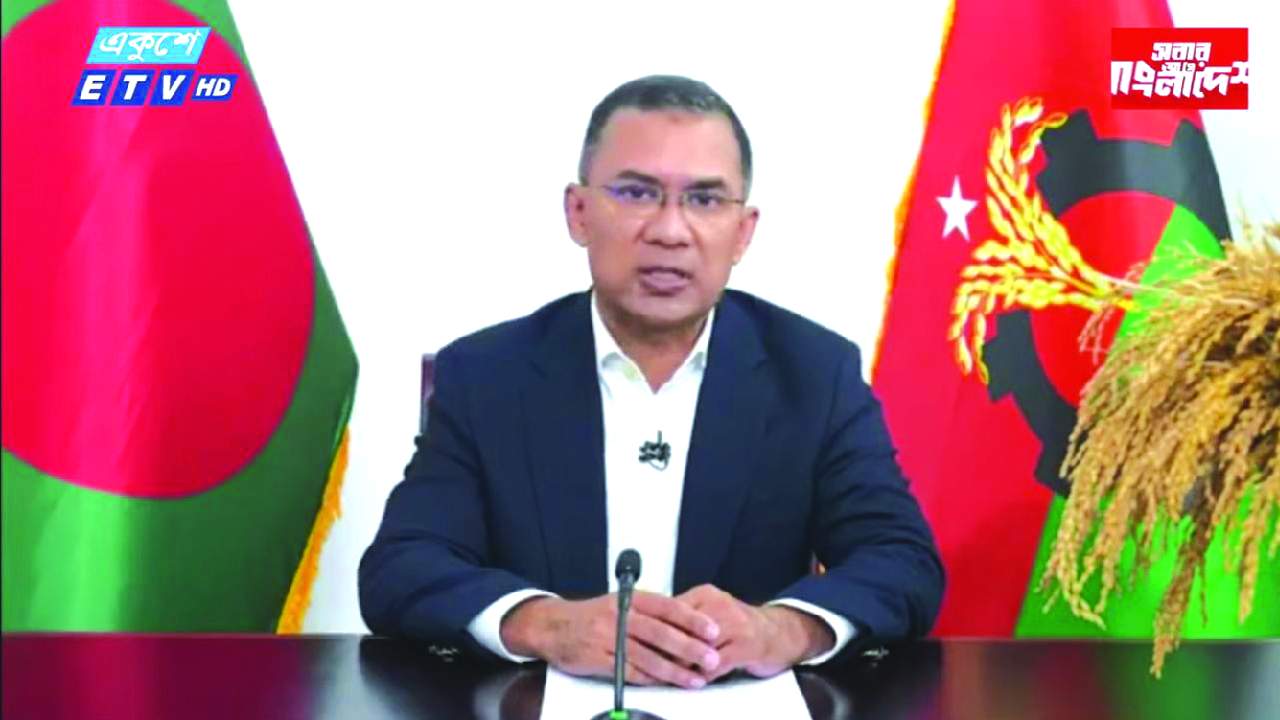
Bangladesh Nationalist Party (BNP) Acting Chairman Tarique Rahman on Sunday delivered a nationally televised address, calling the February 12 general election a historic opportunity to restore democracy and return state power to the people after years of what he described as authoritarian rule. Speaking at length to the nation, Rahman said Bangladesh had reached a decisive moment in its democratic transition.
Referring to Article Seven of the Constitution, which states that all powers of the Republic belong to the people, he alleged that a “fallen, defeated, and expelled fascist clique” had stripped citizens of their political rights and captured state institutions. He said the upcoming election would allow the people to reclaim ownership of the state through direct voting. Rahman said the current democratic opening was the result of more than one and a half decades of struggle by BNP and other pro-democracy forces.
He claimed thousands of people were subjected to enforced disappearances, killings, and abductions during this period, and cited the 2024 mass uprising, during which he said more than 1,400 people were killed and thousands injured. He paid tribute to those who lost their lives in movements for democracy and human rights, expressing condolences to their families and solidarity with the injured.
Reflecting on Bangladesh’s political history, Rahman said sacrifices made during the 1971 Liberation War, the anti-autocracy movements, and more recent struggles should not be allowed to go in vain. He said the responsibility of the present generation was to build a just, humane, safe, and democratic Bangladesh in line with the vision of those who had given their lives. Turning to policy issues, Rahman said BNP’s election manifesto focuses on political and economic empowerment across all sectors of society.
He highlighted unemployment as a major challenge, citing figures that show 2.7 million unemployed people, including around 900,000 graduates, with a significant portion of youth not engaged in education, employment, or training. He said BNP aims to create 10 million jobs at home and abroad through reforms in banking, insurance, and capital markets, expansion of regional economies, and increased investment in industry and trade.
Rahman said BNP plans to prioritize emerging sectors such as information technology, cybersecurity, artificial intelligence, outsourcing, and semiconductors, alongside nationwide technical and vocational training. If BNP forms the next Government, he said, educated unemployed youth would receive temporary financial allowances to help them sustain themselves while seeking work or creating self-employment. Addressing women’s empowerment, Rahman announced a proposed Family Card system to be issued in the name of the female head of each household.
Under the plan, economically disadvantaged families would receive monthly financial support or essential food assistance. He said BNP would continue free education for women, expand women’s participation in policymaking, support women entrepreneurs, and introduce measures such as women-only electric transport, daycare facilities at workplaces, and stricter laws against harassment and violence.
Rahman also outlined plans for farmers, students, and healthcare. He said BNP would introduce Farmers’ Cards to provide agricultural information and financial support, make technical and vocational education compulsory from secondary level, and include a third language in the curriculum to improve global employability. In healthcare, he emphasized preventive care and announced plans to train 100,000 primary healthcare workers to deliver services at the grassroots.
On governance, Rahman accused previous regimes of politicizing state institutions and pledged that constitutional bodies would function independently under a BNP Government. He promised merit-based recruitment in public administration, strict anti-corruption measures, and accountability of the Government to the people. He also proposed an Expatriate Card to ensure dignity, protection, and benefits for Bangladeshis living abroad. Rahman reaffirmed BNP’s commitment to religious freedom and pluralism, saying religion belongs to individuals while the state belongs to all citizens.
He pledged security and equal rights for people of all faiths and communities. Concluding his address, Rahman invoked the legacy of BNP founder President Ziaur Rahman and former Prime Minister Begum Khaleda Zia. He acknowledged past mistakes made by BNP Governments and offered an apology, seeking renewed public support. Calling on voters to participate actively in the February 12 election, he urged citizens, particularly first-time voters, to cast their ballots for BNP’s symbol, the paddy sheaf, saying its victory would represent the victory of a free and democratic Bangladesh.
Appeal to Voters
In the closing section of his address, Rahman invoked the legacy of BNP founder President Ziaur Rahman and former Prime Minister Begum Khaleda Zia, pledging to honor their vision of democracy and Bangladeshi nationalism. He acknowledged past mistakes made during previous BNP Governments and offered an apology to the people, asking voters to give the party another mandate to build a “safe Bangladesh” for current and future generations.
Urging high voter turnout, Rahman called on citizens—particularly first-time voters—to cast their ballots for BNP’s electoral symbol, the paddy sheaf, on February 12. “Let the victory of the paddy sheaf be the victory of Bangladesh,” he said, concluding with prayers for peace, justice, and democratic governance.