Table with Moral - The Story of Goddess Tara (Buddhist folklore)
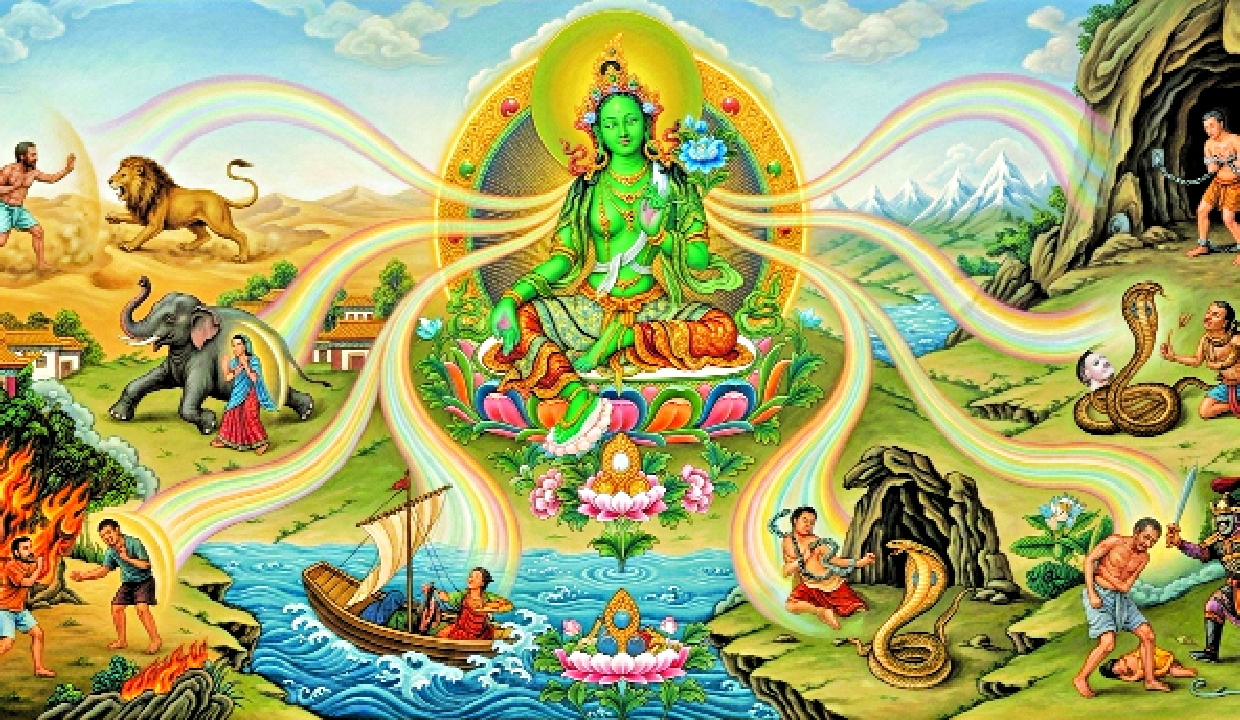
Millions of years ago, there lived a deeply spiritual princess named Yeshe Dawa, which translates to “Moon of primordial awareness”. She was a devoted practitioner who spent lifetimes making vast offerings to the Buddha of that era. Through her immense dedication, she generated Bodhicitta: the ultimate, compassionate aspiration to attain enlightenment for the sake of liberating all living beings from suffering.
Seeing her incredible spiritual progress, a group of senior monks approached the princess. Adhering to the patriarchal biases of the time, they told her that her spiritual merit was immense, but she faced a barrier. They advised her that she should pray to be reborn in a male body in her next life, as they believed true Buddhahood could only be achieved as a man.
Princess Wisdom Moon, possessing profound realization of the ultimate truth, gently but firmly rejected their advice. She replied:
“Here, there is no man nor woman, no self, no person, no consciousness.”
The princess then made a historic, unshakeable vow: “Therefore, until sansara is completely emptied, I shall work for the benefit of all sentient beings exclusively in a female body”.
Following this vow, Princess Wisdom Moon entered a state of uninterrupted meditation for millions of years. Every single day, her profound compassion liberated millions of suffering beings. Recognizing her supreme realization, the Buddha declared that she had achieved full enlightenment. From that moment on, she came to be known as Goddess Tara (the saviouress), the mother of all Buddhas, who manifests swiftly whenever she is called upon to protect beings from fear and suffering. Goddess Tara protects from the eight great external dangers and their internal psychological counterparts, which represent all fears, poisons, and obstacles in life.
Moral of the fable: Never give up. Challenge limiting societal norms and use your unique strengths to empower others who are marginalized.