Ojas: A timeless perspective on health and resilience
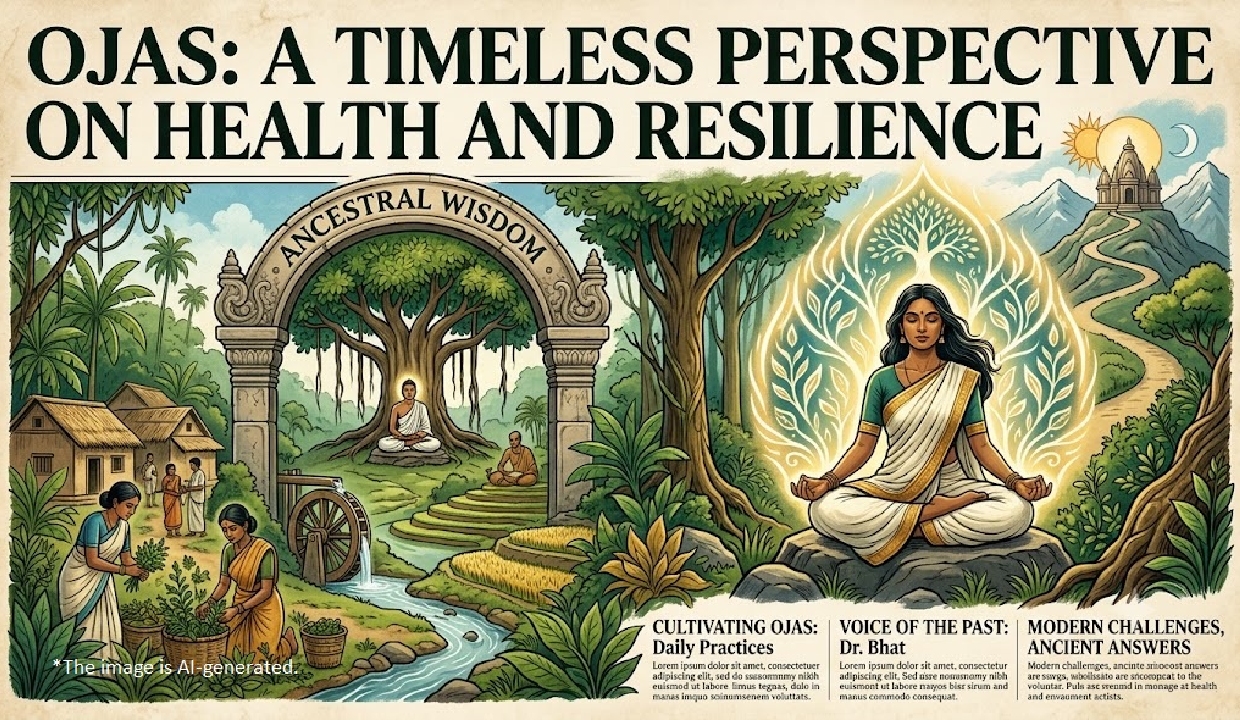
We are living in an era where technological progress has reached unprecedented heights, yet human health appears increasingly fragile. Long working hours, digital dependence, irregular food habits, sleep deprivation, emotional stress, and constant competition have become defining features of modern life. These have inadvertently contributed to a silent epidemic of lifestyle disorders. According to the World Health Organization (WHO), mental health disorders and stress-related illnesses continue to impose a significant global health burden. Scientific studies have also shown that chronic stress suppresses immune function, delays healing, and increases susceptibility to various diseases.
While modern medicine has made remarkable advances in treating disease, the search for sustainable health has prompted renewed interest in traditional systems of medicine. Among Ayurveda’s most profound contributions is the concept of Ojas-the subtle essence that sustains life, vitality, and resilience.
What is Ojas?
The Astanga Hrdaya describes Ojas in a beautiful verse:
“Ojas is the supreme essence of all the bodily tissues culminating in sukra. Though situated in the heart, it pervades the entire body and is responsible for sustaining life.”
Ayurveda explains that the body is nourished through seven successive tissues (dhatu-s): rasa, rakta, mamsa, medas, asthi, majja, and sukra. The finest essence produced from these tissues is known as Ojas. It is the culmination of proper digestion, nutrition, metabolism, and tissue nourishment.
The text further describes its qualities:
Ojas is unctuous, cooling in nature, pure, and slightly reddish-yellow. These qualities symbolise nourishment, stability, and vitality.
Although Ojas is often compared with immunity, Ayurveda presents a much broader understanding. Ojas represents the body’s overall vitality-the harmonious integration of physical strength, mental clarity, emotional stability, and resistance to disease.
The Foundation of Life
The significance of Ojas is emphasised through another remarkable verse:
“When Ojas is destroyed, life itself is destroyed. As long as it remains, life continues. From Ojas arise the many functions that sustain the body.”
This statement highlights the central place of Ojas in Ayurvedic physiology. Every bodily function depends upon it. Even today, physicians recognise that recovery from illness depends not only on medication but also on the body’s intrinsic healing capacity.
Modern Life and the Depletion of Ojas
Perhaps the most striking aspect of this teaching is Ayurveda’s description of the factors that deplete Ojas.
The Astanga Hrdaya states:
“Ojas becomes depleted due to anger, hunger, excessive thinking, grief, overexertion, and similar factors.”
The relevance of this verse today is remarkable. Anger and emotional instability, irregular eating habits, excessive mental work, prolonged stress, sleep deprivation, and physical exhaustion have become defining characteristics of modern living. Digital technology has connected the world but has also increased information overload and reduced opportunities for genuine mental rest.
The text further describes the symptoms of Ojas depletion:
The individual becomes weak, fearful, mentally disturbed, emotionally distressed, dull in complexion, unhappy, dry, and emaciated.
Many of these symptoms resemble what modern medicine describes as chronic stress, burnout, anxiety disorders, emotional exhaustion, and persistent fatigue. Although Ayurveda and modern medicine employ different conceptual frameworks, both recognise that prolonged stress affects the entire person rather than a single organ.
Building Ojas Through Healthy Living
Unlike approaches that focus only on treating disease, Ayurveda places equal emphasis on preserving health. Ojas is not created overnight; it is cultivated through daily habits that support the body’s natural balance.
The classical texts recommend nourishing food, rejuvenative therapies, milk, wholesome broths, and Jivaniya herbs to restore depleted Ojas. Equally important are adequate sleep, proper digestion, emotional balance, regular physical activity, and a disciplined daily routine.
Simple lifestyle practices can contribute significantly to preserving Ojas:
- Eat freshly prepared, nutritious food at regular times.
- Avoid prolonged fasting and highly processed foods.
- Sleep adequately and maintain a consistent routine.
- Practise yoga, meditation, or breathing exercises to reduce stress.
- Engage in moderate exercise without overexertion.
- Spend time in nature and reduce unnecessary digital exposure.
- Cultivate emotional balance through meaningful relationships and mindful living.
These recommendations demonstrate Ayurveda’s preventive approach to healthcare, which remains relevant even in the twenty-first century.
The Fruits of Healthy Ojas
The Astanga Hrdaya concludes this discussion with a simple yet profound observation:
“When Ojas increases, contentment, nourishment, and strength arise.”
The order of these three benefits is significant. Ayurveda places contentment (tusti) before physical strength (bala), reminding us that true health encompasses emotional well-being as much as bodily fitness. A person endowed with healthy Ojas possesses enthusiasm, resilience, clarity of thought, and the ability to withstand life’s challenges.
A Timeless Lesson
The concept of Ojas offers an important lesson for contemporary society. Every meal, every night’s sleep, every emotional response, and every lifestyle habit either strengthens or diminishes our inner vitality. Rather than searching for a single modern equivalent of Ojas, it may be more meaningful to appreciate its holistic message. Ayurveda teaches that lasting health arises when nourishment, discipline, emotional harmony, and balanced living come together.
As the world grapples with rising stress, burnout, and lifestyle diseases, this ancient wisdom remains strikingly relevant. Ojas reminds us that the true goal of healthcare is not merely to extend life but to enrich it with strength, resilience, balance, and contentment. That timeless vision continues to make Ayurveda an invaluable guide for healthy living in the modern age.
Dr. Vinayak Rajat Bhat, SSME - IKS, Vyoma Linguistics Labs Lead Guide (Arthasastra), Bharat Ki Soch; Views presented are personal.