Marvels of India - TULSI
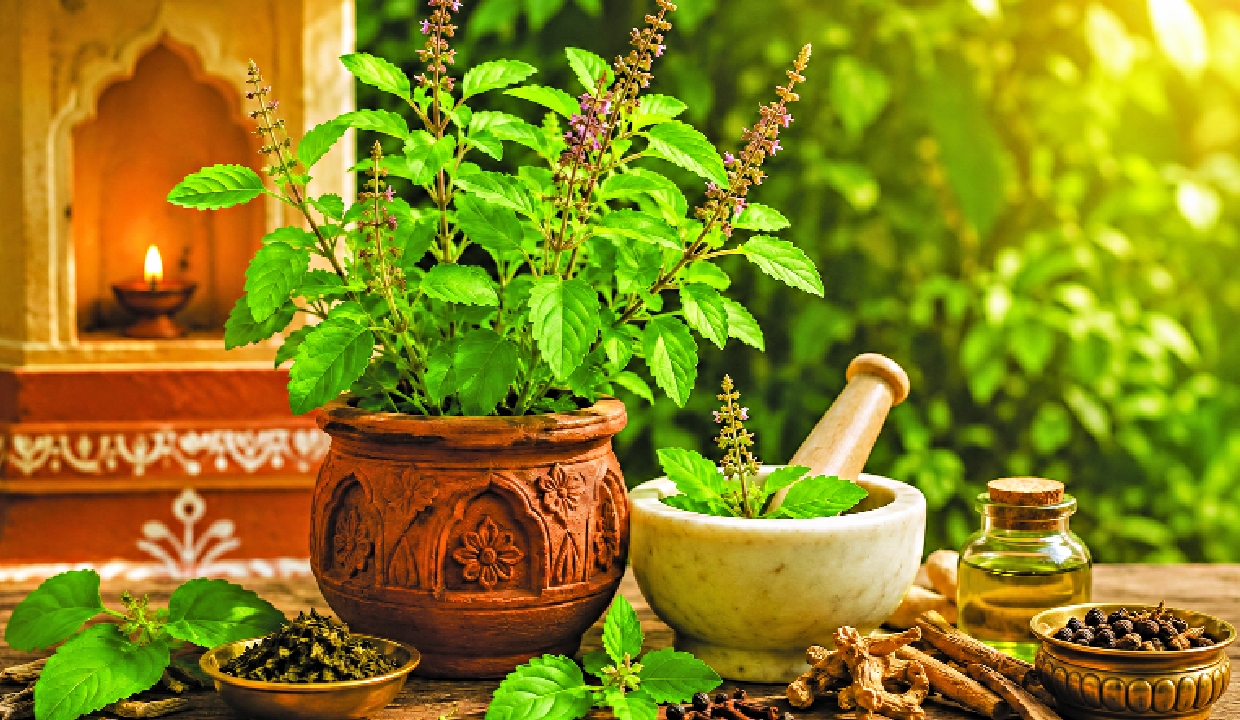
For over three millennia, Tulsi (Ocimum sanctum, also O. tenuiflorum) has held a revered place in Indian daily life, worshipped in households and integrated into Ayurvedic practice as an important medicinal plant carrying deep cultural symbolism, mentioned in ancient Ayurvedic texts as an “elixir of life” due to its healing properties.
Ayurvedic Rasayana
Ayurveda designated Tulsi among its foremost herbs, calling it the “queen of herbs” for its restorative powers. It was traditionally used to counter everyday physical, chemical and psychological stress, supporting balance across bodily systems and resilience against environmental strain.
Modern Scientific Validation
Contemporary pharmacological research, such as Ocimum sanctum
Linn: A reservoir plant for therapeutic applications (2010) by P. Pattanayak, Tulsi-Ocimum sanctum: A herb for all reasons (2014) by M. Cohen, Unravelling the genome of holy basil (2015) by A.K. Upadhyay etc., is now examining these traditional claims, wherein Tulsi is evidenced as countering metabolic stress by normalising blood glucose, blood pressure and lipid levels, and addressing psychological stress through effects on memory and cognitive function. Its phytochemicals, including eugenol and rosmarinic acid, exhibit antioxidant and antimicrobial activity, effects increasingly validated by modern pharmacological research.