Strategic Synergy: Modi and Netanyahu Deepen Bilateral Bonds
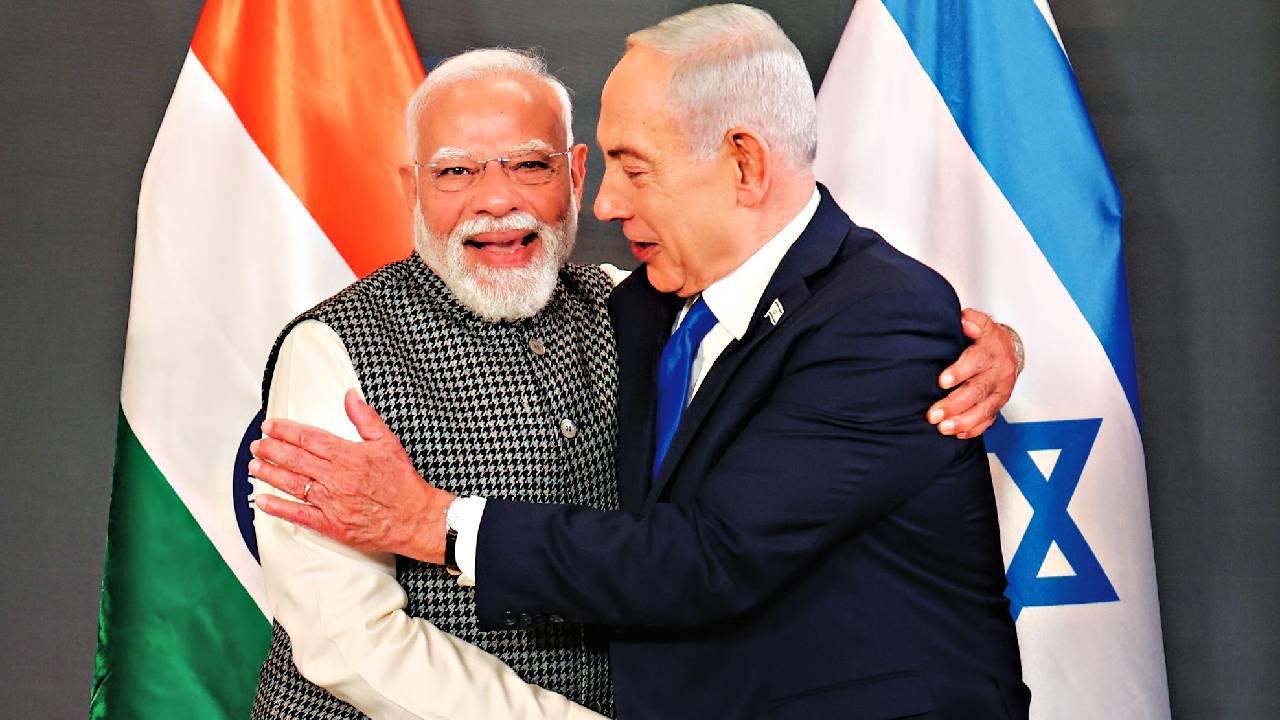
When Narendra Modi visited Israel, the optics went far beyond symbolism. The trip unfolded against the backdrop of deepening instability in the Middle East, sharpening great-power rivalry, and renewed strategic competition in South Asia. For New Delhi, the engagement was not a diplomatic courtesy call but a calibrated signal of India's evolving geopolitical posture: one that is increasingly defined by strategic autonomy, technological ambition, and multi-vector partnerships.
The Middle East remains marked by persistent volatility. The Israel-Palestine conflict continues to inflame regional opinion, with spillover risks affecting global energy markets and maritime security. Iran’s expanding regional footprint and its shadow contest with Israel have added layers of unpredictability to an already fragile environment. Meanwhile, the normalisation process initiated under the Abraham Accords faces strains amid domestic political pressures across the region. For India, which imports a substantial share of its energy from West Asia and is home to millions of expatriate workers in the Gulf, such instability carries immediate economic and security implications.
It is within this complex matrix that India-Israel relations have steadily matured since the establishment of full diplomatic ties in 1992. Today, Israel stands among India’s most important defence partners. Cooperation spans missile systems, drones, cybersecurity, artificial intelligence, water management, and agricultural innovation. At a time when India confronts persistent security challenges along its western and northern borders, Israeli defence technology provides cutting-edge capabilities. Joint development and co-production initiatives dovetail with India's push for domestic manufacturing, strengthening indigenous capacity while reducing long-term dependency. Modi’s visit reinforced this convergence, particularly in counter-terrorism and intelligence-sharing, areas where both nations face common threats and share strategic clarity.
The outreach to Israel also carries implications for India’s western front. Pakistan has been actively consolidating defence cooperation with Saudi Arabia through military exercises, training arrangements, and security agreements. While Riyadh has expanded economic engagement with India, its historical ties with Pakistan’s military establishment remain structurally deep. For New Delhi, strengthening technological and strategic collaboration with Israel serves as a quiet counterbalance, enhancing India’s qualitative edge without provoking overt confrontation. Simultaneously, India has broadened engagement with Gulf partners, particularly the UAE and Saudi Arabia, ensuring that closer ties with Israel do not come at the expense of its Arab relationships.
Another critical layer shaping India’s calculus is China’s expanding footprint. Through the China-Pakistan Economic Corridor, a flagship of the Belt and Road Initiative, Beijing has entrenched itself in Pakistan’s strategic landscape. China’s defence assistance and economic backing provide Islamabad with sustained leverage. At the same time, Beijing has deepened long-term economic engagement with Iran and even positioned itself as a diplomatic broker between regional rivals. For India, this westward push raises concerns about strategic encirclement. Strengthening ties with Israel: an innovation-driven economy and a state deeply attuned to regional security dynamics allow India to hedge against shifting power alignments while accelerating its own modernisation trajectory.
The broader global trade environment also informs this outreach. The protectionist turn during the presidency of Donald Trump disrupted established supply chains and injected uncertainty into global economic governance. For countries like India, the lesson was clear: diversify partnerships, avoid overdependence, and build resilient coalitions. Deepening defence and technology cooperation with Israel complements India's engagement with the United States while preserving policy flexibility. It reflects a pragmatic doctrine-align on issues, not blocs.
Crucially, Modi’s Israel visit does not signal abandonment of India’s balanced West Asia policy. New Delhi continues to support a two-state solution to the Israel-Palestine issue and maintains robust ties with Gulf monarchies vital to its energy security and investment flows. The emphasis remains pragmatic, secure energy routes, protect diaspora interests, expand trade, and enhance security cooperation. This calibrated approach distinguishes India’s diplomacy from ideologically driven alignments. It reflects a steady recognition that in a fractured geopolitical landscape, agility is strength.
Ultimately, the visit symbolised more than bilateral warmth. It underscored India's navigation of a rapidly shifting geopolitical environment shaped by Middle Eastern volatility, Pakistan-Saudi defence linkages, China’s expanding regional footprint, and the aftershocks of global protectionism. By strengthening ties with Israel while sustaining engagement with Arab states and preserving autonomy in global alignments, India is positioning itself as a confident, independent pole in an increasingly multipolar world. The message was unmistakable: strategic diversification is not hedging born of hesitation; it is insurance crafted for an uncertain century.
Author is a prominent columnist and public policy expert