SC declines to stop CJP's Sept 5 march, agrees to hear Centre's plea to quash FIRs
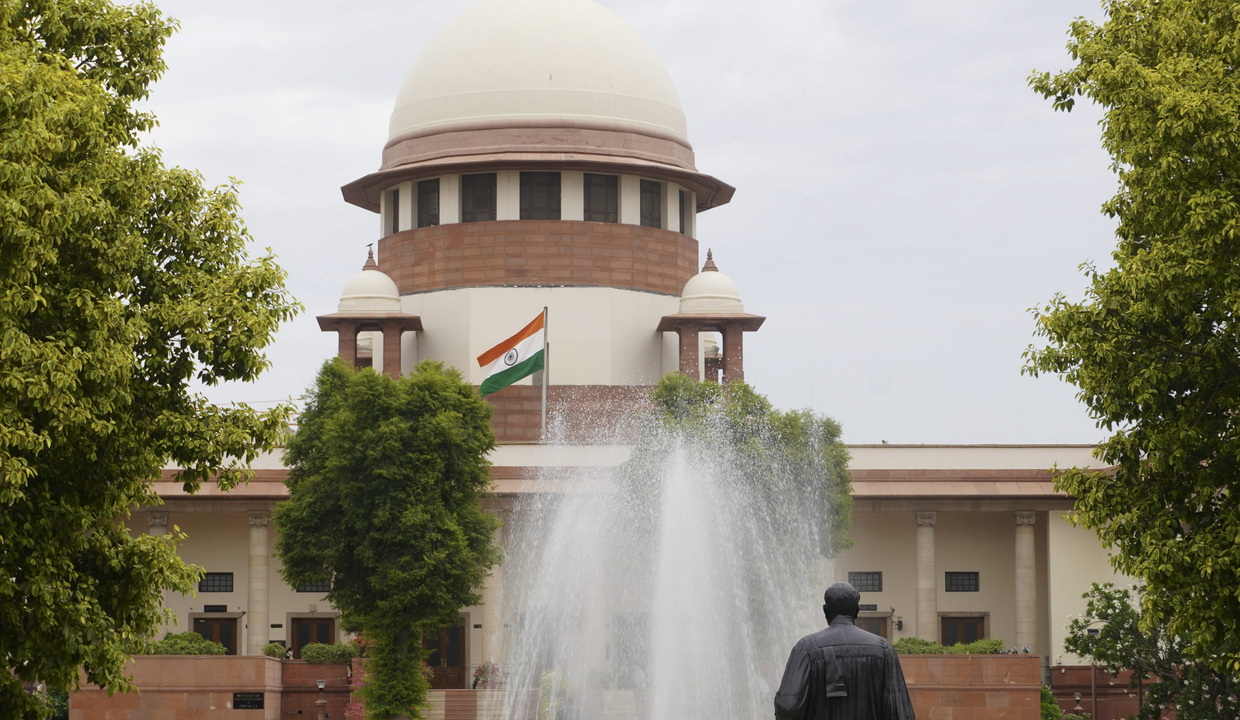
The Supreme Court on Monday declined to stop the September 5 protest march called by the Cockroach Janata Party in Delhi, and separately agreed to hear the Centre's application seeking quashing of FIRs against protesters of the July agitation.
A bench of Chief Justice Surya Kant and Justices Joymalya Bagchi and V Mohana refused to pass interim orders on a plea seeking prohibition of the march, and issued notice. "Let the matter be listed along with pending petitions. To be heard on September 10," the bench said.
The bench said it expected both the protesters and the authorities to act within the law. "As of now we will presume, and we have no reason to doubt that everybody will act and behave in a very responsible manner and in a peaceful and lawful manner," Chief Justice Kant said, reported media.
Earlier, Solicitor General Tushar Mehta mentioned the Centre's application before the bench and urged the court to list it the next day. "It's regarding that protest, for the purpose of FIRs to be quashed etc. Article 142 (of the Constitution), we are invoking," Mehta told the bench, as reported by Bar and Bench. "If parties are reconciling, we have no problem," the Chief Justice replied, and the matter was listed for Tuesday.
The top court is already examining petitions over alleged police excesses during the July protests and has set up a committee to probe allegations of violence from both sides. On August 18, the bench had sought a list of FIRs it could quash under Article 142. Solicitor General Mehta had then told the court that except for 2,873 people booked in grave cases involving murder, rape and abduction, cases against others could be quashed, media reported.
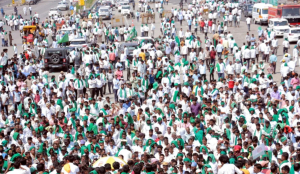
The CJP has called the march for September 5, which falls on Teachers' Day, accusing the Centre of failing to honour assurances made on July 25 that preceded the withdrawal of its 36-day agitation over examination irregularities. The march is to be led by families of students who died by suicide after the cancellation of the NEET and the subsequent re-test, and by those who faced police action during the July protests.
In a post on X on August 26, the party said three of its four demands remained pending, including compensation for families of students, withdrawal of FIRs against protesters, and action against the RAF and Delhi Police.
Delhi Police had earlier said it had not received any request for a procession from India Gate to the Delhi Police headquarters. The plea against the march, filed by retired Delhi Police officer Rajendra Singh, seeks a direction that no large-scale mobilisation in security-sensitive zones such as India Gate and Central Vista be allowed without requisite permissions, and that mobilisation in Lutyens' Delhi be regulated until after the BRICS Summit scheduled for September 12 and 13.
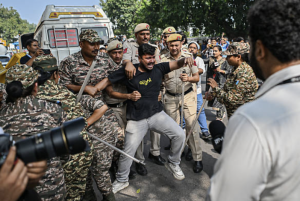
The CJP protests began in June over repeated leaks in national examinations and gained momentum after climate activist Sonam Wangchuk joined the stir with a hunger strike. On July 20, Delhi Police and the Rapid Action Force used lathi charge, tear gas and pellet guns to stop a march towards Parliament. The agitation was called off days later after Education Minister Dharmendra Pradhan resigned, a key demand of the protesters, Bar and Bench reported.
(With inputs from PTI)
Leave a Comment
Comments (1)
This is very wrong to withdraw the cases and FIRs against the rioters, arsonists, destroyer of public and private property, indulging in hate and abusive languages etc. The action of the government is surrender to the criminals and anti-social elements..