The idea of humans and robots co-existing in daily life: How practically relevant is that?
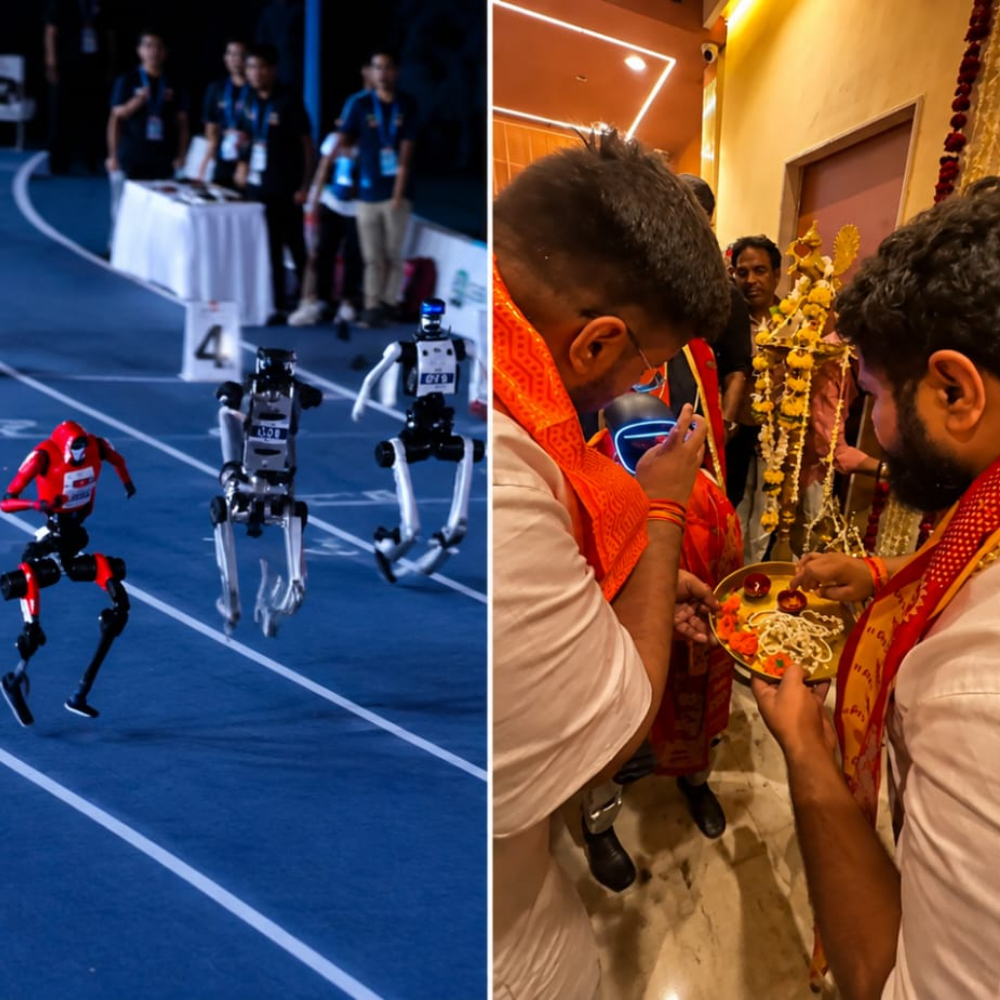
In a rather unusual sight, a robot was seen inaugurating a sandwich shop in Ujjain of Madhya Pradesh on August 23. The visuals sparked an online debate over how far the idea of humans and robots co-existing in today’s world has arrived.
Around 6 PM, August 23, a user on x, named @postman002, posted a video where a robot was seen inaugurating a sandwich shop in the Ujjain district of Maharashtra. This took the internet by surprise as the robot can be seen accompanied by bodyguards, being garlanded and welcomed with a traditional ‘tika’. The robot also managed to pull off dance moves receiving cheerful appreciation from the crowd.
Users of social media observed that the treatment given to the robot was almost as if a human were being welcomed. The use of tilak marks a sense of reverence and auspiciousness, often associated with Indian traditional occasions.
One user commented, ‘Soon they will replace waiters and cooks with robots. Humans will make themselves redundant…’.
Another user pointed out, ‘China is showcasing humanoids at the Olympics, while our desi humanoids are dancing like it’s Raja ki Baraat.’
And the comment isn’t entirely off the mark.
While India’s humanoid made headlines for dancing at a shop inauguration, China has been showcasing humanoid robots in far more advanced settings, including Olympic-level events.
More than 2,000 humanoid robots ran, played table tennis and soccer and are setting exceptional records at the ongoing World Humanoid Robot Games in Beijing, highlighting China’s rapid advances in robotics.
A humanoid robot developed by Chinese smartphone maker Honor, ran 100 metres in 9.32 seconds, beating the world record of the well-known player Usain Bolt.
The robot, dubbed Lightning, reached a peak speed of 14.5 metres (47.6ft) per second during a preparatory test event for the second World Humanoid Robot Games, which opened in Beijing on Saturday.
China has been promoting humanoid robots as a strategic emerging industry, deploying them primarily in the hospitality sector, which has gained worldwide attention over a period of time.
But China isn’t alone. From Olympic stages in China to fashion runways in Seoul, robots are slowly becoming part of the world we live in, not just machines we watch from a distance.
In Seoul, Korea, A South Korean Entertainment Technological company hosted a fashion-runway event, called the ‘Mach 33: Physical AI fashion show’ where robots were seen walking along with models on the runway with coordinated outfits. The event was designed around the idea of humans and robots coexisting in daily life.
From India’s ceremonial welcome to China’s Olympic showcase and South Korea’s fashion runway,the integration of robots into human spaces is already underway.