Rebuilding student trust after the paper leak crisis
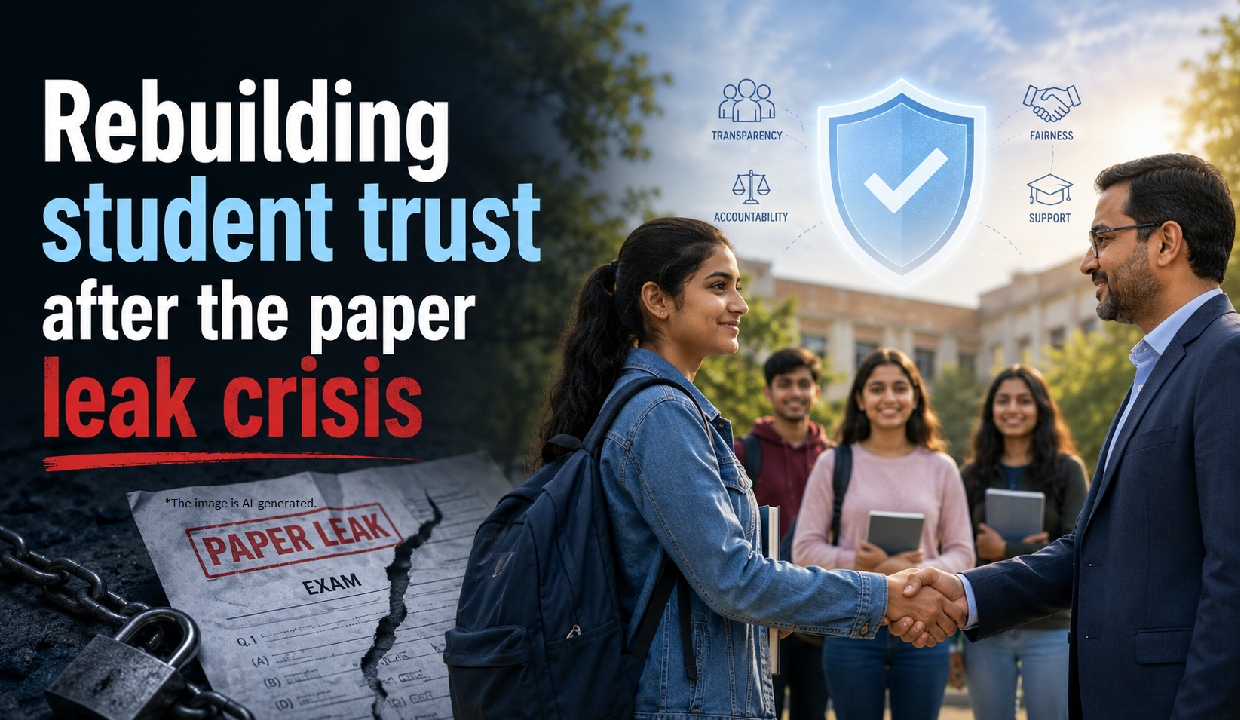
Trust cannot be rebuilt overnight; it returns only when students see institutions acknowledge their failures and correct them transparently
For a generation that has grown up under the relentless pressure of competitive examinations, the recent spate of paper leaks has fractured something fragile: the belief that merit, not manipulation, decides who gets to become a doctor, an engineer or a civil servant.
When lakhs of students who have spent years preparing discover that a result can be bought or stolen, the damage extends beyond one exam cycle. It corrodes faith in the entire system of public examinations.
The pattern across recent controversies is depressingly familiar. Question papers have been printed and transported through poorly secured logistics chains, sometimes via private vendors with minimal accountability. Centres in remote towns have weak digital infrastructure, making real-time monitoring difficult. There is often a troubling gap between when a paper is finalised and when it is administered — a window long enough for leaks to occur and circulate on messaging apps.
Investigations, when they happen, are slow, fragmented across state and central agencies, and rarely result in swift, visible punishment. Most damagingly, the bodies conducting these exams have repeatedly responded with denial rather than transparency, eroding credibility further with every defensive press statement.
Gen Z’s fury is not simply about a single exam gone wrong. It reflects a generation that has watched coaching-centre economics balloon, that has poured family savings into preparation, and that increasingly experiences exams as the only ladder of social mobility available to them. When that ladder appears rigged, the betrayal feels personal and systemic at once - amplified and accelerated by social media, which turns local grievances into national outrage within hours.
Rebuilding trust requires structural change, not just reassurance. First, examination bodies must adopt secure, encrypted digital question-delivery systems with decentralised, randomised paper sets, reducing the value of any single leak.
Second, an independent statutory authority - insulated from political and administrative pressure - should oversee high-stakes national exams, with clear accountability separate from the ministries that benefit politically from smooth exam conduct.
Third, the chain of custody for papers, from the printing press to the exam hall, needs forensic-level tracking, audited by external agencies, not self-certified.
Equally important is the speed and visibility of justice. Leak investigations must run on fixed timelines with public reporting, and those responsible — whether vendors, officials or examination staff — must face consequences that are seen, not just announced. Finally, students deserve a credible grievance and re-examination mechanism. Anything less leaves an entire generation rightly unconvinced.