Reading India Samvaad and Army Day tributes resonate at World Book Fair
From shaping a national reading culture to honouring military sacrifice, Day 6 of the New Delhi World Book Fair 2026 marked a meaningful intersection of ideas, history and nationhood.
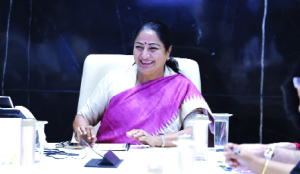
The Reading India Samvaad 2026, a two-day National Leadership Dialogue on Reading and Libraries, began on Thursday. Organised by the National Book Trust (NBT), India, under the Ministry of Education, Government of India, the Samvaad is envisioned as a national convergence platform to strengthen India’s reading, library and knowledge-access ecosystem, aligned with NEP 2020 and the national vision of Viksit Bharat@2047.
The dialogue was inaugurated by Sanjay Kumar, Secretary, Department of School Education and Literacy, Ministry of Education, in the presence of Rajshekhar Joshi, Vice Chairman, Setu Aayog, Government of Uttarakhand, Archana Sharma Awasthi, IRS, Additional Secretary, DoSE&L, Ministry of Education; Yuvraj Malik, Director, NBT and Kumar Vikram, Chief Editor & Joint Director, NBT.
Malik emphasised that reading is the foundation of any progressive society and recalled how great conquerors and kings like Alexander the Great, Chandragupta Maurya and Napoleon Bonaparte read even through battles.
Sanjay Kumar observed that “nothing is more beautiful than a wall full of books,” describing reading as the power to enter another mind, and called for wider publication and readership of books in multiple Indian languages while urging citizens to envision India 20 years ahead. Archana Sharma Awasthi recalled spending entire days at the Book Fair as a child and highlighted parents’ role in cultivating reading habits.
Rajshekhar Joshi advocated for libraries to evolve into living ecosystems supported by technology and personalised reading pathways.
On Day 1, two panel discussions were held on Reimagining the Classroom from Textbooks to Reading Culture and Libraries as Learning Hubs – Reclaiming Reading Spaces featuring Nikhil Tiwari, Director (Education), Municipal Corporation of Delhi (MCD), Danish Aziz, Education specialist, UNICEF India, Maulshree Kalothia, Lead Parag Initiative, Tata Trusts and Shweta Bhutada, Senior Project Lead, ASER Centre, Pratham Education Foundation, Dr. Pradeep Rai, President Indian Library Association; Prof. (Dr.) Sunita Rattan, Chairperson, University Library Committee, Amity University, Noida and Shri Neeraj Jain, Managing Director, Scholastic India.
Army Day At Theme Pavilion
At the Theme Pavilion, Army Day was marked with a powerful tribute to India’s martial legacy through sessions that reflected courage, leadership and sacrifice. A panel honoured Major Rama Raghoba Rane, the first living recipient of the Param Vir Chakra, with Dr. D. V. Guruprasad and Lt. Col. Annappa Narayan Shet reflecting on his life and legacy. Dr. Guruprasad traced Major Rane’s roots in Karwar, Karnataka, and his journey from a Sepoy to a Major, shaped by discipline, perseverance and service. Lt. Col. Shet detailed Major Rane’s exceptional courage as an engineer officer during the 1947–48 conflict, particularly his mine-clearing operations carried out under intense enemy fire that enabled Indian forces to advance and secure strategic positions.
In another panel discussion on Operation Vijay (Kargil War, 1999), Lt. Gen. Mohindra Puri and Brig. Om Prakash Yadav spoke with Colonel S.C. Tyagi. Drawing from firsthand experience, Lt. Gen. Puri spoke about assuming command in the Srinagar–Shershahabad sector at short notice, highlighting the challenges of extreme terrain, weather and sustained enemy fire. Brig. Yadav focused on tactical planning and execution, detailing how key positions were secured while ensuring troop safety and uninterrupted supply lines.
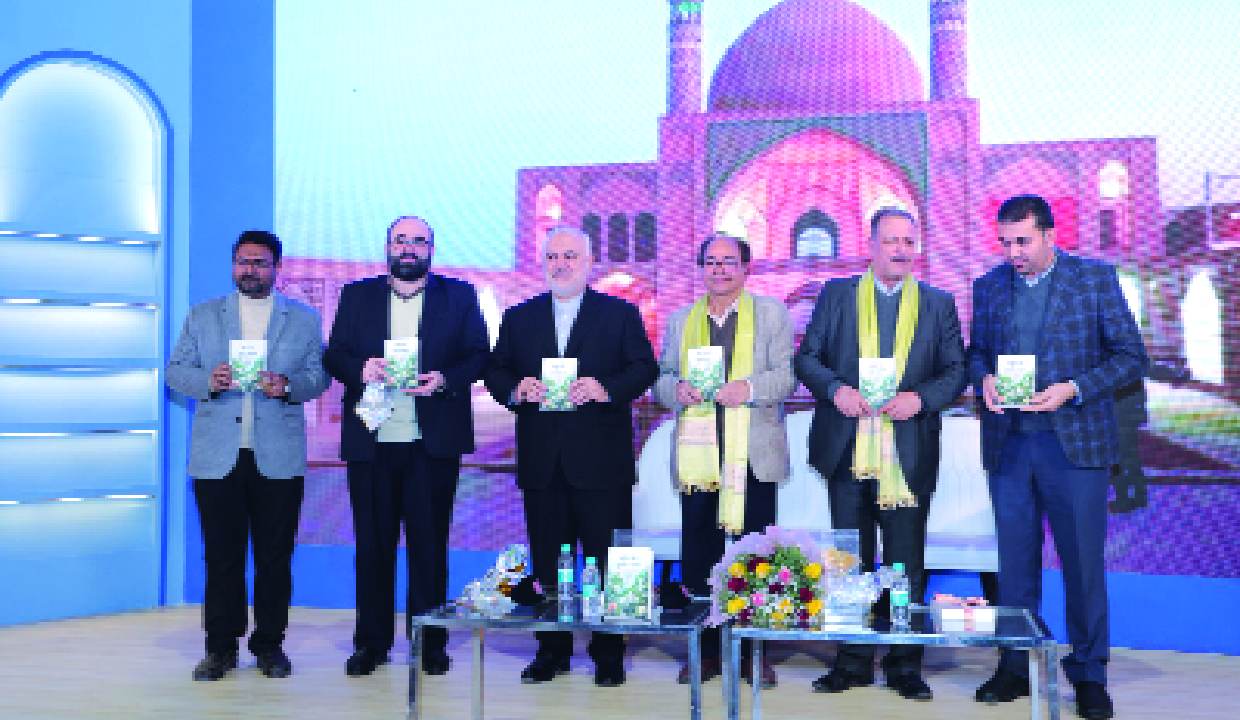
The book “Mantra Viplav” by author Tarun Vijay was launched today in a session attended by dignitaries, including RSS Sarkaryawahak Dattatreya Hosabale and Rajya Sabha MP Sudhanshu Trivedi.
Hosabale recalled the thoughts of Maharshi Aurobindo and spoke about three key ideas articulated by him: first, that a nation must collect and preserve its ancient knowledge; second, that this knowledge should be made relevant and useful for human life; and finally, that we must continue to seek and create newer knowledge.