Rapper-turned politician Balen Shah’s party sweeps Nepal polls
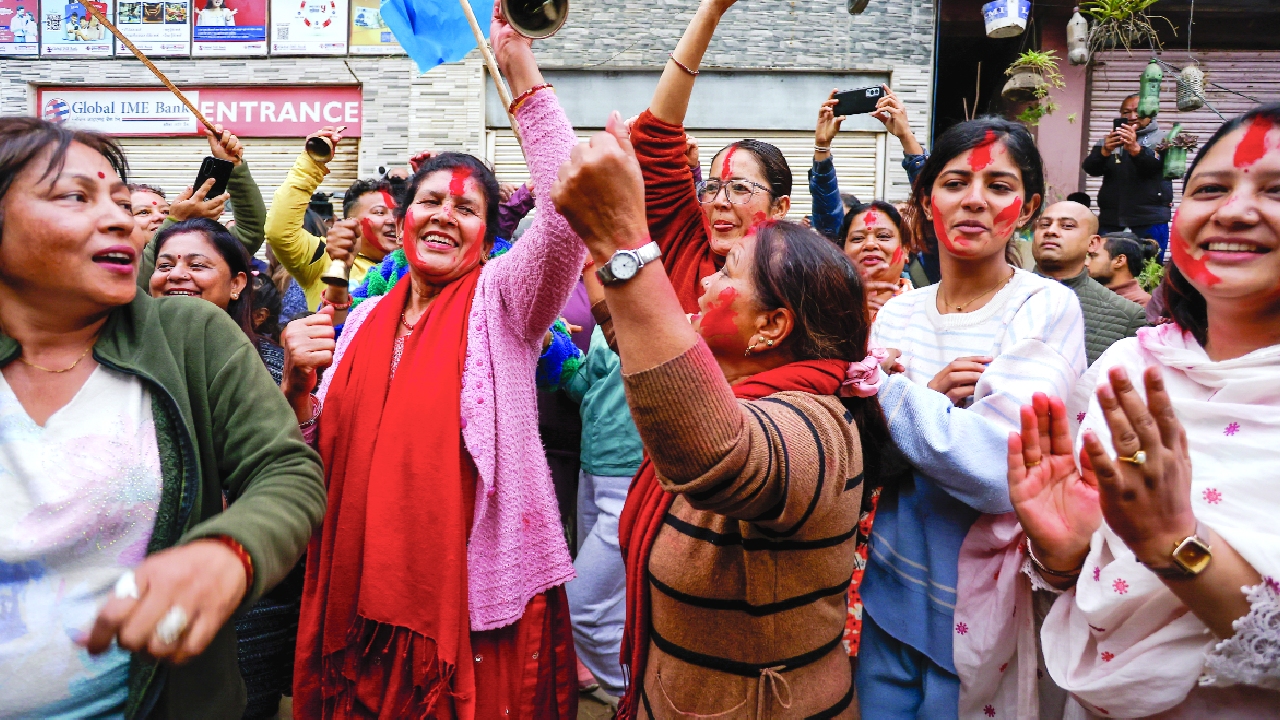
Rapper-turned-politician Balendra Shah’s newly formed Rastriya Swatantra Party (RSP) was on Friday heading towards a landslide victory in Nepal’s first general elections since the violent Gen Z protests toppled the K P Sharma Oli-led government in September.According to the Election Commission’s data available from 144 of the total 165 constituencies, the RSP has won three seats and is ahead in 104 others, local media reported. The Nepali Congress has won two seats and is leading in 12 others, while the CPN-UML is leading in 10 constituencies. The Nepali Communist Party has won one and is leading in six constituencies.
The outcome is expected to provide a strong government in the politically fragile Nepal, which has had 14 governments in the last 18 years. The election was being closely watched by India, which hopes for a stable government in the politically fragile Himalayan nation to take forward the developmental partnership between the two sides. “We look forward to working with the new Government of Nepal to further build on the robust multifaceted ties between our two countries and peoples for mutual benefit,” Ministry of External Affairs Spokesperson Randhir Jaiswal said in Delhi on Thursday.
He said India has “consistently supported peace, progress and stability in Nepal and in keeping with our commitment, provided logistical supplies as per request from Government of Nepal for these elections”.Balendra Shah, who was the Mayor of Kathmandu till recently, is leading in Jhapa-5 constituency against four-time prime minister and CPN-UML chair Oli in the latter’s stronghold. Shah, popularly known as Balen, received 6,551 votes, while Oli got just 1,428 votes. Popularly known as ‘Balen’, the 35-year-old engineer was a popular choice to lead the interim government after Gen Z youths toppled the Oli-led coalition government in September last year, following two-day nationwide violent protests against corruption and a ban on social media.
But Balen declined then to lead the interim government, saying he would rather head the government by contesting the parliamentary election for a full term.In January, he joined the RSP, led by Ravi Lamichhane, and was soon declared the party’s prime ministerial candidate.The RSP is leading in all 10 constituencies of Kathmandu.
Nepal witnessed about 60 per cent voter turnout during the elections to the House of Representatives on Thursday. The counting of votes started late Thursday night and is expected to be completed by Friday night, according to the Election Commission.The Gen Z youth, through their two-day intensified protests on September 8 and 9, ousted Prime Minister Oli, who was heading a coalition government with the backing of Nepali Congress that enjoyed nearly two-thirds majority support.
After Oli’s ouster, President Ramchandra Paudel dissolved the House of Representatives on September 12 and appointed Sushila Karki as the caretaker PM.The major issues raised by Gen Z are anti-corruption, good governance, an end to nepotism, generational change in political leadership, etc.