Pollution in NCR needs long-term policy, not quick fixes: Yadav
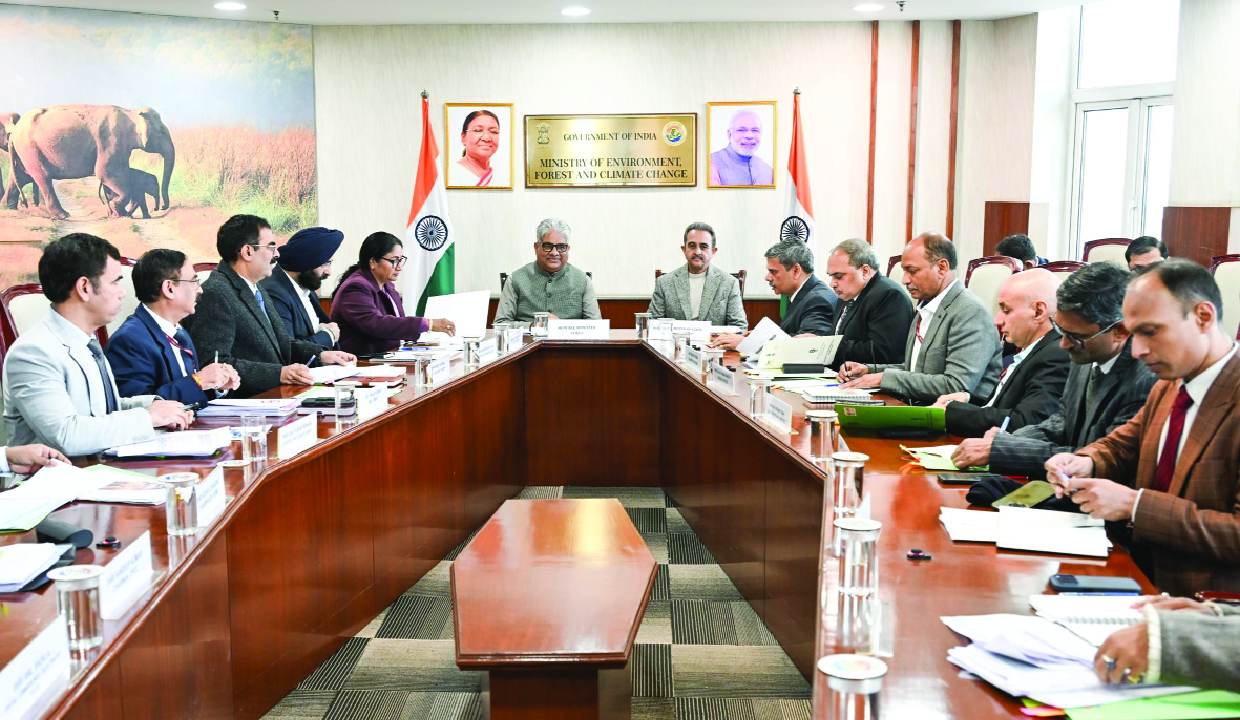
Union Environment Minister Bhupender Yadav on Monday said air pollution in the National Capital Region (NCR) is driven by both anthropogenic activities and meteorological factors, emphasising that long-term policy interventions, rather than quick fixes, are essential.
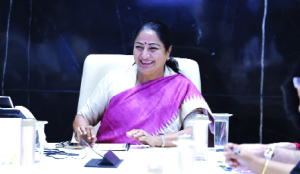
He made the statement while chairing a high-level meeting to undertake a detailed review of the action plans of the Delhi government for tackling air pollution in the NCR cities, attended by Chief Minister Rekha Gupta.
The meeting was held as part of the regular annual review mechanism to assess progress and strengthen the implementation of identified measures.
During the meeting, Yadav highlighted the need for smart traffic management, particularly at 62 identified congestion hotspots, to ensure smoother traffic flow. The Ministry of Environment, Forest and Climate Change informed that the Central Pollution Control Board has issued notices to 88 units that have not installed Online Continuous Emission Monitoring Systems, with closure action to commence from the 23rd of this month.
Yadav congratulated the officials of the Delhi Government and related agencies for their sustained efforts in containing air pollution in the national capital.
On vehicular pollution, the Minister highlighted the need for smart traffic management, particularly at 62 identified congestion hotspots, to ensure smoother traffic flow. He stressed strict action against polluting vehicles, including a special registration drive, installation of Automatic Number Plate Recognition (ANPR) systems at border entry points, and exploration of staggered office timings to reduce peak-hour congestion.
Measures such as incentivisation of electric vehicles, accelerated expansion of charging infrastructure, congestion charges, smart parking management and a uniform vehicle registration policy for NCR were discussed.
Reviewing industrial pollution, it was noted that 227 out of 240 industrial estates in NCR have already shifted to PNG. However, unplanned development and subsequent regularisation of industries outside designated estates remain a concern. The minister directed that strict action be taken against illegally operating and non-conforming units, including sealing where required.
The Central Pollution Control Board (CPCB) has issued notices to 88 units that have not installed Online Continuous Emission Monitoring Systems (OCEMS), with closure action to commence from 23.01.2026, it was informed.
The meeting also reviewed management of Construction and Demolition (C&D) waste, with emphasis on designating C&D waste sites, stopping demolition activities during peak pollution periods, and partnering with recycler associations for scientific disposal. Also, it was informed that a C&D waste processing plant at Tehkhand is expected to be operational within this year.
On road development and dust control, Yadav stressed end-to-end paving, plantation of local shrub varieties in a mission mode and greening works involving the Eco Task Force, NCC, NSS and youth clubs to address PM10 pollution.
Redevelopment of over 3,300 km of roads in Delhi is planned in the coming year, with dust abatement and traffic management integrated into execution. Mechanised Road Sweeping Machines (MRSMs) are to be widely deployed in an Op-Ex model with no diesel-based units, along with handheld vacuum machines/litter pickers for smaller roads. Road maintenance contracts may include pothole repair within 72 hours, and the Delhi Government was requested to review recurring road damage to ensure accountability.
The Minister emphasised strengthening end-to-end public transport through accelerated augmentation of Delhi Metro and city bus services, along with improved last-mile connectivity under an Integrated Transport Plan for NCR cities, to encourage greater public transport usage. The Delhi Metro Corporation presented its detailed expansion plan for the coming years, while the Delhi Transport Department informed that out of the scheduled bus induction plan of 14,000 buses, an order has been placed with CESL for a total of 3,350 electric buses, all of which will augment the city’s public transport fleet. CAQM informed that a scientific study has been initiated from January 2026 through TERI, IIT Delhi, IITM Pune and ARAI to identify pollution sources in Delhi NCR. It was also highlighted that, barring the COVID lockdown year, 2025 recorded the best AQI figures since 2018, reflecting consistent improvement in the NCR’s air quality.
Dignitaries present in the meeting included the Chief Minister (NCT Delhi), Minister of State (EFCC), Kirti Vardhan Singh and Delhi Environment Minister Sardar Manjinder Singh Sirsa, besides senior officials from MoEFCC and the Delhi Government.