PM won't act against democracy, centre tells SC on CEC selection
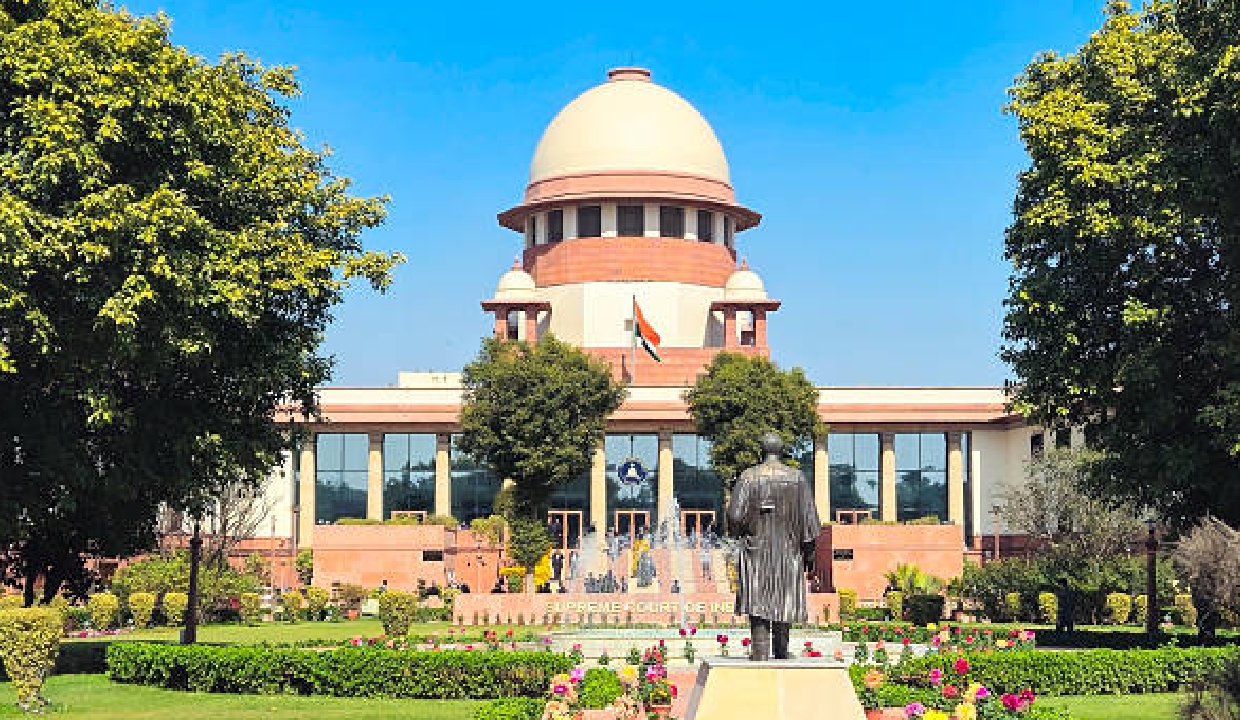
The central government told the Supreme Court on Thursday, July 30, that it would be wrong to assume the Prime Minister and other ministers would act in "bad faith" or against democracy simply because they hold a numerical majority in the process for selecting the Chief Election Commissioner and election commissioners.
Solicitor General Tushar Mehta, defending the law governing the appointment process, told the court that the office of the Prime Minister carries an inherent "sanctity," and that questioning the selection committee's decisions would undermine constitutional trust in elected institutions.
"If his decision is not to be trusted and is to be seen as necessarily a bad-faith exercise, then why not have a provision that even while selecting his Cabinet, he must consult some former judge or outsider?" Mehta asked a bench of Justices Dipankar Datta and Satish Chandra Sharma.
The court was hearing petitions challenging the constitutional validity of the Chief Election Commissioner and Other Election Commissioners (Appointment, Conditions of Service and Term of Office) Act, 2023, which leaves the Chief Justice of India out of the panel that selects election commissioners.
Mehta argued the matter should go to a larger bench under Article 145(3) of the Constitution, saying it raises a substantial question of constitutional interpretation. He said questioning the adequacy of the selection committee amounts to doubting the wisdom of Parliament and undermining the constitutional trust doctrine.
"When the executive wants to participate in the selection of another organ, it becomes a question of independence of another organ. Can it be said to the judiciary then that we will not trust your appointments because there is no outsider? This is not adversarial. I am just saying this as a student of law," Mehta said.
Justice Datta responded, "As you said judges select judges, we wonder whether judges select judges nowadays."
Mehta said the executive and legislature are the only branches directly accountable to the public.
The bench pushed back, citing B.R. Ambedkar's remarks and pointing to the criminal records of lawmakers and ministers across the country.
"One-and-a-half years before his death, Dr Ambedkar said democracy failed in India. These are all utopian ideas... Dr Ambedkar passed away in 1955-56… Just give us the figures in how many states there are ministers who have cases," the bench said.
Justice Datta clarified that the issue was not about distrusting the prime minister personally. "We would trust the prime minister. But this has not happened over the years. I rest at that. Now it's 2:1.
Two on the side of the PM and one on the side of the opposition," he said, adding that an election commissioner is meant to be independent and that the process should visibly demonstrate fairness, even if fairness is being achieved in substance.
At the start of the hearing, Attorney General R. Venkataramani argued that questions arising from the 2023 Anoop Baranwal judgment raised significant constitutional issues warranting review by a larger bench.
After hearing both sides, the court reserved its judgment on whether to refer the case to a larger five-judge bench, a move opposed by lawyers representing the petitioners.
Under the 2023 law, the selection committee comprises the prime minister, a Union minister nominated by the prime minister, and the leader of the opposition, or the leader of the largest opposition party, in the Lok Sabha. Petitioners argue that excluding the CJI weakens the independence of the appointment process. The law has been challenged by several parties, including Congress leader Jaya Thakur and the Association for Democratic Reforms.
Parliament passed the law in December 2023, months after a Supreme Court ruling directed that election commissioners be appointed by a committee including the prime minister, the leader of the opposition and the CJI.
The Centre has separately defended, in an earlier filing, its appointment of two election commissioners under the 2023 law, arguing that the Election Commission's independence does not depend on having a judicial member on the selection committee. The government's affidavit disputed claims that the two commissioners were appointed hastily on March 14, 2024, to preempt a Supreme Court hearing scheduled the next day on interim relief in the case. The Supreme Court has also declined to stay those appointments.
A five-judge Constitution bench had ruled in March 2023 that the CEC and election commissioners should be appointed on the advice of a committee comprising the prime minister, the leader of the opposition in the Lok Sabha, and the CJI.
(With inputs from PTI)