PM seeks greater attention to adolescent girls’ health
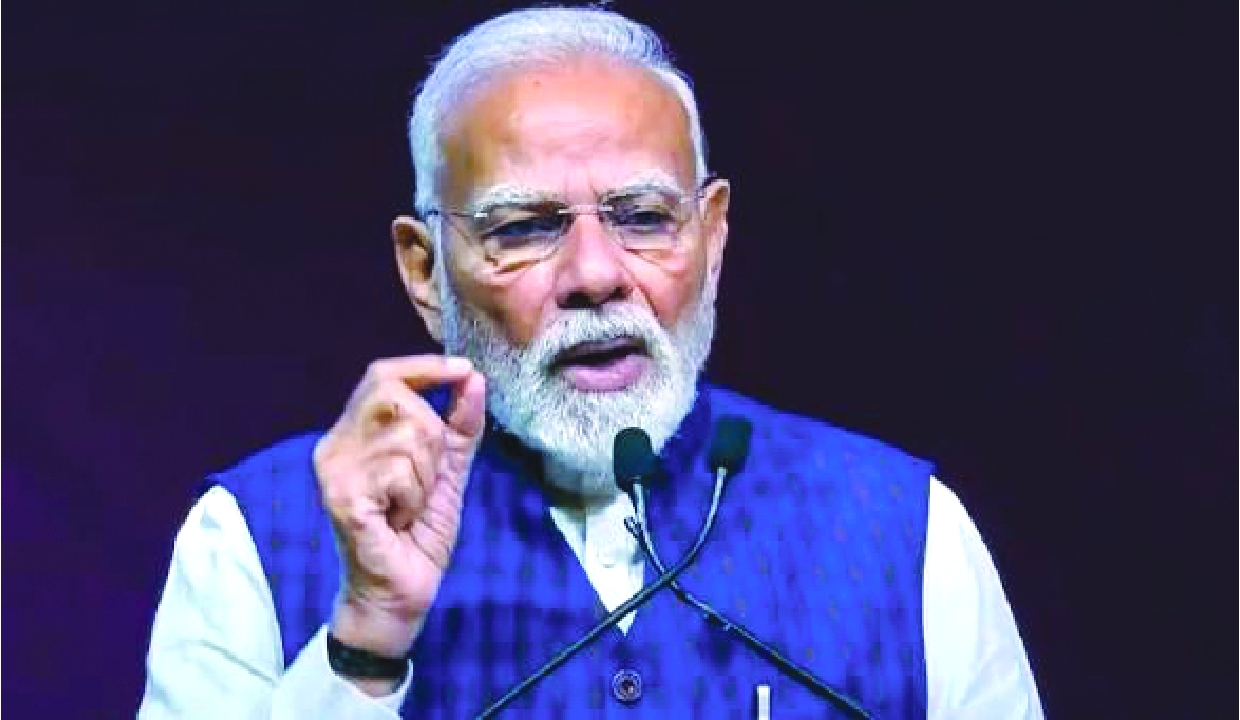
Prime Minister Narendra Modi on Friday called for greater focus on the health, nutrition and overall development of adolescent girls and suggested developing age-appropriate modules for children on women’s safety, dignity and empowerment.
Addressing a departmental summit on women and child development here, the prime minister also underlined the importance of preventive action through the convergence of efforts across various departments on the issue of women’s safety.
He made the remarks while chairing the valedictory session of the two-day National Departmental Summit organised by the Ministry of Women and Child Development.
The Summit, part of the series of departmental summits envisioned by the prime minister, brought together ministers and senior officials from states and Union territories for focused deliberations on nutrition and early childhood care, child protection, women’s safety and empowerment, and strengthening delivery of services through greater convergence, according to a statement issued by his office.
Modi appreciated the intensive deliberations and emphasised the importance of collaborative decision-making between the Centre and States, it said.
He suggested that states could take this model further by organising similar chintan shivirs at the district level and at municipal and metropolitan levels.
Modi also suggested dedicated chintan shivirs for Anganwadi Workers, enabling them to exchange experiences, innovations and practical solutions from the field. Emphasising the principle Jan Bhagidari, he said an Anganwadi centre should not function as an isolated institution; it must be a centre of community participation.
He said families living around Anganwadi centres could also be encouraged to contribute on special occasions by sharing nutritious food, toys and locally relevant items for children.
The PM also sought deeper engagement of universities and educational institutions with Anganwadi centres.
“Universities could adopt nearby Anganwadi centres and undertake social impact studies, creating opportunities for students to contribute while also generating useful insights for improving service delivery,” he said.
Medical students and NSS and NCC volunteers could similarly be associated with Anganwadi centres and community initiatives, he said.