Parliamentary panel suggests recommendations on corporate laws amendment bill
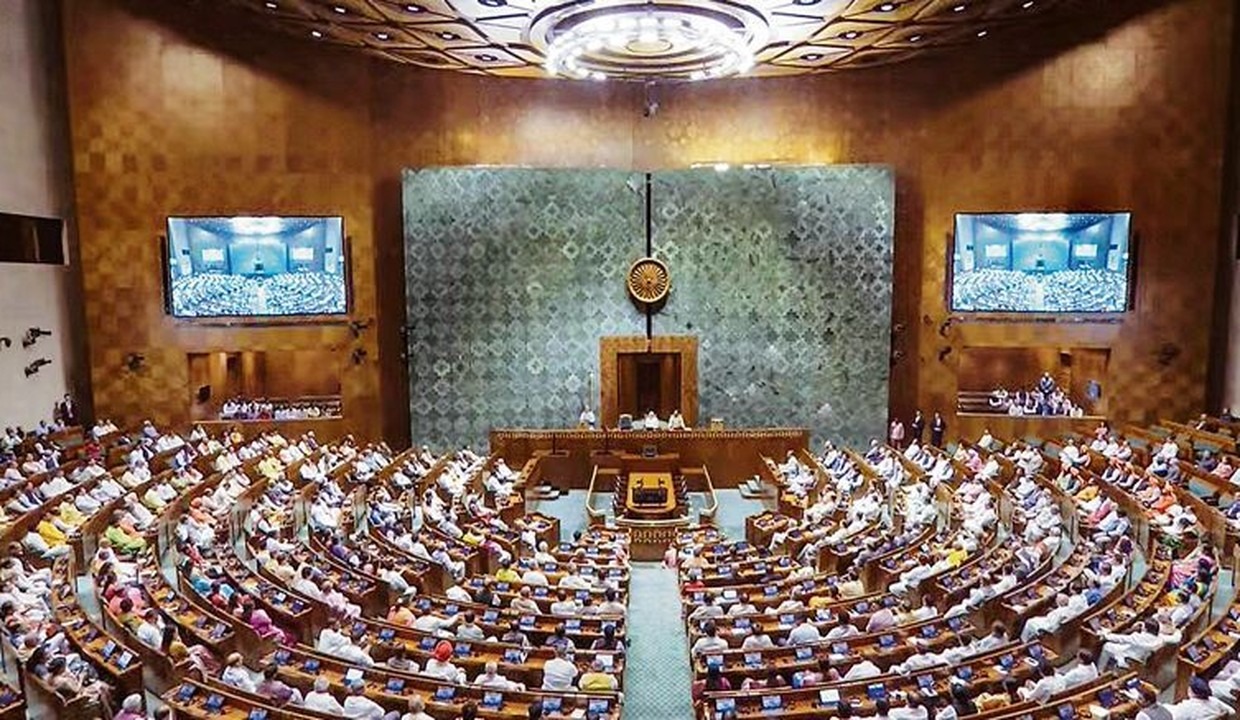
A Parliamentary panel, which reviewed the proposed amendments to corporate laws, on Monday, August 3, made various recommendations, including having a fixed penalty of Rs 50,000 for certain non-compliances and permitting in-kind CSR contributions for small companies.
Besides, the Joint Committee on the Corporate Laws (Amendment) Bill, 2026, has suggested that exemption from mandatory statutory audit be allowed only for small businesses and not for public companies.
Another recommendation is to enable "seamless re-domiciliation of foreign companies to IFSC without requiring winding-up in their home jurisdiction" -- a move that would allow overseas companies to move their operations to India without much hassle.
The committee, chaired by BJP member Sudheer Gupta, submitted to the Lok Sabha its detailed report running into more than 1,100 pages, including annexures.
The Bill, which was introduced by Finance and Corporate Affairs Minister Nirmala Sitharaman, was referred to the panel soon after introduction in the Lok Sabha on March 23. It is aimed at further improving the ease of doing business in the country.
Changes to the Companies Act and Limited Liability Partnership (LLP) Act have been proposed in the bill.
One of the recommendations of the panel is to replace "fine, which may extend to Rs 1 lakh with a fixed penalty amount of Rs 50,000 in cases where companies default in compliance with provisions in line with the objective of the decriminalisation and rationalisation exercise".
With respect to CSR, the committee has suggested retaining the Rs 10 crore net profit threshold, allowing in-kind CSR contributions for small companies, maintaining a negative list of ineligible agencies, and keeping CSR exemption powers strictly with Parliament.
Under the Companies Act, a certain class of profitable entities are required to shell out at least two per cent of their three-year average annual net profit towards Corporate Social Responsibility (CSR) activities during a financial year.
Another recommendation is to reduce the minimum age for appointment as Managing Director, Whole-time Director or Manager from 21 to 18 years and raise the maximum age from 70 to 75 years.
The committee has also recommended deleting imprisonment provisions for failure to comply with NFRA orders in line with decriminalisation, and that penalty recoveries be handled via a framework proposed in new Section 454B for recovery of due penalty instead of traditional recovery mechanisms like recovery as land revenue arrears.
NFRA is the National Financial Reporting Authority.
Among other suggestions, the panel has said that specialised dedicated Insolvency and Bankruptcy Code (IBC) benches must be established through a binding statutory obligation rather than an enabling administrative option.
It has recommended making it mandatory for the NCLT (National Company Law Tribunal) President to constitute special benches for cases pertaining to the IBC, and regular benches dealing with cases for Companies Act, 2013 along-with urgent steps to increase tribunal benches to clear backlogs.
Also, the panel has suggested "raising compounding limits to Rs 1 crore, inserting 'or any other person' for statutory consistency, establishing an end-to-end digital compounding portal, and publishing compounding orders on MCA21".
Regarding the calibration of lower ceilings -- including separate limits for public and listed entities -- the panel has emphasised that the power delegated to the central government must be exercised judiciously.
The corporate affairs ministry, while framing statutory rules, should take into account realistic operational requirements, consult key regulators such as Sebi and other relevant stakeholders, and maintain balanced standards that do not unduly constrain legitimate corporate group structures, according to the committee.
Further, the panel has said that while converting an Alternative Investment Fund (AIF) into an LLP, investors (beneficial owners) and managers of trust-AIFs should be designated as 'partners' upon conversion into an LLP.
The committee comprised 21 Lok Sabha and 10 Rajya Sabha members.