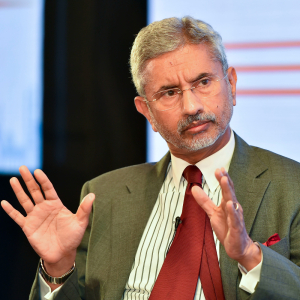
'One Nation, One Election' unconstitutional, mindless exercise: Chidambaram
Former Union minister P Chidambaram on Monday, August 24, strongly opposed the proposed “One Nation, One Election” framework before a parliamentary panel. He called the move “unconstitutional”, “monstrous” and a “mindless” exercise, sources said.
Appearing before the joint committee of Parliament examining the Constitution (129th Amendment) Bill, 2024 and the Union Territories Laws (Amendment) Bill, 2024, Chidambaram argued that the proposed legislation to synchronise Lok Sabha and state assembly elections would violate the basic structure of the Constitution, they said.
The former home and finance minister submitted that legislatures are elected for five-year terms and that cutting short their tenure would directly undermine this constitutional principle.
Chidambaram also told the panel that his conscience did not permit him to support the Bills and said the government does not have the required two-thirds majority to pass the proposed constitutional changes, according to sources familiar with the deliberations.
Trinamool Congress' Sagarika Ghosh, who is also a member of the panel, opposed the proposal and said it could give the Election Commission “unbridled” power.
The panel, headed by BJP member PP Chaudhary, also heard from around 10 Padma awardees, including Tarlochan Singh, Navin Khanna, Meenakshi Jain and Niru Kumar. While some backed simultaneous elections, others opposed the proposal, warning that it could create “chaos” in the country.
The two Bills were introduced in the Lok Sabha in December 2024 and subsequently referred to the joint committee for detailed examination.
They were drafted after a high-level committee headed by former president Ram Nath Kovind recommended holding Lok Sabha, state assembly and local body elections simultaneously in a phased manner. Union Home Minister Amit Shah was among the members of the Kovind panel.
India had followed a synchronised election cycle after Independence, with Lok Sabha and state assembly polls held together in 1951-52 and subsequently in 1957, 1962 and 1967.
The cycle was disrupted after some state assemblies were prematurely dissolved in 1968 and 1969. The Fourth Lok Sabha was also dissolved ahead of schedule in 1970, leading to fresh elections in 1971.
While the first three Lok Sabha terms completed their five-year tenure, the Fifth Lok Sabha's term was extended until 1977 under Article 352 during the Emergency.
Since then, only a few Lok Sabha terms, including the Eighth, Tenth, Fourteenth and Fifteenth, have completed five years. Several others were dissolved prematurely.
State assemblies have similarly witnessed premature dissolutions and extensions, gradually ending the earlier synchronised election cycle and resulting in the staggered electoral schedule followed across the country.
(With inputs from PTI)