No Satcom monopoly in India: Scindia tells Musk
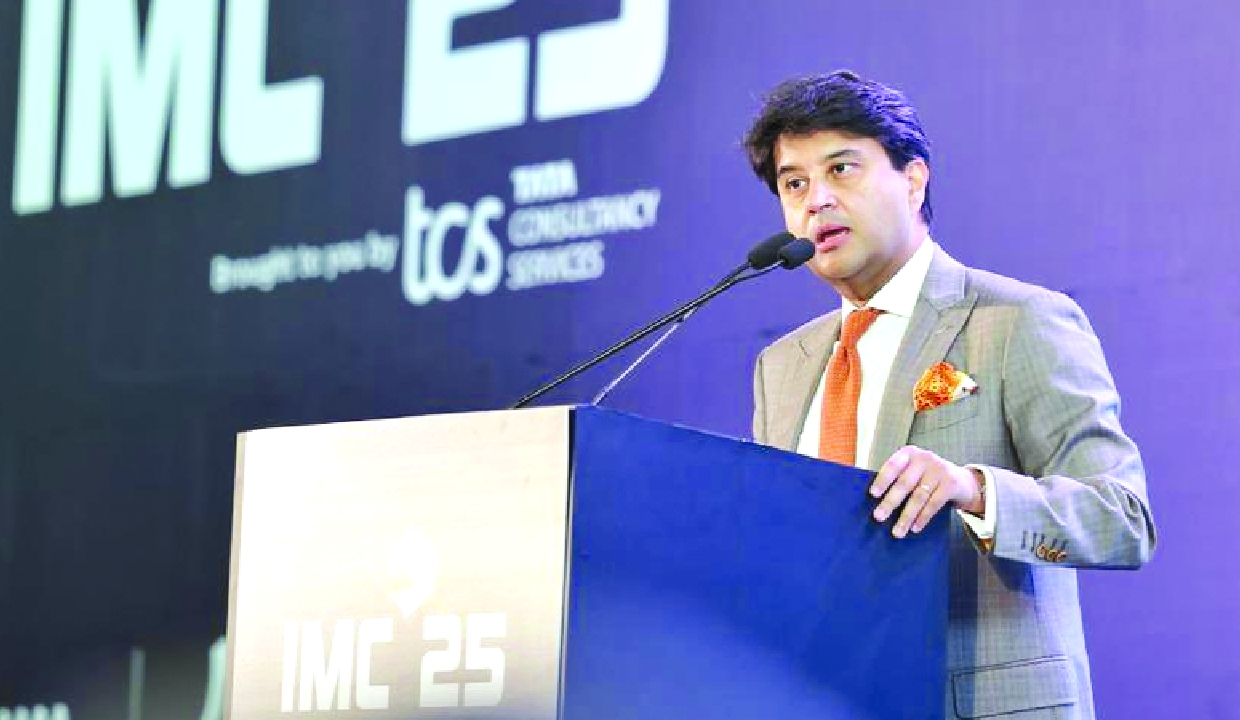
Union Communications Minister Jyotiraditya Scindia on Friday said India does not allow a monopoly in any sector, after Elon Musk claimed that vested interests were blocking licences for Starlink’s satellite internet service.
Scindia said there was no question of permitting a monopoly in satellite communications. He added that three parties are in line for final approval of commercial licences, suggesting more than one operator is expected to clear the final stage of the process.
The statement came a day after a public dispute between Musk and the Government. The SpaceX and Starlink chief had said his company’s satcom services were being held up.
The Department of Telecommunications rejected the suggestion that domestic business interests were responsible. It said every satcom licensee in the country must demonstrate compliance with security norms.
Officials have treated the delay as unfinished regulatory requirements rather than a decision to keep Starlink out. Applicants must meet technical and security conditions before the government can issue a commercial licence. The Government has said those conditions apply to all companies seeking to offer satellite broadband, not just one applicant.
Scindia’s comments widened that response by eliminating the possibility of a monopoly and referring to three parties nearing final approval, showing that the licencing pipeline was open to competition. However, he did not name the three applicants nor specify a date for the grants.
Starlink has been seeking permission to operate in India for several years. Its service relies on low-Earth orbit satellites to deliver broadband, including in places where ground networks are thin. Over the same period, Indian rules on spectrum, security clearance and foreign participation in satellite communications have continued to be applied to individual applications.
The exchange on Thursday brought the disagreement into the open. Musk’s posts presented the delay as being caused by interests opposed to Starlink’s entry. In response, the Telecom Department stated that meeting security requirements is a must and that the allegations of being blocked by local companies were without foundation. On Friday, Scindia returned to the point with a more general statement: no sector, including satellite communications, is set aside for one operator only.
The minister’s remarks do not affect the approval order; the commercial service still awaits the remaining clearances. The applicants expected to receive final approval cannot start operations until those clearances are completed, and the Government has not given a timetable for that action.
The official explanation of the dispute is altered by Friday’s statement since the reply no longer confines itself to denying that Starlink is being targeted; it now makes the explicit assertion that the market will not be closed to competition, highlighting the fact that three parties are said to be at the final stage of approaching the licensing process.