India slams US over green-card processing halt
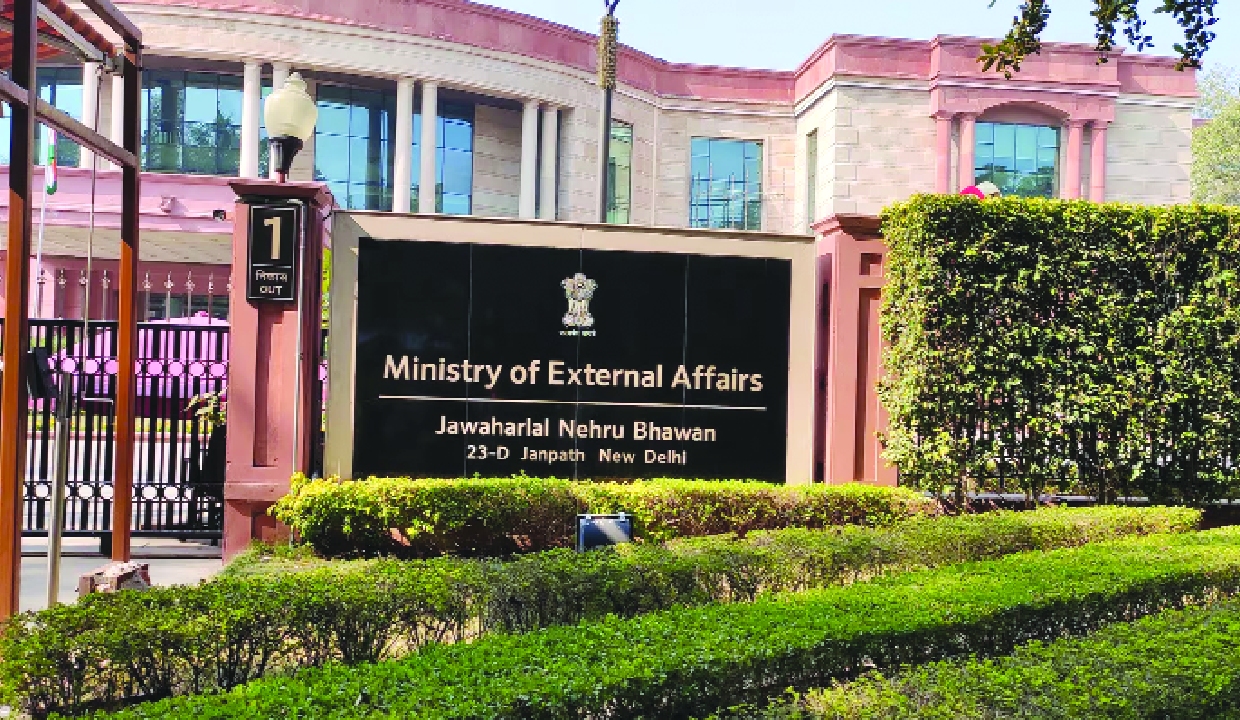
India on Friday strongly criticised the US administration’s decision to suspend the processing of Permanent Labour Certification (PERM) applications for eight major technology companies, warning that the move could affect thousands of Indian professionals seeking permanent residency in the United States.
The Ministry of External Affairs (MEA) also condemned US Vice President JD Vance’s description of foreign workers as “indentured servants,” calling the language “unwarranted and deeply offensive.”
The measures, announced by the Trump administration as part of its efforts to tighten restrictions on foreign workers, cover Infosys, Tata Consultancy Services (TCS), Wipro, HCL Technologies, Microsoft, Adobe, Capgemini and Cognizant. US authorities have also initiated investigations involving several universities.
The PERM programme is an important step in the employer-sponsored green card process. Its suspension is expected to create uncertainty for Indian technology professionals pursuing permanent residency after entering the US on H-1B visas.
Responding to the decision, the MEA said the movement of skilled professionals benefits both countries by supporting innovation, research, productivity and economic growth.
“Talent mobility adds value to both economies,” the ministry said, noting that Indian professionals contribute to the US technology sector while American companies gain access to highly skilled workers.
The ministry added that international talent strengthens corporate competitiveness, encourages job creation, and generates economic value in the United States.
New Delhi described professional mobility as a significant mutual benefit and said the latest restrictions did not support the countries’ shared objectives.
India also emphasised that its skilled professionals in the US contribute to the American economy and innovation ecosystem.
The Indian government took particular exception to Vance’s comments criticising technology companies for employing foreign workers.
Vance alleged that some corporations recruit workers from abroad to replace American employees and reduce labour costs. He argued that such practices could disadvantage domestic workers and questioned the presence of some foreign employees in the country.
India rejected this characterisation, arguing that it failed to recognise the qualifications and economic contributions of Indian professionals.
The MEA also pointed to the historical role of immigration in the development of the United States, stating that generations of immigrants had helped shape the country through their work, entrepreneurship and innovation.
It said the language, which carried painful historical and colonial associations, was deeply offensive and confirmed it would continue monitoring developments related to the restrictions.
Microsoft, one of the companies affected by the US action, defended its employment practices and said most of its H-1B visa filings involved workers already employed by the company.
The technology giant said approximately 80 per cent of the 6,000 H-1B applications it submitted during the previous financial year were intended to extend or change the immigration status of existing employees, rather than recruit new workers.
Microsoft added that applications for new employees involved individuals already legally present in the United States. According to the company, these filings accounted for about 1% of its US workforce.
The company said it supported the American workforce and would provide the administration with additional information about its visa applications.
The suspension of PERM processing does not automatically invalidate existing H-1B visas or change the immigration status of current visa holders and their dependants. However, it could delay or disrupt the permanent residency process for eligible employees of the affected companies.
US Labour Secretary Keith Sonderling announced the restrictions on Thursday, stating that authorities would not accept new permanent labour certification applications involving the companies concerned or continue processing their pending applications.
The action forms part of the administration’s wider efforts to scrutinise the employment of foreign nationals and prioritise American workers.
The affected companies have substantial operations in India and employ large numbers of Indian technology professionals, making the policy particularly significant for Indian workers seeking long-term employment opportunities in the US.
The latest decision comes amid broader tensions between New Delhi and Washington. Relations have faced challenges following US tariff measures imposed last year, disagreements over President Donald Trump’s claims about his role in de-escalating the India-Pakistan military confrontation in May 2025, and increased H-1B visa fees.
Despite these differences, both governments have worked in recent months to stabilise ties and advance negotiations toward a bilateral trade agreement. However, they have not yet reached a final agreement.
Separately, Trump has signed legislation authorising punitive tariffs of up to 100 per cent on imports from countries that purchase Russian oil, potentially affecting major buyers such as India.
The green card processing restrictions add another point of contention between the two countries, particularly given the importance of the Indian technology workforce to US businesses and the wider economic relationship.
India has maintained that skilled-worker mobility should be viewed as a source of shared economic advantage rather than a threat to either country’s interests. The MEA said it would continue to follow the issue as developments unfold.