No more hotel hunts as pod hotel arrives at Anand Vihar Namo Bharat Station
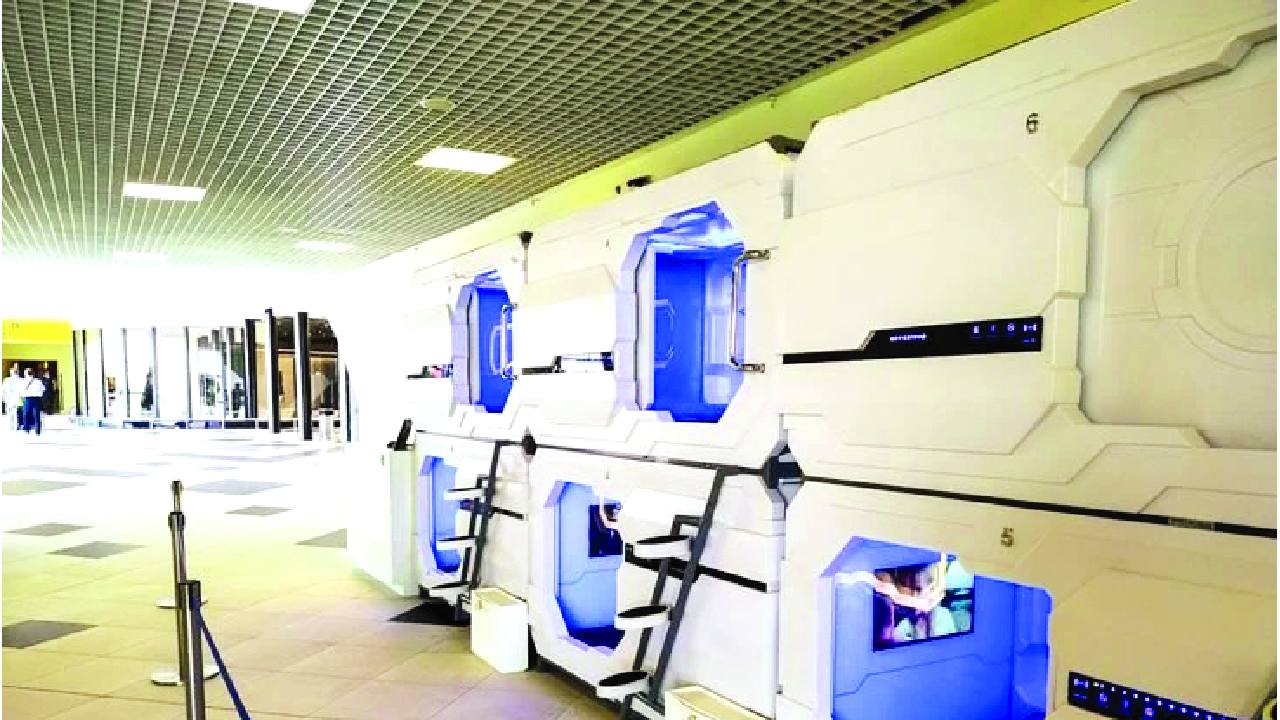
Commuters travelling long distances on trains need not worry about scouring for an overnight stay at a hotel, as the Rapid Rail Transport facility is all set to facilitate hourly accommodation at designated railway stations as part of its no fare revenue expansion model.
Keeping in mind the comfort level of the passengers in to provide them with world class experience, the National Capital Region Transport Corporation (NCRTC) is developing pod hotels with a capacity of 30 beds at the Anand Vihar Namo Bharat station on the Delhi-Meerut Namo Bharat corridor. They can now book a room at pod hotels within the station premises and also enjoy top quality dining experience there.
Giving details about this project, NCRTC officials said, the corporation has awarded the work for licensing of Property Development (PD) Floors at Anand Vihar Station. Besides a fine dining restaurant, the hotel will also have other commuter-oriented commercial facilities within the station premises. The license has been awarded to enhance commuter convenience at one of the busiest transit hubs in the region.
Pod hotels are designed to meet the needs of new-age commuters by offering short-stay, safe and affordable accommodation within the station premises itself.Explaining the rationale for developing pod hotels at Anand Vihar junction, they this interchange station has a high-footfall.
The pod hotel will provide a much-needed resting option for commuters who are travelling longer distances and have a short layover. For instance, a traveller arriving from Meerut on the Namo Bharat train and scheduled to catch a long-distance train from Anand Vihar Railway Station can take a brief rest at the station instead of venturing out to find a hotel. This not only saves time but also offers a convenient and economical alternative, especially for commuters with limited layover periods.
Under the project, a tentative area of more than 4,000 square metres has been licensed. This area is distributed across four locations across different levels of the station, enabling seamless integration of hospitality and commercial facilities within commuter movement zones.
In addition to the pod hotel, the development includes a fine dining restaurant, along with other proposed commercial uses such as food and beverage (F&B) retail outlets, office spaces, apparel stores and similar facilities, aimed at improving overall commuter experience.Anand Vihar Namo Bharat Station is among the busiest multimodal transit hubs in the NCR, owing to its direct connectivity with a Delhi Metro station serving the Pink and Blue Metro lines, the Anand Vihar Railway Station, and two Inter-State Bus Terminals (ISBTs), one on the Delhi side and the other at Kaushambi in Uttar Pradesh.
The Indian Railways station at Anand Vihar is a key gateway for commuters travelling to eastern India, resulting in very high daily commuter movement. Facilities such as pod hotels are expected to benefit commuters navigating long journeys and multiple transfers.This initiative forms part of NCRTC’s broader plan to monetise the commercial potential of the Delhi-Meerut Namo Bharat Corridor, thereby augmenting non-fare box revenue (NFBR).
The Delhi-Meerut Namo Bharat Corridor spans approximately 82 km across Delhi, Ghaziabad and Meerut, passing through densely populated urban centres. A strong emphasis has been placed on multimodal integration, with stations such as Anand Vihar and Sarai Kale Khan enabling seamless transfers between Namo Bharat, Metro, Railways, ISBTs and city bus services. No more hotel hunts as pod hotels arrive at Anand Vihar Namo Bharat Station
Since the commencement of operations, the Delhi-Meerut Namo Bharat Corridor has witnessed steady ridership growth, with over two crore commuter trips completed to date. Currently, 55 km of the corridor with 11 stations is operational, while the remaining sections-including Sarai Kale Khan-New Ashok Nagar and Meerut South-Modipuram, will be commissioned soon. The corridor presently records an average daily ridership of 55,000-60,000, which is expected to rise substantially after full commissioning.