NDMC approves FSSAI, GST registrations as deemed licences
The New Delhi Municipal Council (NDMC) on Wednesday approved a landmark reform to simplify licencing norms by treating FSSAI and GST registrations as “deemed licences” under the NDMC Act. The change comes as a major relief for traders, shopkeepers and small businesses operating in the NDMC area. The decision, cleared at the NDMC Council meeting, is expected to reduce compliance burden, cut red tape and end long-standing confusion faced by thousands of establishments over multiple municipal licences.
Under the new policy, businesses holding valid FSSAI registration or GST registration, along with licences issued under the Delhi Shops and Establishments Act, will no longer be required to obtain separate Health Trade or General Trade Licences from NDMC. Officials clarified that while separate licences will not be mandatory, NDMC will continue inspections to ensure hygiene, sanitation and public health standards are maintained. The deemed licence provision, however, will not apply to cases already pending before courts, which will continue to be governed by judicial orders.
NDMC Vice Chairperson Kuljeet Singh Chahal said the move was aimed at citizen-centric governance in line with the “Viksit Bharat @2047” vision. “This reform will directly benefit ordinary traders and small businesses by simplifying procedures while maintaining public safety through regular inspections,” he said.
Another key decision was the extension of cashless medical facilities to all contractual employees of NDMC and their dependents under the Liberalised Medical Health Scheme. Chahal said this was possibly the first instance in the country where contractual staff of a government body were being given comprehensive, cashless healthcare cover.
Around 878 contractual employees are currently working with NDMC, many of whom have served continuously for 12 to 25 years in roles such as data entry operators, junior engineers, nurses, pharmacists, sanitary inspectors and helpers. With the approval, both employees and their dependents will now have access to quality medical treatment, significantly improving their health security.
The Council also approved an enhancement of financial assistance for regular SC/ST employees under the Hitkari Nidhi Yojana. The assistance for the marriage of each child has been increased from Rs 50,000 to Rs 75,000, for up to two children. Financial aid in case of the death of an employee has also been raised to Rs 75,000.
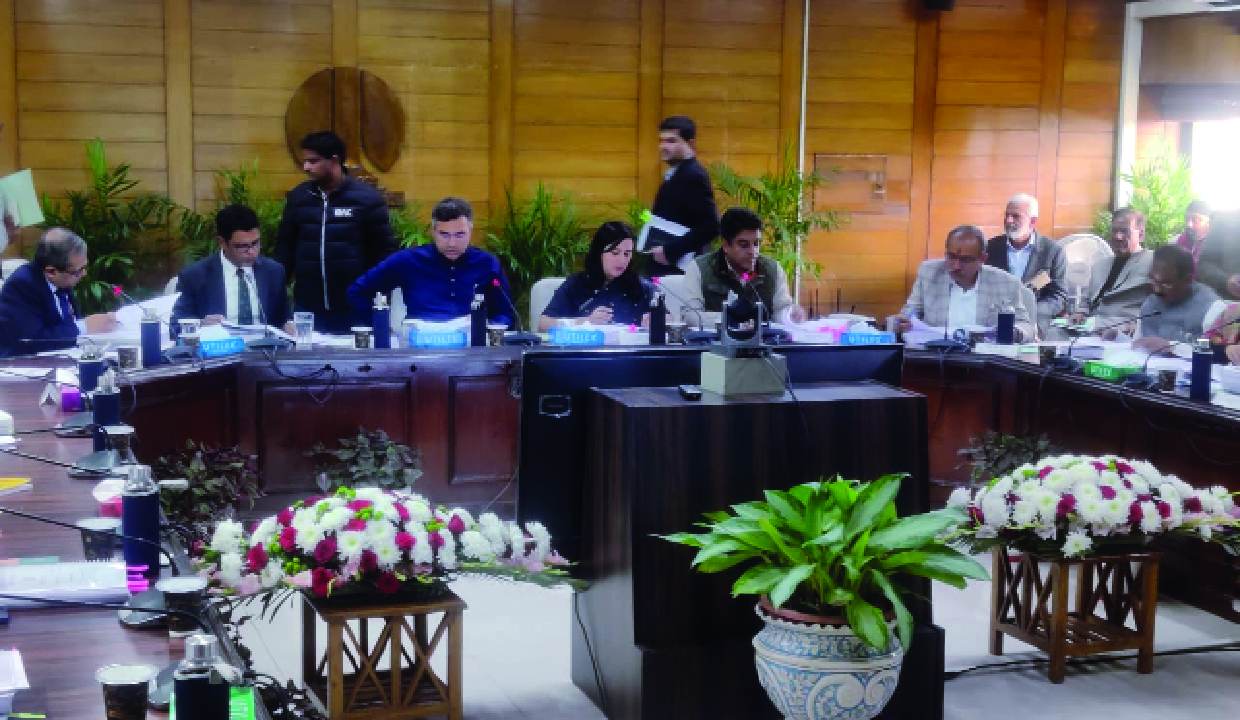
The Council meeting, presided over by Delhi Minister Parvesh Sahib Singh Verma, was attended by NDMC Chairperson Keshav Chandra, New Delhi MP Bansuri Swaraj and other Council members. A wide range of proposals covering health, housing, electricity, water supply, sanitation, sewerage and road infrastructure were approved.
On the health front, NDMC cleared the proposal to levy minimal charges for OPD registration and dental procedures at its Dental Care Clinic at Palika Health Complex, aligning rates with CGHS, AIIMS, Maulana Azad Institute of Dental Sciences and Jamia Millia Islamia. However, the council clarifies that the NDMC employee registration in OPD will remain free of cost.
For employees, the Council approved revised recruitment rules for multiple posts, including bacteriologists, laboratory technicians, dental assistants, law officers, linemen, special educators and medical officers. Amendments to NDMC Pension Fund Regulations, 2023, were also moved forward, with a proposal sent to the Ministry of Home Affairs.
Major infrastructure decisions were also taken. NDMC approved the construction of 160 Type-III staff flats at Pushp Vihar, Saket, at a revised cost of Rs 105.90 crore. Significant investments were cleared to modernise electricity infrastructure, including replacement of ageing 33 kV and 66 kV switchgears, laying of new 11 kV cables, and procurement of 50 MW of renewable power through SECI to meet future demand.
In the water sector, approvals were granted for a new water supply control room at Old RK Ashram Marg, replacement of old pipelines at Pandara Road, installation of smart water meters and misting systems on major roads to control dust and pollution.
The Council also cleared multiple sanitation and sewerage projects, including rehabilitation and replacement of decades-old sewer lines to prevent collapses and improve public health. Large-scale road resurfacing works using modern hot and cold mix technology were approved across key NDMC roads.
Chahal said the decisions taken reflect NDMC’s push towards future-ready infrastructure, simplified governance and improved civic services. “These reforms are meant to directly touch the lives of ordinary citizens by making services easier, safer and more reliable,” he said.