Naxalism eradicated nationwide: Shah
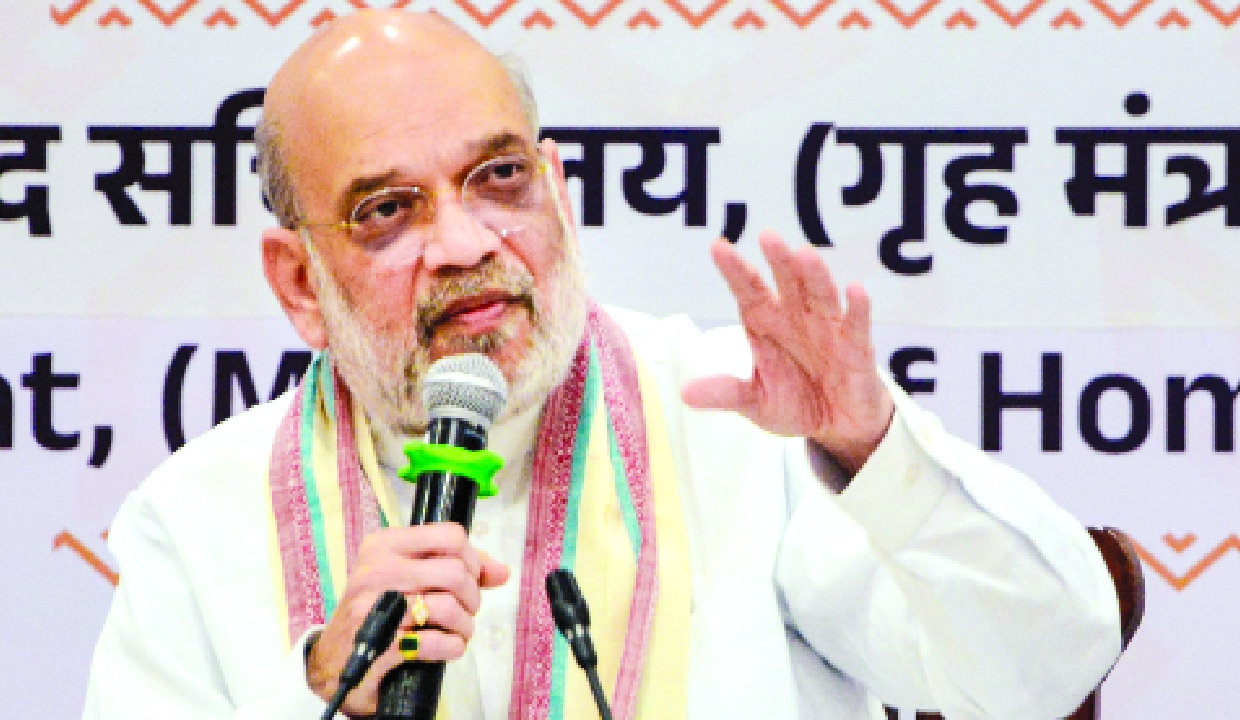
Union Home Minister Amit Shah said on Tuesday that Naxalism has been eliminated across the country, ahead of the Government’s March 31, 2026, deadline. While speaking in Jagdalpur, Chhattisgarh, Shah praised India’s security forces for their bravery and sacrifice, calling this a major step in solving an important internal security issue.
He pointed to three key dates in the campaign against Naxalism: December 13, 2023, when the BJP took office in Chhattisgarh and began a focused effort against the Maoist insurgency; August 24, 2024, when police leaders from all States agreed to work together to end Naxalism by March 2026; and March 31, 2026, which now marks an early victory.
Shah emphasised the importance of State cooperation, noting that most non-BJP Governments supported the central strategy.
The Home Minister criticised the previous Congress Government in Chhattisgarh for failing to cooperate, saying that real progress in the Bastar region began only after the BJP took over in December 2023. “It was after December 2023… that we could eliminate Naxalism in Bastar,” Shah said. He also challenged the idea that Naxalism grew because development did not reach tribal and forested areas, arguing instead that Naxalism itself blocked development.
“The truth is exactly the opposite,” Shah said. “Development could not reach these areas because Naxalism was there.” He noted that some regions were even less developed than Naxal-affected districts but did not experience insurgency because there was no violence or fear.
In places like Bastar and other Red Corridor areas, people were caught in a cycle of fear and underdevelopment. Now that Naxalism is gone, the focus is shifting to rebuilding. Shah said that as of May 19, 2026, former Naxal strongholds are seeing new development, with roads, schools, hospitals, and job programs finally moving forward.
The end of violence has allowed for new infrastructure, mining reforms, and the possibility of tourism in once off-limits areas. This achievement is more than just a tactical win. For over fifty years, Naxalism, which began with the 1967 Naxalbari uprising, caused thousands of deaths and disrupted life in nearly 100 districts across several states.
The success is the result of ongoing efforts by the Central Reserve Police Force, state police, and intelligence agencies, supported by political determination and inter-State cooperation. Ending Naxalism early also frees up resources that were used for counterinsurgency. While some may question the timing or political motives, the reality is that fear has lifted from many villages.
“Tribal communities can now access markets, education, and Government services without fear of violence. Development will now be the priority, with plans for roads, electricity, skill centres, and forest rights moving ahead”. Shah’s announcement marks a major shift in India’s internal security. Ending Naxalism removes a challenge that has troubled Governments since Independence.
“The next challenge is to make sure development reaches all parts of the former Red Corridor quickly and fairly. The bravery of security forces has made this possible, but the real test will be turning peace into lasting prosperity. India is now more secure and united. Ending Naxalism ahead of schedule is not just a security win; it is a promise of growth for the country’s most vulnerable regions. The coming months will show how this victory leads to real change,” Shah said.
The Shah outlined upcoming development programmes for the region. The Ministry of Home Affairs (MHA) established about 200 security camps in Bastar, with nearly a third to be converted into ‘Veer Shahid Gundadhur Seva Dera,’ aimed at supporting regional service and development. He said the aim of the ‘Veer Shahid Gundadhur Seva Dera’ initiative is to link Bastar with development. A credit society and a village dairy will be established to support local livelihoods. Each tribal household will receive a cow and buffalo for cooperative marketing, allowing women to supply milk.
“Prime Minister Narendra Modi had called for special efforts to formulate schemes to preserve and promote tribal culture,” he said. Shah said the initiative provides a platform for tribal culture, including dance, song, language, attire, cuisine, and handicrafts. He said two Bastar Olympics have been organised, with participation from 3.94 lakh players, including many former Naxals who have accepted rehabilitation. Shah said these developments mark the end of Naxal influence and the start of a new phase for Bastar.