My True Identity
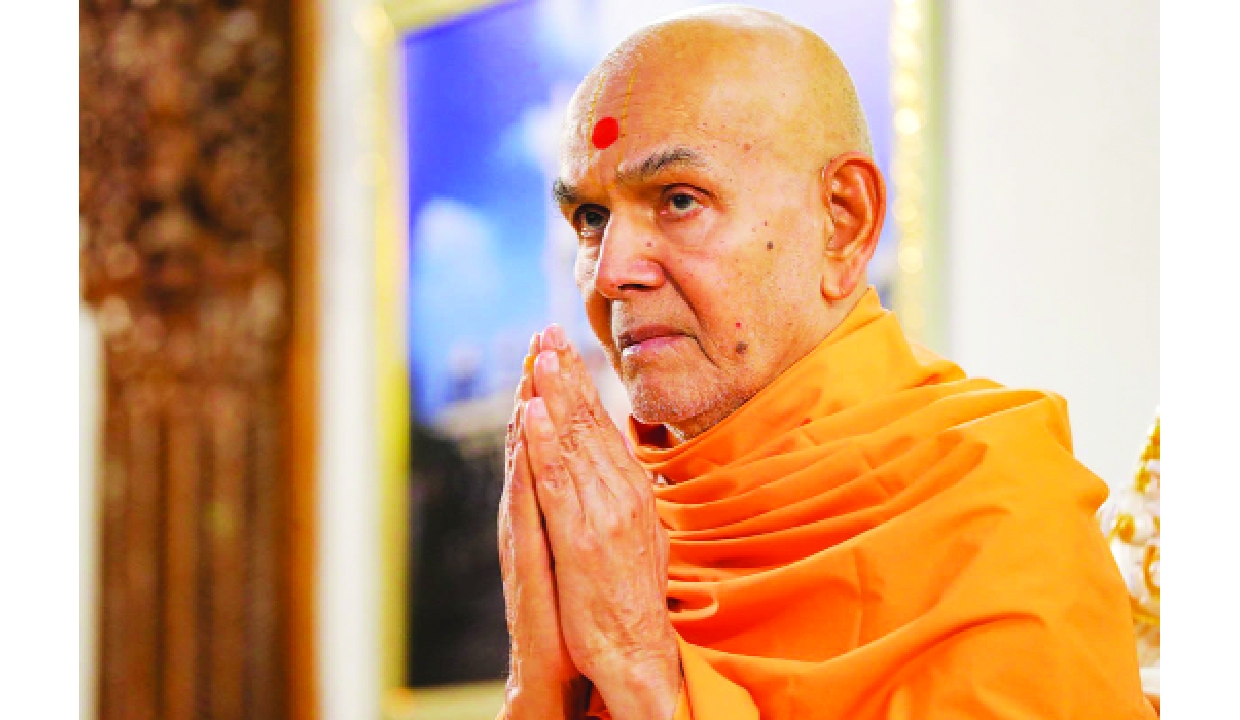
Names, professions and achievements may define how the world recognises a person, but they cannot define the real self. The body changes, circumstances shift and accomplishments fade, yet the atman remains eternal and indestructible
The greatest crisis facing the world today is not economic or political; it is a crisis of identity. Humanity is searching for an answer to one fundamental question: “Who am I?” Unfortunately, most people are looking for that answer in the wrong places. Some define themselves by their caste, others by their cult, language, nationality, profession, wealth, social status, or physical appearance. This mistaken understanding of identity has become one of the deepest causes of personal suffering and global conflict.
Consider this: if you lose your job, does your identity disappear? If a doctor is stripped of his title, an engineer of her degree, a businessperson of his wealth, an actor of her fame, or a political leader of power, do they cease to exist? Certainly not. These are not their true identities; they are merely roles and introductions. Yet, in today’s world, people have confused their introductions with their identity.
This misunderstanding has filled history with division and conflict. Most wars have not been fought because people were human beings, but because they identified themselves with external labels: state, race, language, cult, ethnicity, or political ideology. “My state,” “my community,” “my cult,” and “my people” have often become walls that separate one human being from another. If these external identities were the ultimate truth, then in this age of unprecedented scientific progress and technological advancement, violence should have disappeared long ago. Instead, conflicts continue because humanity still has not discovered its true self.
At the heart of this confusion lies another illusion: people mistake the body for the self. Consequently, the world has become obsessed with physical beauty, appearance, and attraction. A compliment about one’s appearance inflates the ego, while criticism can shatter one’s confidence. If the body is who I am, then praise of the body becomes my honor, and criticism of it becomes my humiliation. But is the body permanent?
The body you possessed as a child no longer exists. Science tells us that most of the body’s cells are continually replaced over time. If the body is constantly changing, then who is the unchanging “I” that has witnessed every stage of life, from childhood to youth and beyond? There must be something deeper than the body, something constant amidst all change.
The Bhagavad Gita provides a profound answer: You are not the body; you are the atman (soul). The body is merely a garment, while the atman is its eternal wearer. Positions change, circumstances change, relationships change, and even the body changes, but the soul remains unchanged. It is neither born nor does it die. One who understands and lives with this awareness gradually rises above fear, insecurity, pride, jealousy, and hatred.
This is the true identity of every human being.
The need of our time, therefore, is not to create a new identity but to rediscover the one we have forgotten. We may be doctors, engineers, administrators, entrepreneurs, artists, or political leaders. We may be Indians, Americans, or citizens of any nation. We may be young or old. Yet all these are temporary roles we perform throughout life; they are not our essential nature.
An actor may portray a king in one play, a beggar in another, and a scholar in a third. Yet, once the curtain falls, the actor returns to his true identity. Life is much the same. We perform many roles on the stage of the world, but beneath them all lies our unchanging spiritual identity.
His Holiness Mahant Swami Maharaj reminds, “Self-realization is not merely a philosophical concept; it is the greatest science of inner peace.”
On 3 March 1820, at Gadhada (Gujarat), when Muktanand Swami asked Bhagwan Swaminarayan how one could remain composed amid lust, anger, greed and fear. Bhagwan Swaminarayan answered: “Firm realization of the atman as distinct from the body is the key to inner composure.”
The day a person truly realises, “I am not this body; I am the eternal soul,” the inner war begins to end. The roots of external conflicts lie in this inner confusion about who we really are. Therefore, what the world needs today is not merely more sophisticated technology, but a deeper spiritual vision.
While modern psychology speaks of self-acceptance, Indian spirituality goes a step further; it guides us from awareness of the self to devotion to the Supreme Self. In other words, genuine peace does not arise merely from accepting ourselves as we are, but from recognising our eternal spiritual identity and cultivating a living relationship with God.
Thus, my true identity is not my body, my profession, my social status, or any external label. My true identity is that I am a pure, conscious, eternal Atman. This realisation brings peace to the individual, love into relationships, and transforms humanity from a culture of conflict into a civilisation of cooperation, compassion, and lasting harmony.
The Bhagavad Gita provides a profound answer: You are not the body; you are the atman (soul). The body is merely a garment, while the atman is its eternal wearer
Dr Swami Gyanananddas is a dedicated follower of the Swaminarayan tradition and has earned a PhD from MS University; Views presented are personal.