Independence Day Special
Our youth are dynamic, enthusiastic, focused, and full of potential. There are times when that energy gets depleted, and we need to renew and uplift it.
It is drugs that deplete our life energy. But why do people turn to drugs in the first place?
Nobody likes to live with stress. Some turn to drugs simply to get relief from stress. Some are saturated with what they see, hear, smell and experience. Some are searching for happiness, love or an altered state of consciousness. Beneath all these searches is one longing: to feel something more, to experience a thrill beyond the ordinary.
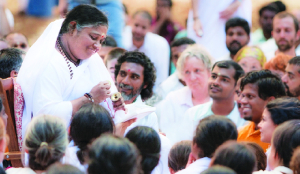
My answer to the youth looking for such a high has always been simple- come here, we will give you a better high-a high that you will never want to get rid of.
It is the high of creativity, of service, of unconditional love. When you taste even a little of this, you discover that you don’t need anything outside yourself to feel alive. You begin to experience a joy that does not deplete you, but gives you more energy. That is the real high-the one that does not take life away from you, but gives you more of it.
I believe our young people are sitting on an inheritance that they are learning to value. India is a world leader. Consider what this country holds. India is very highly placed in several fields, starting with spirituality, Ayurveda, and yoga. Worrying doesn’t make any difference, but working does, and spirituality gives one the strength to work. India has always shown light to the world, leading the world towards the path of peace. Yoga, too, is more than a physical exercise; it is a study of life, a study of the body, breath, mind, intellect, memory and ego, a study of our own inner faculties. Ayurveda reminds us that health is not mere absence of disease; it is the dynamic expression of life itself.
Every state and province in our country has a unique and different cuisine, dance styles, and dressing styles, and they celebrate festivals in their own unique way too. Every few kilometres, the dialect, food and culture change.
When we organised the World Culture Festival in Delhi, nearly 40,000 artists shared one stage. People from every part of India came to display their art, and the world was shocked to see it. One-third of the world’s population was connected to that festival in some way, across seven lakh locations. This is why India’s cultural diversity cannot be replicated anywhere else on earth.
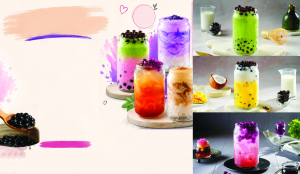
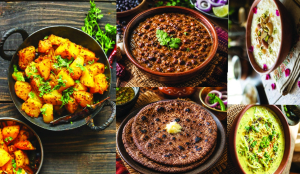
And similarly, our cuisine is so diverse. When we organised the Annam Brahmam festival, fifty-six thousand different dishes were prepared, from Tripura to Kerala, dishes most of us have never even heard of. Ask for Putharekulu in Hyderabad, and you will get a sweet dish tucked inside rice wafers as thin as paper. In Maharashtra we call it Anarasa. Ask for Mandapeta, and they will send you to Orissa. There, ask for Channa Poda, and you’ll get a sweet found nowhere else. When we visited the tribal belt, we were served a meal of 108 different dishes. This cuisine has never been given the platform it deserves. Abroad, the world knows only the samosa and gulab jamun, when we have a treasure trove here.
Our garments and jewellery have the same richness. Every piece has its own name, its own form, its own beauty and a story from the region it comes from. In every state, there are different kinds of necklaces — one close to the neck, another long, each with its own charm. The same is true of our garments. Every state has its own colours and styles.
This diversity is a very special gift of our country. But today, we are slowly forgetting it. Instead of appreciating what is our own, we are simply imitating what has been created somewhere else.
And then there is tourism. Greece is a small country, yet twelve million tourists visit it every year to see pillars and old temples. India has ancient sites, monuments rich in history and architecture, and knowledge we are not taking full advantage of. If you go to Switzerland, you cannot go to the beach; you can only go skiing. But if you go to Spain, you can go to the beach, but you cannot go skiing. In India, you have all the possibilities. We have beaches, and we have ski slopes in the same country, a possibility very few nations on earth have. But we need to improve our infrastructure, our connectivity, our facilities, because these are what hold us back.
This is the India our youth must fall in love with, not a borrowed idea of glamour from somewhere else, but the depth that already belongs to them.
Which brings me back to why so many of our young people are being drawn away from this richness and towards addiction. For those who have not yet gone towards drugs, we must create a barrier in their minds. When they see the condition of those who have been caught in addiction-unable to sit, unable to get up, unable to see properly-they understand where this path leads. A barrier forms in the mind. And for those who have already gone there, we will not reject them. We will bring them back with love and care.
There are two extremes seen in our young people today. One is that they consider this act of taking drugs as heroic, and it fills them with false pride. On the other hand, getting addicted to drugs has stigma attached to it that affects them and their self-esteem begins to shrink. Both groups are suffering. If we are to help them, we have to encourage society to embrace those who are struggling rather than keep them at a distance. Those who are taking drugs are still our own. When we create a sense of belonging, people stop falling into guilt and self-pity.
The secret in overcoming the addiction and need for a high really lies in something every one of us already possesses and rarely uses- our own breath. A few minutes of pranayama and a little meditation can bring a sea of change to a young person’s mind, fill them up with energy, enthusiasm and love. It does not take much effort, only willingness.
My dream has always been a society free from violence, a body free from disease, a mind free from confusion, an intellect free from inhibition, and a soul free from sorrow. This is the birthright of everybody. I would like to see a smile on everyone’s face.
We are all of the same light, the same consciousness. If we are united with that consciousness, then we do not feel like strangers; we feel like family. This is what each youth needs to know today: that they are not alone; they are part of this big family, this one consciousness. And there is no lack, no lack of anything in life.