MCD presents surplus budget for FY 2026-27
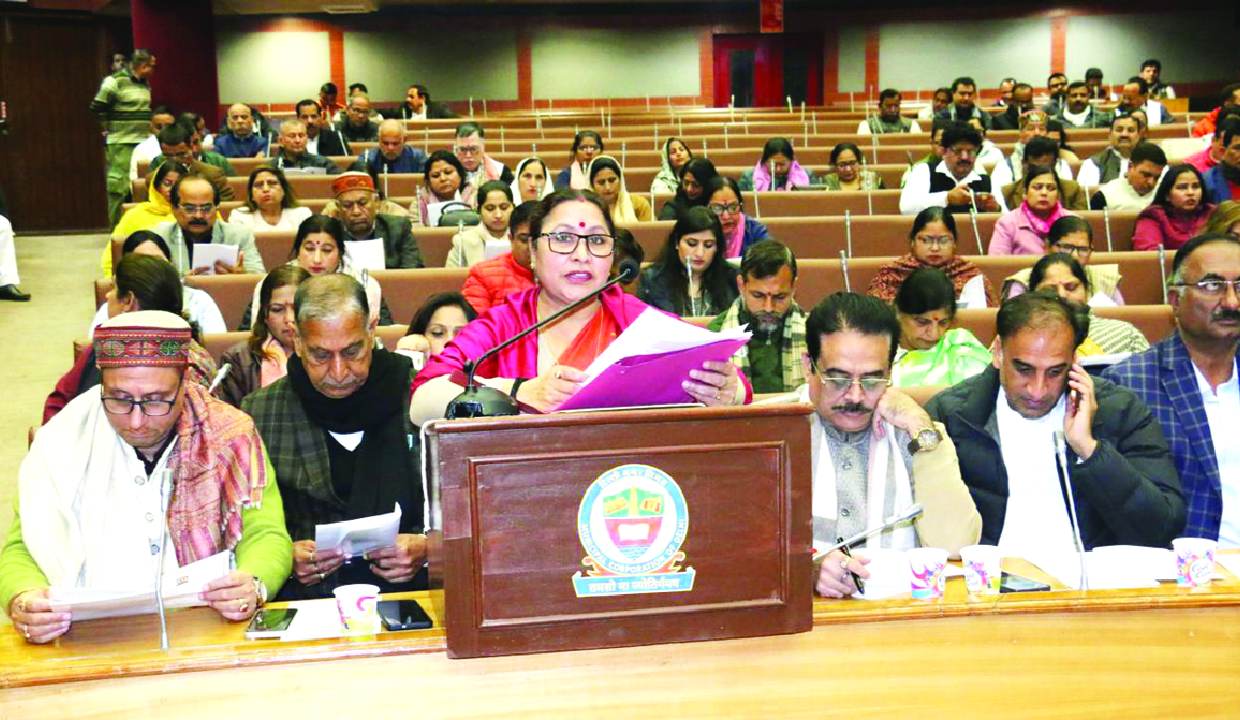
The Municipal Corporation of Delhi (MCD), possibly for the first time, on Wednesday presented a surplus budget for the financial year 2026-27.
The civic agency targeted an income of over Rs 17,000 crore, while expenditure is estimated at Rs 16,697.56 crore. In the Revised Estimates for FY 2025-26, an income of Rs 15,679.72 crore and an expenditure of Rs 16,305.19 crore are projected.
To control the air pollution, the MCD has announced it will constitute a “Group of Departments” by bringing together all concerned departments, led by a Senior Additional Commissioner. This group will prepare year-round action plans, monitor their implementation, and ensure timely and effective execution. The group will take concrete steps on road dust control, monitoring construction sites, waste management, increasing green cover, and action against pollution-causing sources.
To enhance MCD’s revenue, property tax will be collected from all eligible premises. At some locations, advertising rights were granted in the name of maintenance, while at others, advertisements were installed illegally. Now, a regulated advertising system will be implemented at all such facilities, which is expected to generate Rs 250 crore in additional revenue.
After clearing the Bhalswa, Ghazipur, and Okhla sanitary landfill sites, the reclaimed land will be developed with green spaces, public amenities, and development projects. Organic gardens, green zones, and community spaces will be created at these locations. The “One Road — One Day” scheme will be launched, under which one major road in each zone will undergo comprehensive redevelopment every day.
All garbage dumps and compactors will be removed from major roads. In each ward, vacant plots will be developed into fenced sites, covered containers, or mini transfer stations. Strict contractual conditions will be imposed on private waste collection agencies, and door-to-door garbage collection will be further strengthened. Suction-cum-jetting machines will be deployed for effective cleaning of drains in narrow lanes and unauthorised and regular colonies.
Three bio-methanation plants are being set up for wet waste processing. A 100 TPD plant at Ghogha became operational in September 2025, while a 300 TPD plant at Okhla and a 350 TPD plant at Ghazipur will be commissioned by December.
A 200 TPD biogas plant at Nangli Dairy is already operational, while plants of 200 TPD capacity each at Goyla Dairy and Ghogha Dairy will become operational by March. Waste-to-energy plants of 3,600 TPD at Narela-Bawana and 3,000 TPD at Ghazipur are proposed and are expected to be completed by December 2028.
The capacity of the Okhla waste-to-energy plant is being enhanced from 1,950 to 2,950 TPD, to be completed by March 2027. The Tehkhand plant capacity is being increased from 2,000 to 3,000 TPD, to be completed by December 2027. After completion of these projects, dumping of waste at landfill sites will be nearly eliminated. A construction and demolition (C&D) waste processing plant is proposed at Tehkhand, along with the construction of 12 new fixed compactor transfer stations.
For a green Delhi, solar panels are being installed in all corporation offices and schools. Currently, 60 per cent of Delhi’s streetlights operate on solar energy, and the target is to convert all streetlights to solar power.
Modern toilets will be constructed at all markets, bus stops, and public places. Parking facilities will be ensured in every market.
A master plan will be prepared to make Delhi green and lush. Trivenis will be developed on vacant MCD land, where banyan, neem, and peepal trees will be planted together to provide shade, beauty, and environmental protection.