Marvels of India - The Chola Navy
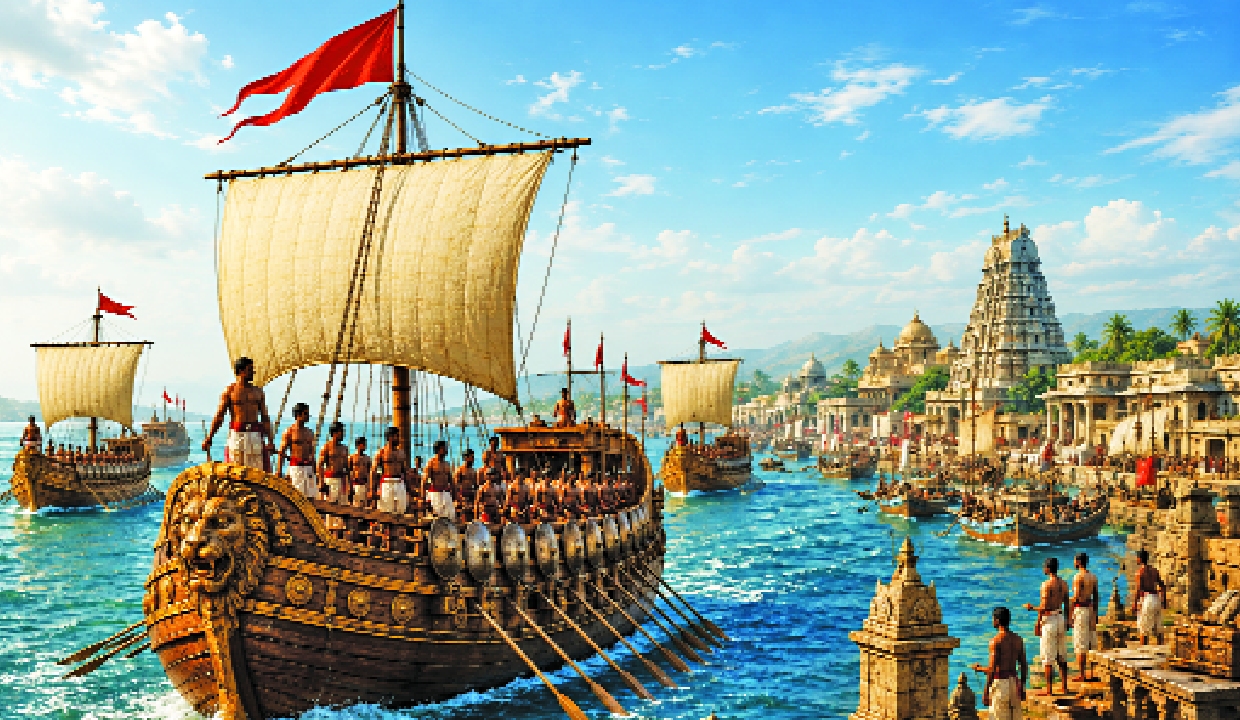
Guarding the Ocean
The Chola empire, unlike most of its contemporary political powers, treated the control of sea routes as central to the state security. Controlling maritime expanse meant controlling revenue and the present-day Bay of Bengal was a contested space where rivals, pirates and regional kingdoms regularly threatened commerce and coastal holdings. This made naval capability, apart from land defence, essential to the state survival.
Ports as Strategic Assets
Nagapattinam, Kanchipuram and Puhar functioned simultaneously as commercial hubs and military outposts, safeguarding maritime interests against rival kingdoms and foreign incursions, and providing the Cholas with forward bases to project deterrence across the Bay of Bengal.
Strategic Deterrence Beyond the Coastline
When the Srivijaya empire (present-day Sumatra) intervened on behalf of Tambralinga (an ancient Malay kingdom), threatening Chola trade routes to China, the Chola emperor Rajendra I dispatched fleets in 1017 CE and 1025 CE to secure the harbours of the Strait of Malacca and protect Chola commerce from disruption. It was a calculated security response rather than an unprovoked conquest, since no lasting Chola annexation followed.
A Template for Modern Maritime Security
The Chola approach, i.e., fortified ports, merchant-guild coordination and rapid naval response to threats against trade, anticipated principles that Bharat's naval forces still apply today in securing the Indian Ocean Region.