Markets tank as oil and gas infrastructure hit in West Asia
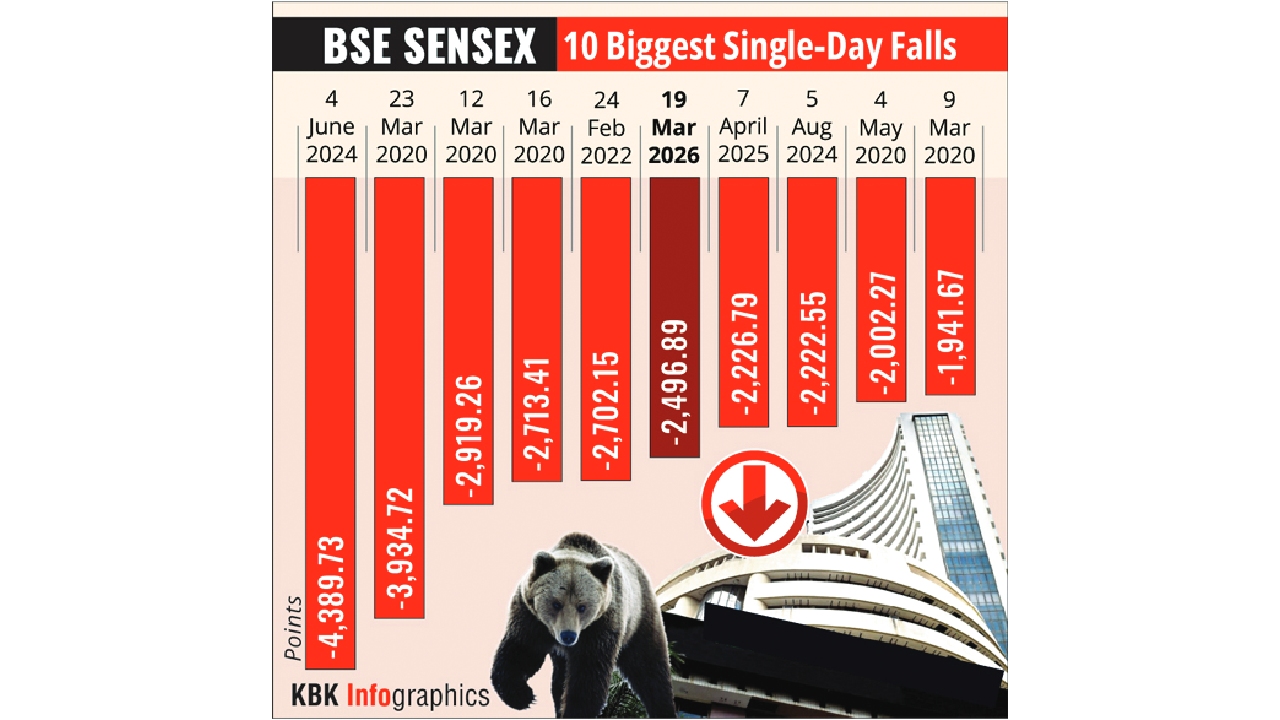
Global markets fell sharply on Thursday as the escalating conflict in West Asia triggered a full-blown energy crisis, with crude oil prices surging past $100 per barrel. India’s benchmark Sensex fell more than 2,500 points, wiping out approximately INR 12 lakh crore in market value in a single session.
Experts say the crash is the most severe energy-driven market collapse since the 1970s Oil Crisis. Stock exchanges worldwide have been on edge since February 28, 2026, when US-Israel strikes in Iran killed Supreme Leader Ayatollah Ali Khamenei and other top officials. In retaliation, Iran intensified missile and drone attacks across Gulf Cooperation Council (GCC) nations, targeting oil and LNG facilities, airports, hotels and civilian areas.
The closure of the Strait of Hormuz to US-allied shipping by Iran has cut traffic by 90 per cent, halting the transit of 8-10 million barrels per day and sending insurance premiums soaring. Limited rerouting through pipelines or the Cape of Good Hope cannot compensate for the shortfall. Brent crude briefly traded between $100-$103 per barrel, up from around $70 before the conflict.
The spike in oil prices reverberated across global markets. On March 12, the Dow Jones Industrial Average plunged 739 points (1.56 per cent), the S&P 500 fell 1.52 per cent, and the Nasdaq Composite dropped 1.78 per cent, erasing roughly $1 trillion in market capitalisation in a single session. Broader indices have declined 2 per cent-5 per cent since the war began, with technology, transport and consumer stocks among the hardest hit.
Asian markets have suffered the sharpest declines. South Korea recorded its biggest single-day loss since 2008, while Hong Kong’s Hang Seng and other regional indices tumbled amid fears of energy shortages affecting import-dependent nations like China, India, and Japan. European bourses, including the FTSE 100, CAC 40, and DAX, posted repeated daily losses of 1 per cent-2 per cent, with cumulative declines of 4 per cent-5 per cent in worst-hit sessions.
India’s vulnerability is acute, as 85 per cent-90 per cent of its crude oil is imported, with over half sourced from the Middle East. Each $10 rise in crude prices adds roughly $13-14 billion to the annual import bill. The sharp oil spike has already weakened the Indian Rupee, while analysts warn of a widening Current Account Deficit (CAD), potentially rising to 1.9 per cent-2.2 per cent of GDP in FY27 from under 1 per cent earlier projected. Retail fuel prices may climb further, pushing Consumer Price Index inflation up 25-75 basis points, with FY27 headline inflation projected at 4.1 per cent-5.5 per cent. GDP growth could slip 15-40 basis points to 6.6 per cent -6.8 per cent if the crisis persists.
Finance Minister Nirmala Sitharaman said the impact on inflation remains “not substantial” so far, while Chief Economic Adviser Anantha Nageswaran warned that sustained $100-plus crude could widen fiscal and current account deficits.
Economists caution that prolonged closure of the Strait of Hormuz could push Brent crude to $150-$160 per barrel within months, triggering stagflation reminiscent of the 1970s, with higher inflation, slower growth, and tighter monetary policy. Airlines, emerging markets, and energy-intensive industries are already under pressure.
While brief market rallies occurred on talks of US naval escorts or diplomatic engagement, Iran’s leadership has vowed to keep the waterway closed until its demands are met, prolonging attacks on shipping. The global financial turbulence reflects a direct economic consequence of the geopolitical chokehold on one of the world’s most vital energy arteries.