Machha Jataka (The fish jataka - No. 75) The Pali Canon
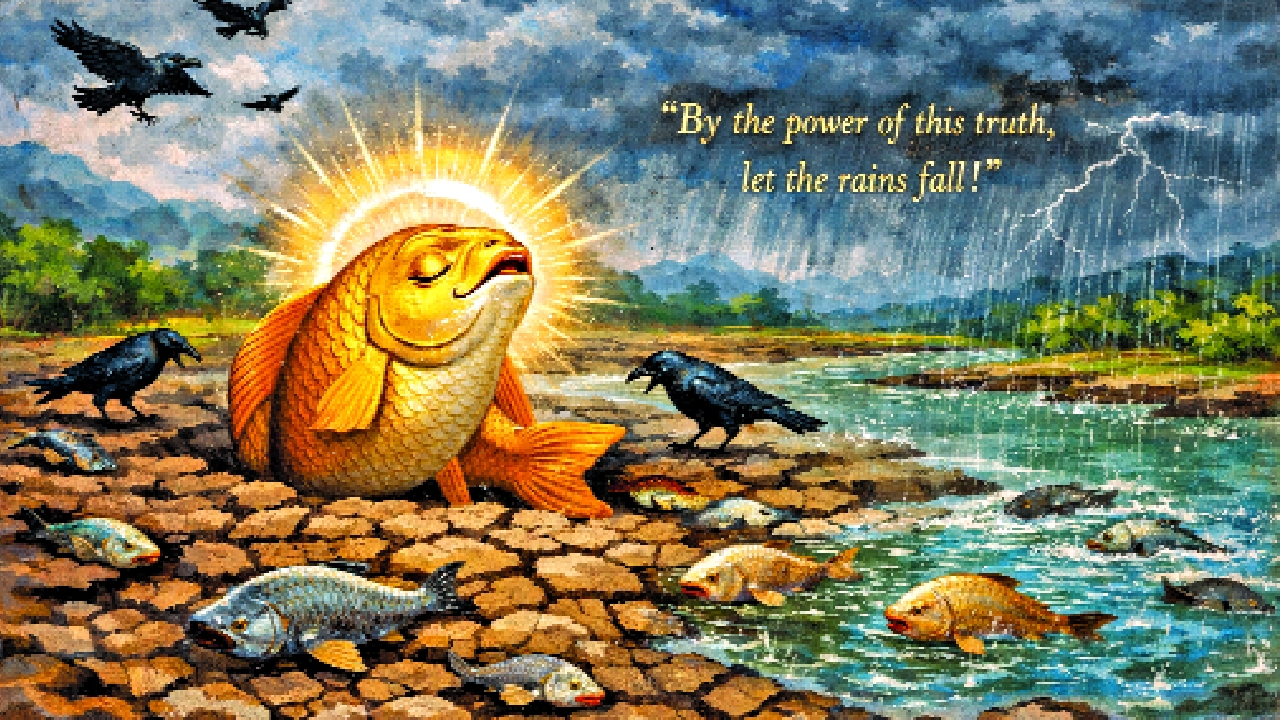
The Jataka tales are a well-known and much loved part of Theravada Buddhist literature that depict earlier incarnations of Gautama Buddha. The Maccha Jataka (the fish Jataka) is one of the most illustrative examples of the Sach-kriya (the act of truth.) In a previous life, the Bodhisattva (the Buddha-to-be) was born as a king of fish in a pond in Kosala. A severe drought occurred. As a result, the pond dried up and the mud cracked. The fish started dying. Taking advantage of the opportunity, crows began circling to pick up the gasping fish. Seeing this, the Bodhisattva rose to the surface to salvage the situation. He did not plead with the gods, instead he relied on his virtue. He made a declaration to the entire universe, “In my entire life, I have never intentionally harmed a single living being. By the power of this truth, let the rains fall.” Legend has it that the sky immediately darkened, and a torrential downpour saved the pond and all its inhabitants.
Moral of the Fable
Highlighting the power of truth (Sach-kriya), the story suggests that the universe responds to absolute honesty. The Bodhisattva didn’t perform a ritual or a sacrifice. Instead, he took recourse to morality. He stated a fact about his character, and the sheer strength of that fact forced the natural forces to surrender.