Blasé Capital MASKA MAAR KE
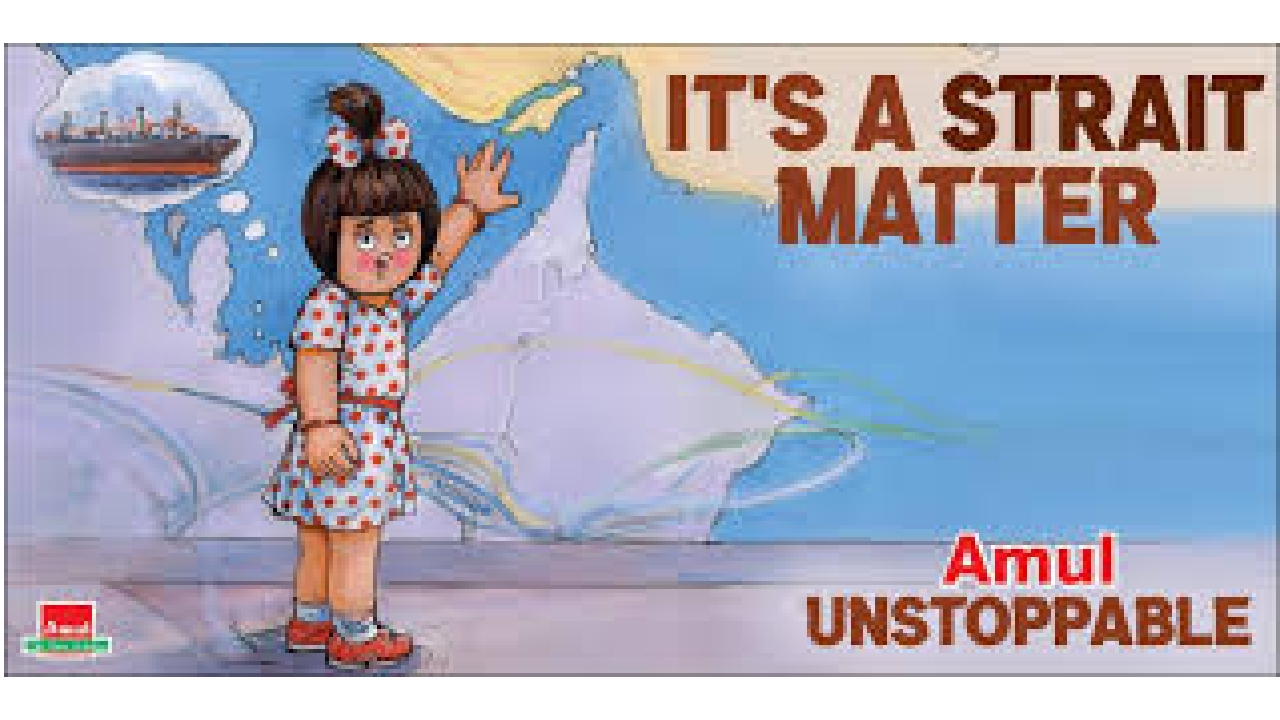
In 2025-26, the annual turnover of dairy major, Amul, crossed the INR 1,00,000 crore milestone. The polka-dotted Utterly-Butterly girl is ecstatic, both with the revenue mark, and longest-running advertising campaign in the world. The annual growth in the last financial year was 11 per cent, which took the topline figure from INR 90,000 crore in 2024-25. According to a press release of the Gujarat Cooperative Milk Marketing Federation (GCMMF), “The surge is powered by a massive product portfolio of more than 1,200 product packs, a vast distribution network, and a rapid adaptation to the evolving needs of modern consumers.” For most consumers, across generations, including Gen Z, the brand marks possibly the most successful Indian-global entity, apart from, say the Tata and Reliance groups. If the Tata products are used by Indians, from morning till night, as one writer said, the Amul portfolio, as is the punchline, represents the taste of India, and possibly the world. The products are exported to more than 50 nations, which include the US, Gulf nations, and parts of Africa and Asia.
Most people may not know that Amul started a year before India’s independence, in 1946, when Tribhuvandas Patel approached Sardar Patel on how to combat the unfair trade practices of the traders and agents in Gujarat. The latter Patel asked the former one to start a cooperative to combine the strengths of the farmers. Morarji Desai, who decades later became the prime minister, advised on how to achieve this objective. Three years later, the legendary Verghese Kurien, joined as a general manager, and later created the Milk Revolution, and took the brand to unprecedented heights. In 1955, the original Kaira cooperative became Amul, or the acronym for Anand Milk Union Ltd. The polka-dotted ad campaign began with the entry of Sylvester da Cunha, the master-creative advertiser, who came up with the idea of a naughty, mischievous little girl as the buttery mascot. In the 1970s, Amul, the cooperative became part of GCMMF, with Patel as the chairman, who was replaced by Kurien in the early 1990s.
Hence, Kurien’s leadership coincided with the reforms period. During the 1990s, as liberalisation came in, thousands of Indian brands were either decimated, or shrank into the background. Foreign brands, whose imports were restricted due to unusually-high import duties, ruled the roost. Indian business families scurried from one end to the other of their corner rooms in a bid to come up with a survival-profitable strategy. Many old firms died, or were paralysed, new firms entered the fray, and some of the iconic business groups managed to sail through. Amul was one of the success stories. It held on its own, despite the growth of foreign brands. Indeed, as prosperity grew, incomes were higher, the Amul products expanded in volumes and values. Kurien guarded the citadel with his might, and used politics, economics, and business insights to compete with the foreigners. He won many battles in the corridors of power, corner rooms, board rooms, and marketplaces. He was never afraid of competition, even as he used every tactic in the book, and under the sun, to keep the foreigners at bay.
For example, a Google search indicates that before he became the chairman, and when Amul was in its infancy as a business, Kurien was among the proponents to save Indian brands. He argued against the ‘dumping’ of milk powder via cheap imports, which hurt the farmers’ interest. He used the cultural effects to change the nation from eating cow-based products to buffalo-based ones. This proved to be a hit in a nation because of religious connotations. In the 1950s, when an iconic foreign brand refused to manufacture condensed milk locally, Amul did it, which allowed the Government to ban imports. Even when Europe wished to ‘gift’ milk powder to India, with allegations that it wanted to capture the market, Amul persuaded the Government to allow regulated imports through NDDB, which would sell it at market rates. This saved Amul from cheap imports, and the profits were used to finance the White-Milk Revolution, which enhanced the powers and profitability of the farmers and cooperatives. Thus, Amul, in some senses, led the cooperative revolution, along with NDDB.
During the reforms period, there was political pressure to allow free entry of the MNCs, and privatise state-owned and state-funded entities. As the public sector went under the private hammers, and were sold out, Kurien lobbied strongly to save the dairy sector from the MNC onslaught. He urged that this would result in backdoor privatisation of the dairy sector. His loyalists emphasised the politics of the dairy sector, and how the farmers were a huge vote bank. “Through these efforts, Kurien created a system where India stopped importing milk, and started exporting it, transforming a cooperative of small farmers into a multi-billion-dollar entity,” shows a Google search. From there, it was only a matter of time before the Amul brand clocked the INR 1,00,000 crore annual turnover. One needs to remember that even today, even as India discusses a bilateral trade deal with the US, and inks similar ones with the other nations, the protection of the dairy sector from imports is a top priority among the policy-makers.