Historic reunion as Buddha relics return to Ladakh: Shah
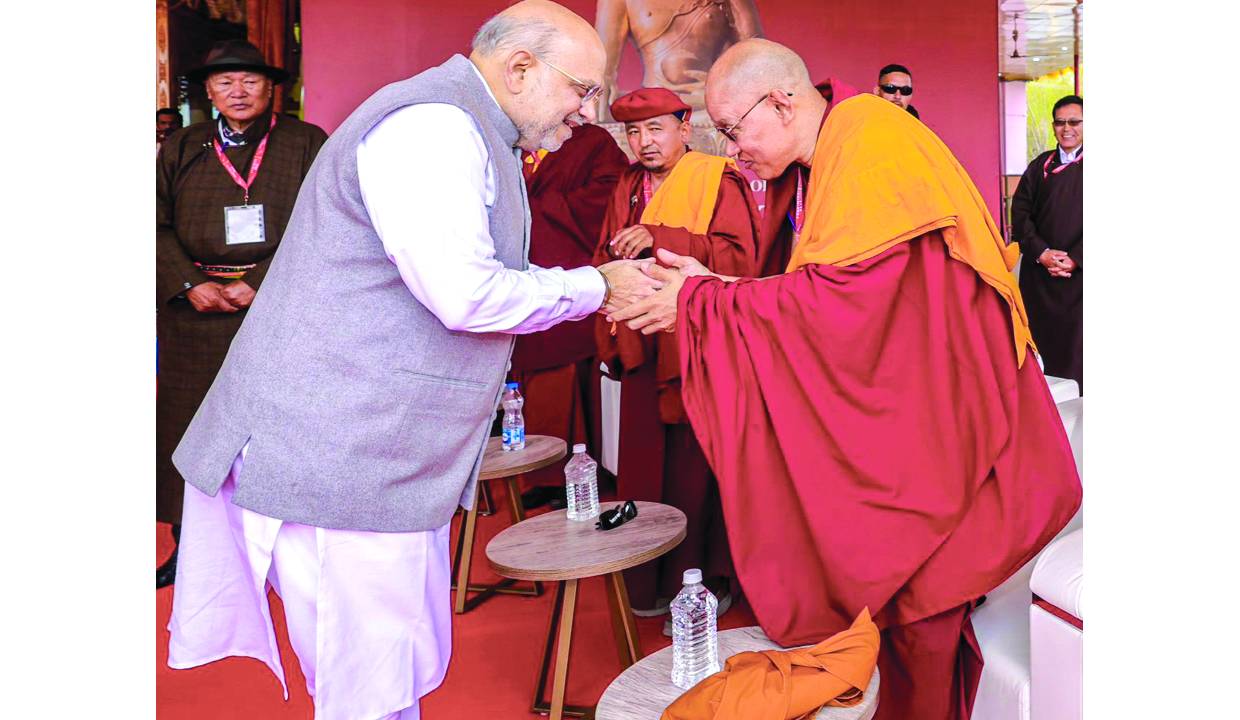
In the land of high passes in Ladakh, where the mountains seem to touch you and are quieter than the rest of the country, the Sacred Exposition of the Holy Relics of Gautam Buddha has brought with it a different kind of stillness.
For the first time, these sacred relics, usually housed at the National Museum, were brought to Ladakh for public viewing, shifting something intangible in the landscape itself.
At Jivetsal Ground in Leh, the experience began long before the relics were shown. The fever and the love for Lord Buddha were seen on every face. Each one holding a Khatak, a traditional Tibetan Buddhist ceremonial scarf, symbolising purity to offer to the relics.
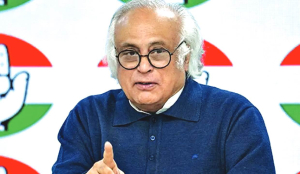
Union Home Minister Amit Shah, who was present on the solemn occasion, described the return of sacred relics of Lord Buddha to Ladakh after 75 years as a “historic reunion” and said that the Union Territory has remained a “living land of dharma” that preserved and nurtured Buddhist knowledge for centuries.
Ladakh LG Vinai Kumar Saxena emphasized that the event reflects the region’s spiritual energy and would contribute to the growth of eco-spiritual tourism in Ladakh. The queues were long, yet no one seemed restless. People waited quietly along the roads, prayer beads in hand, some murmuring chants under their breath, others simply watching the mountains.
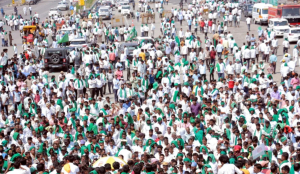
Nearly 20,000 people, including monks from different regions, gathered in an overwhelming turnout that stretched across the open grounds. From school children in uniform to elderly devotees leaning on walking sticks, everyone seemed drawn by the same quiet pull.
Many sat down on the bare ground, bracing against the cold Ladakhi winds, waiting patiently for hours just for a glimpse of the relics. It wasn’t just attendance; it was collective devotion made visible.
“Om Mani Padme Hum” echoed softly across the gathering, the chant rising and falling like breath. Tenzin, a monk among the crowd, said, “I feel the sacred relics are himself the Buddha, who is here to bless us.”
What remained striking was how personal the moment felt, even within a shared space. Some folded their hands and closed their eyes. Others simply looked, as if trying to hold the moment without translating it into ritual. There was no single way to be present, and that perhaps made it all the more compelling.
The timing of the exposition, around Buddha Purnima, added another layer of resonance. It was not just about display, but about placing these relics back into a living cycle of remembrance and reflection. In Ladakh, where monasteries are active spaces rather than preserved relics of the past, the connection felt immediate and unbroken.
For many locals, the emotion was difficult to articulate. This was not merely a rare exhibition; it felt closer to an arrival. The relics have travelled across countries before, but here, in a region where Buddhism shapes everyday rhythms, their presence carried a different kind of intimacy. Traditional lama music, Tsog offerings, ceremonial lamp lighting, and cultural performances, from Tibetan traditions to Ladakhi folk dances, deepened the atmosphere of the occasion.
Around the periphery, small-scale entrepreneurs had set up stalls with traditional Ladakhi clothing, wooden artefacts, and organic herbal products, offering a quieter, everyday window into the region’s cultural life.
The movement of the relics across the region, including their journey towards Zanskar, extended this feeling beyond a single venue. It turned the exposition into something more fluid, almost like a travelling moment of stillness passing through different valleys and communities.
In his address during the inauguration, Shah described Ladakh as a long-standing land of the Buddha’s Dharma, echoing the Dalai Lama’s words of it being a “living laboratory” of compassion and Buddhist culture. He spoke of traditions such as Nyingma, Kagyu, Sakya, and Gelug, and their shared teaching of seeing reality as it truly is, an idea he noted remains deeply relevant today.
Beyond the words and the size of the crowd, however, something more humble remains. The relics, which are thought to contain the Buddha’s living presence, arrived as anchors of faith rather than just historical artefacts.
They seemed to blur the lines between the past and present in the quiet of folded hands, the cadence of murmured chants, and the long, patient wait for a single glance. For a brief while, devotion was simply lived rather than rehearsed amid the high-altitude solitude of Ladakh.