Land grievances need triage, not theatre

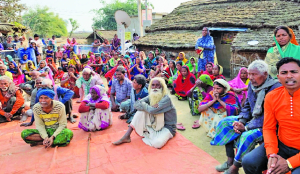
Land grievances dominate public grievance forums across India. Whether in Janata Durbars, district grievance hearings, public outreach programmes or online complaint portals, land-related complaints invariably account for a disproportionate share of administrative attention. Yet they also expose a fundamental contradiction in governance. Citizens approach these forums expecting solutions, while the officials hearing them often lack the legal authority to provide one.
The resulting disappointment erodes public trust in the State. The opposite response is equally problematic. Faced with public expectations, media scrutiny and social media amplification, grievance forums sometimes drift into areas reserved for courts or statutory bodies. Complex disputes are discussed in public, competing claims are examined before cameras, and directions are issued beyond jurisdiction.
Public grievance forums should function as intelligent gateways into the land-governance ecosystem by identifying the nature of grievances, assessing their urgency and directing them to the appropriate institutional pathway. In short, they should operate as triage centres, not adjudication centres.
The problem begins with language itself. The expression “land dispute” is used so loosely that it conceals more than it reveals. What administrators encounter at the cutting edge are not merely disputes but a much wider spectrum of land ailments. Encroachments on government land, disputes regarding possession of public land, eviction from settled land, family partition disagreements, private access-road disputes, measurement and demarcation issues, grievances arising from revenue proceedings, non-compliance with judicial orders and matters already pending before courts are all routinely grouped under the same label. Yet they are fundamentally different problems requiring fundamentally different remedies.
Field experience suggests that most grievances reaching public forums fall into a limited number of recurring categories. Each category points towards a different authority, a different legal framework and a different pathway to resolution. An encroachment case requires administrative enforcement. A demarcation dispute requires technical measurement. A matter pending before a civil court requires judicial determination rather than administrative intervention. The mistake is to expect a public grievance forum to resolve all of them. Such an expectation places both citizens and administrators in an impossible position. Citizens arrive seeking immediate relief, while officials are often constrained by law, jurisdiction and procedure.
The resulting gap between expectation and authority becomes a source of frustration and mistrust. The challenge is compounded by the fact that land grievances rarely remain confined to legal questions. They frequently involve social relationships, economic interests, local power structures and community tensions. A seemingly minor boundary disagreement can escalate into violence. A disputed pathway can disrupt access to homes and farms. Left unattended, many such grievances eventually transform into litigation, law-and-order problems or political controversies.
This is precisely why public grievance forums matter. Their significance lies not in deciding every matter brought before them, but in identifying problems early and ensuring that grievances enter the correct institutional pathway before they escalate. Once a land grievance is received, the crucial question is not, “Who is right?” but “What kind of problem is this?” An encroachment, a demarcation dispute, a pending civil suit and a compliance failure may all arrive at the same public hearing, but they belong to entirely different institutional pathways. Public grievance forums are therefore best viewed as the triage centres of land governance. Their role is to classify grievances, assess their conflict potential, route them to the appropriate authority and monitor progress.
The effectiveness of the forum depends less on its ability to decide matters on the spot and more on its ability to ensure that each grievance enters the correct pathway before it escalates into litigation. Many States already possess statutory mechanisms that can be better leveraged through such triage. Bihar, for instance, has a time-bound public grievance redressal framework as well as a specialised mechanism under the Bihar Land Disputes Resolution Act for specified categories of disputes. A triage protocol can provide the missing connective tissue between public hearings and these existing forums. The objective is not to create new institutions but to make existing ones work better. This distinction is critical. Public grievance forums should not become parallel courts.
Questions of title, inheritance, easement rights and adjudication belong to institutions specifically created for those purposes. Grievance forums should not become passive listening posts that merely record complaints and generate acknowledgements. The challenge, therefore, is to strike a balance between helplessness and overreach. A triage-based approach respects institutional mandates while ensuring that citizens are not left to navigate a fragmented administrative system on their own. When grievance forums attempt to perform functions assigned to courts or statutory authorities, they inadvertently weaken those institutions. Conversely, when citizens leave public hearings without a clear pathway forward, confidence in governance suffers. A triage model avoids both outcomes by ensuring that every institution performs its designated role while remaining accountable for results.
The success of public grievance forums should not be judged by the number of petitions heard or disposed of. Instead, it should be measured by the number of grievances correctly routed towards resolution. Disposal is an event. Resolution is an outcome. Every district should consider adopting a Land Grievance Triage Protocol. Such a framework would classify grievances into predefined categories, assess their conflict potential and route them to designated statutory pathways-whether under service-delivery legislation, specialised land-dispute mechanisms, survey processes or judicial forums.
The objective would be to shift attention from disposal to resolution. India’s land governance challenges are too complex to be addressed through improvisation. They require clarity of roles, institutional discipline and structured coordination. Public grievance forums have an important role to play. Not every grievance can be resolved at a grievance forum.
Every grievance, however, can be correctly diagnosed there. Governance credibility is built when citizens know that their problem has been correctly identified, routed to the right institution and followed through to resolution. The challenge before land administration is not to make public grievance forums more dramatic. It is to make them more diagnostic. The future of land governance lies not in theatre, but in triage.