JPC on One Nation, One Election visits Delhi Assembly
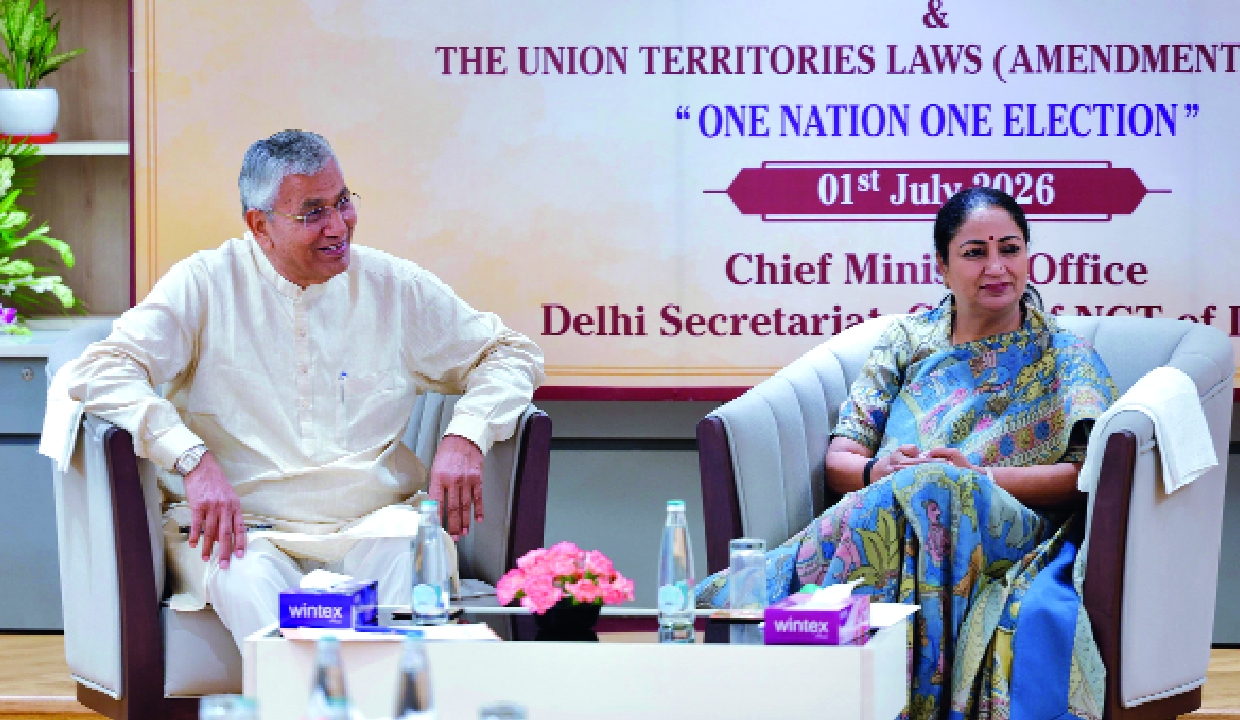
The Joint Parliamentary Committee (JPC) examining the constitutional framework for simultaneous elections visited the Delhi Assembly on Wednesday. The visit is a part of nationwide consultations. Delhi Assembly Speaker Vijender Gupta interacted with the committee members and called for comprehensive examination of issues including constructive votes of no-confidence, premature dissolution of legislatures, and harmonisation of electoral rolls, while emphasising that any reform must rest on broad political consensus and robust constitutional safeguards.
The committee is examining the Constitution (One Hundred and Twenty-Ninth Amendment) Bill, 2024, and the Union Territories Laws (Amendment) Bill, 2024, which together form the legislative framework for One Nation, One Election. The panel is headed by its Chairperson, PP Chaudhary, and is engaging with State Governments, constitutional authorities, political parties, and other stakeholders across the country before submitting its recommendations to Parliament.
Earlier, the panel held discussions with Chief Minister Rekha Gupta and ministers of the Delhi Government at the Secretariat. During the meeting, the Committee held detailed discussions with the Chief Minister on the constitutional, legal and administrative aspects of the two Amendment Bills. The deliberations covered a range of issues, including synchronisation of Lok Sabha and Assembly elections, integration of the electoral cycle, the likely impact on the Government of National Capital Territory of Delhi Act, and administrative preparedness. She said that holding simultaneous elections across the country is the need of the hour and that there could be no better arrangement. The Chief Minister said the Delhi Government supports every reform that strengthens good governance, administrative efficiency and the democratic system. At the same time, she emphasised that any such reform must fully preserve the spirit of the Constitution and democratic principles.
During the interaction, Chaudhary described the committee’s work as an exercise with far-reaching implications for India’s democratic and electoral architecture. He said the consultative process across the country was designed to ensure that the committee’s final recommendations reflect the full range of India’s constitutional, political, and federal perspectives. “The consultative process would enable the Committee to present a comprehensive and well-informed report to Parliament,” he said.
Speaking during his interaction with the committee, Speaker Vijender Gupta traced the historical context of the proposal. He noted that simultaneous elections were the norm in the initial decades after Independence but that political developments and premature dissolutions of legislatures gradually led to divergent electoral cycles across States and the Centre.
He said frequent elections entail substantial administrative and financial costs, repeatedly bring the Model Code of Conduct into operation, and affect the continuity of governance and development programmes.
Gupta suggested the committee examine a range of interconnected issues, including the synchronisation of electoral cycles, mechanisms for constructive votes of no-confidence, rules governing premature dissolution of legislatures, harmonisation of electoral rolls between states and the Centre, strengthening the logistical preparedness of the Election Commission, and institutional arrangements to ensure political stability while preserving India’s democratic and federal character.