Japan’s former emperor turns 92, heart condition stable
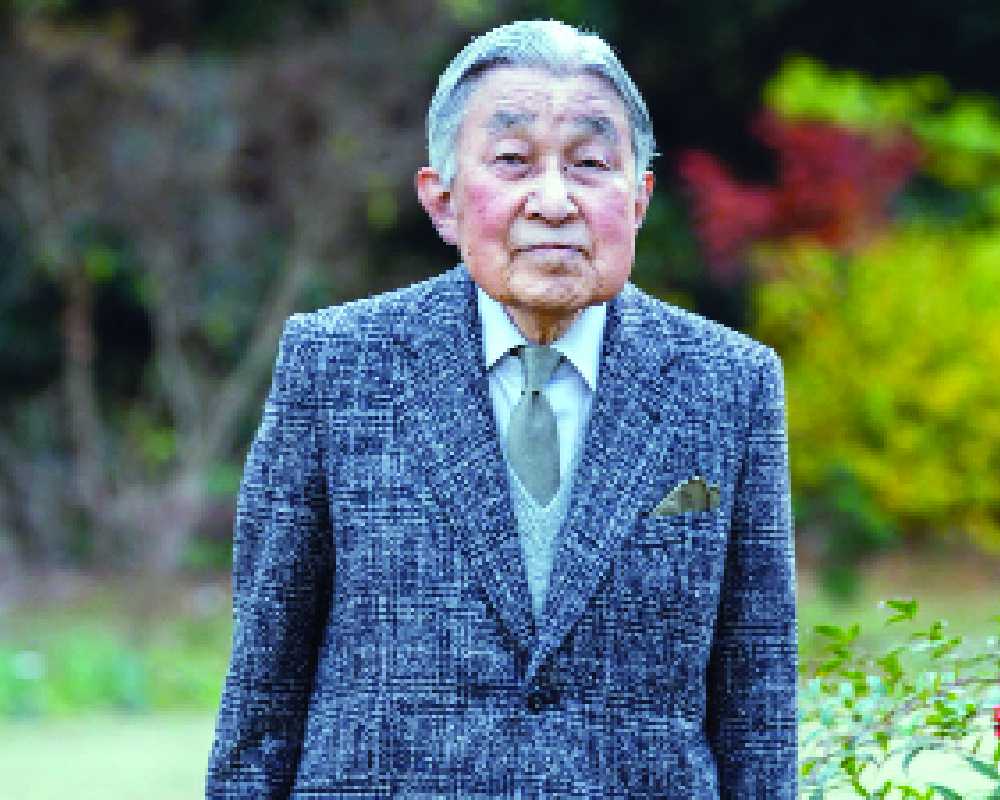
Japan’s beloved former Emperor Akihito marked his 92nd birthday on Tuesday as his heart condition stabilised, palace officials said, following health concerns earlier this year. Akihito, the father of Emperor Naruhito, was diagnosed in May with insufficient blood flow to the heart muscles but has been in stable condition since he started a new medication in July, the Imperial Household Agency said in a statement.
He still enjoys scientific research into goby fish, career work in which he found 10 new species, and he visits a biology lab on the palace compound twice a week, the agency said. Akihito, who has held the title of emperor emeritus since his abdication in 2019, was to celebrate his birthday with his family and receive guests, including Japanese Prime Minister Sanae Takaichi.
Known for his efforts to make amends for Japan’s wartime past, Akihito repeatedly prayed this year for its victims and the survivors who faced hardships as he marked the 80th anniversary of the end of World War II. Akihito and his wife, Empress Emerita Michiko, offered a moment of silence on four key dates of the war 80 years ago — the end of the Battle of Okinawa, the atomic bombings of Hiroshima and Nagasaki, and the day marking Japan’s surrender — the IHA said.
He has said the war, fought in the name of his father Hirohito, should not be forgotten. In August, Akihito and his wife visited a central Japan resort in Karuizawa, where he had been evacuated as a child during the war, and where the couple started a romance years later international financial architecture reform, where progress has been insufficient,” he said.
As regards to UN Security Council reforms, the “majority agree that the body should be reflective of the current geopolitical realities” and enhance the “Council’s credibility,” he said while emphasising the need to “resist efforts by those who seek to maintain the status quo.” India has been at the forefront of the years-long efforts to reform the Security Council, saying it rightly deserves a place as a permanent member of the Council, which in its current form does not represent the geo-political realities of the 21st Century.
In his remarks, Harish said India remains committed to working collaboratively with all stakeholders to ensure the effective implementation of the pact and its annexes. “India believes the 2028 review should be results-oriented and forward-looking,” he said while delivering remarks at the third interactive informal dialogue on the review of the Pact for the Future agreement.
Harish also presented a copy of the Hindi translation of the Pact for the Future to UN General Assembly President Philemon Yang, Permanent Mission of India to the United Nations posted on social media. The Pact for the Future covers a broad range of themes, including peace and security, digital cooperation, human rights, gender, youth and future generations, and the transformation of global Governance.