Iran relaxes Hormuz transit rules

In a notable but cautious policy shift, Iran has softened its position on maritime access through the strategically crucial Strait of Hormuz, allowing ships not linked to its “adversaries” — specifically the United States and Israel — to transit the waterway under coordinated security arrangements with Iranian authorities.
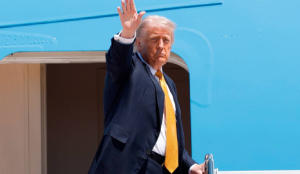
The move comes just hours after Donald Trump warned that Washington could launch strikes on Iranian power infrastructure if the vital shipping route is not fully reopened within 48 hours. The warning has intensified geopolitical tensions in an already volatile region, raising concerns about the risk of further escalation.
Tehran had earlier shut down the Strait on February 28, halting or severely restricting passage through a corridor responsible for transporting nearly one-fifth of the world’s oil and liquefied natural gas. The closure triggered widespread alarm in global energy markets, with analysts warning of supply disruptions and rising price volatility.
The latest announcement signals a calibrated easing rather than a complete reopening. Iranian officials have indicated that vessels willing to comply with Tehran’s security protocols and not associated with its “enemies” will be allowed safe passage, reflecting a conditional approach to restoring maritime traffic.
Addressing the International Maritime Organisation, Iranian representative Ali Mousavi emphasised that Iran remains open to cooperation with international bodies to ensure maritime safety and protect seafarers operating in the Gulf.
Mousavi underscored that diplomacy continues to be Iran’s priority, but stressed that any meaningful de-escalation would require an end to hostilities and the rebuilding of mutual trust. He also reiterated Tehran’s stance that recent military actions by the United States and Israel are the primary drivers of instability in the region.
The Strait of Hormuz is widely regarded as one of the most critical energy corridors in the world. Any disruption to shipping in the narrow passage has immediate and far-reaching consequences for global energy supply chains. The earlier closure had already reduced vessel movement, as shipping companies weighed the risks of operating in a conflict-prone zone.
In response, the United States has been exploring the formation of a multinational naval coalition to escort commercial vessels through the Strait. However, several members of the North Atlantic Treaty Organization have expressed reluctance to participate in direct military operations against Iran, reflecting divisions within the alliance.
While Iran’s latest stance suggests a willingness to ease restrictions, the situation remains highly fluid. Analysts caution that any further escalation between Tehran and its rivals could once again disrupt this vital maritime artery, with significant implications for global trade, energy security, and regional stability.
pakistan’S former diplomat sparks outrage with ANTI-India remarks
New Delhi: Former Pakistani diplomat Abdul Basit has sparked widespread outrage with controversial remarks suggesting that major Indian cities such as New Delhi and Mumbai could be targeted in the event of a broader conflict involving Pakistan.
Speaking during a televised discussion, Basit made the statements while responding to recent observations by Tulsi Gabbard, who flagged concerns over Pakistan’s long-range ballistic missile programme in a US security assessment.
He criticised Gabbard’s position as “anti-Pakistan,” arguing that her views reflect a consistent bias against Islamabad. Basit asserted that Pakistan’s nuclear and missile deterrence is primarily India-centric and claimed that global powers, particularly the United States, tend to overlook India’s missile capabilities while focusing on Pakistan.
He pointed to India’s development of advanced missile systems as an example of what he described as selective scrutiny.
In his remarks, Basit went further to outline a hypothetical worst-case scenario involving US military action against Pakistan’s nuclear infrastructure. He suggested that if such a situation were to arise, Pakistan would have limited strategic options, controversially stating that India could become a target in response. His comments included references to the proximity of Indian cities and past incidents, which many observers described as deeply insensitive and provocative.
Basit also spoke about shifting geopolitical alignments, noting that while ties between Pakistan and the United States may see periodic improvement, Washington’s long-term strategic partnership lies with India. He compared this dynamic to Pakistan’s own relationship with China, suggesting that countries pursue partnerships based on strategic interests rather than permanence.
The remarks have drawn sharp criticism from analysts and commentators, who warned that such rhetoric risks escalating tensions in an already fragile regional security environment. References made during the discussion also evoked memories of past attacks, further intensifying concerns over the tone and implications of the statements.
The incident has once again highlighted the sensitivity of nuclear and security discourse in South Asia, where relations between India and Pakistan remain complex and often strained.