India’s quest for energy Atmanirbharta
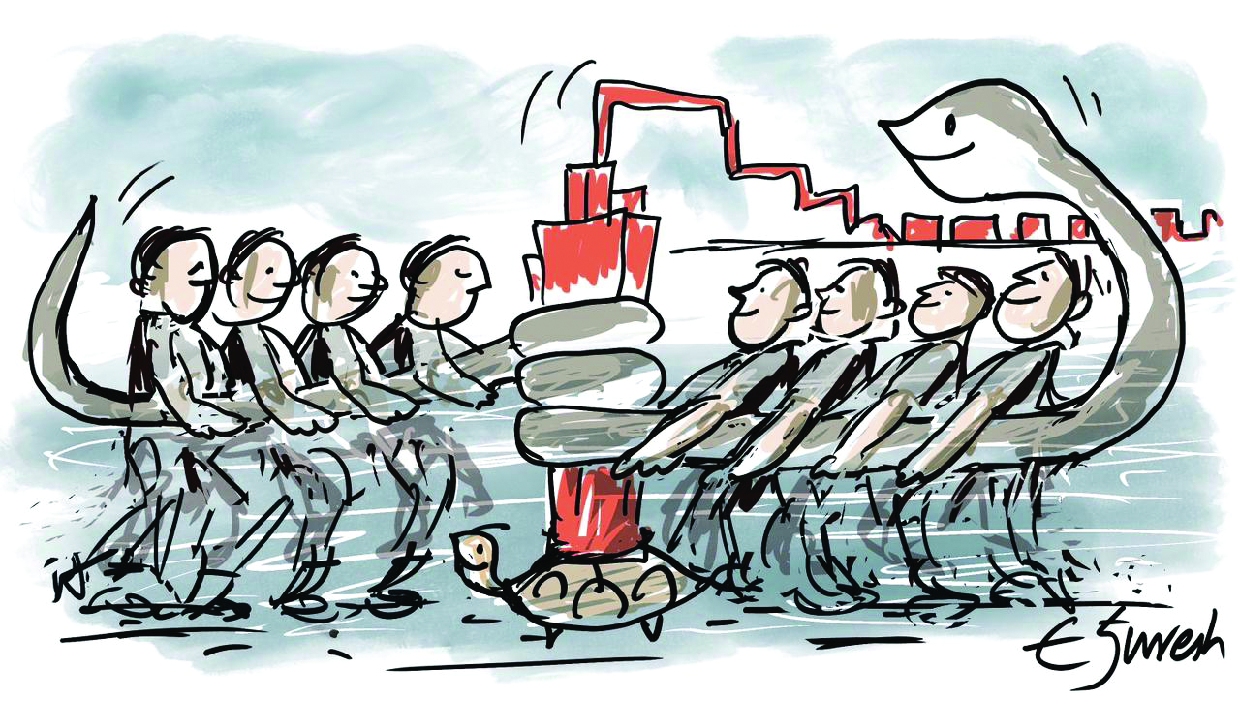
India’s dependence on imported hydrocarbons has long been its greatest energy vulnerability, a risk sharply exposed by recent disruptions to global oil supplies. By investing heavily in offshore exploration, India is seeking not instant self-sufficiency, but a stronger and more resilient energy base capable of cushioning the economy against future geopolitical shocks
The Union Cabinet approved the National Offshore Exploration Scheme, termed Samudra Manthan, on July 2026 31, committing Rs 84,084 crore through Financial Year 2030-31, pushing for offshore hydrocarbon exploration, along with the stated ambition of adding over 600 million tonnes of oil equivalent to India’s reserve base. This new scheme does not seem to be an incidental policy intervention, but rather part of a larger strategic orientation towards building sustainable energy goals.
In the last four months, India has had to face the test of its energy security challenges, given the closure of the Strait of Hormuz, resulting in the collapse of oil traffic by almost 97 per cent. The vulnerability lies in the very structure of the energy supply chains. India’s import dependence on crude oil has climbed from 77 per cent in 2014 to nearly 88 per cent in 2026. Rising domestic demand, stagnant production and the gestation lag have made it more difficult. Also, roughly half of India’s natural gas supply is imported from West Asia. Moreover, around 90 per cent of crude is bought from abroad, and half of that transits through the Strait of Hormuz. Even today, indigenous output accounts for only about 12 per cent of total domestic refinery demand.
At the same time, India finds itself competing directly with China for the same limited pool of discounted Russian and Venezuelan oil, a rivalry that analysts expect will continue for as long as Gulf supplies stay constrained by conflict. Russian oil, meanwhile, has grown more expensive to keep buying, since the risk now attached to it has pushed up the premium that buyers are forced to pay. Every lever India has used so far to manage its import dependence, whether that is Russian discounts, diversity of Gulf suppliers, or flexibility in the spot market, has been narrowed in recent months, laying bare the very risk that this dependence always carried.
Samudra Manthan can be best seen as India’s long-term policy response to disruptions in global energy supply chains, aiming to convert demonstrated vulnerabilities into a long-term industrial project. Pushing for local exploration is not just an economic or policy goal but a geopolitical imperative. Huge public investment in offshore exploration is a well-intended political choice made by the government.
For the past two decades, India’s energy strategy has leaned mainly on demand-side diversification. In simple terms, this has meant buying oil from a wider range of countries, settling payments in different currencies, and relying on a greater variety of shipping routes. To say, when Hormuz was shut, India’s energy diversification strategy of the preceding three years was tested and found to be only partially adequate, with floating Russian cargoes at sea and a temporary waiver from Washington permitting their purchase. Samudra Manthan is trying to address this challenge from the supply side of the energy equation. This policy is more inclined towards reducing India’s reliance on external energy shocks, given any kind of geopolitical volatility. Offshore exploration is one lever that India can possibly design and operate on its own terms, and that is precisely what Samudra Manthan is largely aiming for in the longer run.
Some critics may argue that with this policy initiative, India is moving away from clean energy. However, energy security and energy transition are not necessarily mutually exclusive objectives. The prolonged dependence of heavy transport, aviation, shipping, and petrochemicals on hydrocarbons underscores the strategic urgency of bolstering domestic energy output and production capacity over imported fuels. Another argument is that domestic production is not a quick substitute for import security, and the scheme’s own six-year horizon concedes this fact. Deepwater and ultra-deepwater exploration, which Samudra Manthan is designed to accelerate, are globally among the most expensive hydrocarbon initiatives. In addition, they require quite advanced and complex technological support, big-term investment timelines, and stable policy frameworks.
Having said that, this new policy by the Modi government is pushing India’s overarching energy transition from source diversification to import substitution by building home-grown offshore resources. The Samudra Manthan policy operationalises this strategic doctrine through three transformative takeaways.
Firstly, it dismantles historic exploration bottlenecks by co-funding up to 50 per cent of high-risk deepwater drilling costs, catalysing substantial private and global upstream investments into this sector. Secondly, scaling domestic crude and natural gas output constructs a reliable “strategic buffer” that insulates core industries like aviation, shipping, and heavy freight logistics from recurring supply chain disruptions.
And thirdly, in the longer run, by drastically reducing the country’s energy import bill, it preserves critical foreign exchange reserves, enabling India to reinvest sovereign capital into building state-of-the-art subsea infrastructure and indigenous industrial supply chains. More importantly, this can lead to developing domestic advanced naval capabilities, cementing our stature as a formidable maritime power in the Indian Ocean.
The fact that Samudra Manthan addresses the structural, decade-scale vulnerability in India’s energy security is very significant and well timed. The scheme’s success should be measured not against whether it makes India self-sufficient, but whether it narrows, even if incrementally, the gap between a growing economy’s appetite for oil and the barrels that India imports globally. Thus, Samudra Manthan is not a stand-alone policy initiative but part of a broader policy strategy to maximise every viable domestic energy resource and aim for self-reliance in energy security for India in the near future.
Samudra Manthan can be best seen as India’s long term policy response to disruptions in the global energy supplies chains, aiming to convert demonstrated vulnerabilities into a long term industrial project. Pushing for local exploration is not just an economic or policy goal but a geopolitical imperative
Abhishek Pratap Singh is an Assistant Professor at Deshbandhu College, University of Delhi, and Kaustubh Tripathi is a Research Associate at VisvaNiti Foundation, New Delhi; Views presented are personal.