India’s electoral watchdog in eye of a political storm
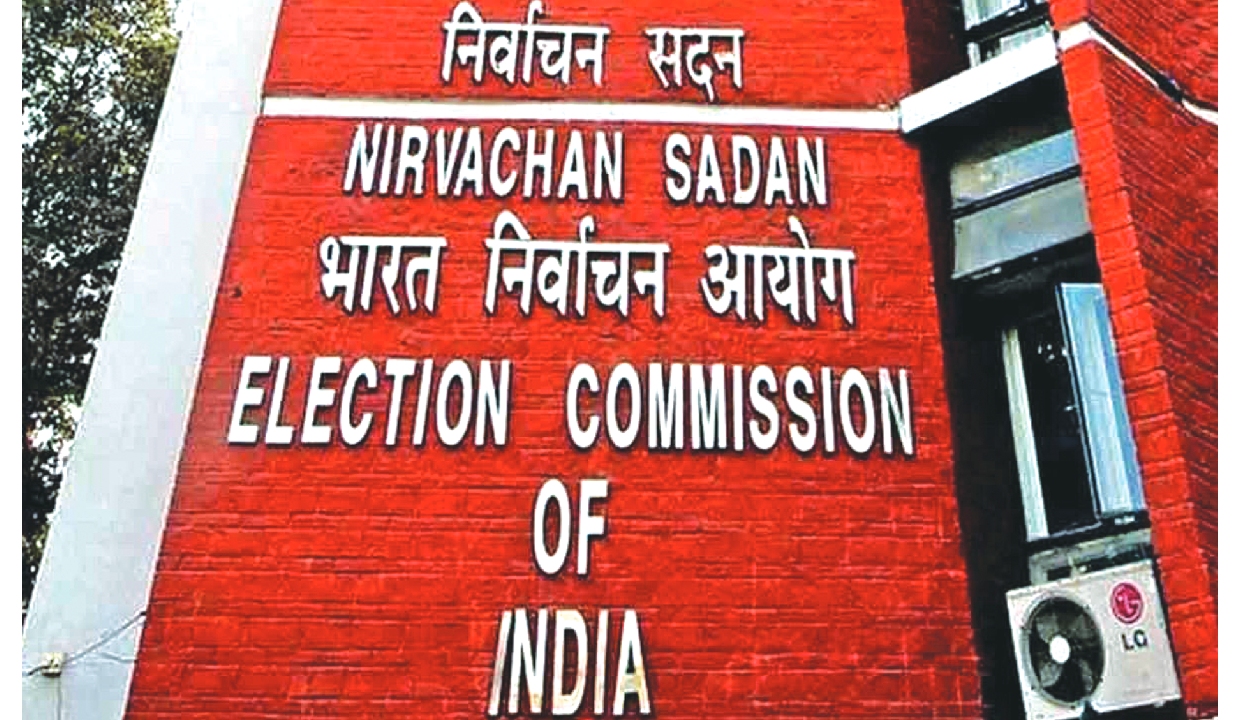
From its modest origins in colonial administrative arrangements to its present status as a constitutional watchdog of the world’s largest democracy, the Election Commission of India stands as one of the most critical pillars of India’s institutional framework. Yet, even as it continues to conduct massive electoral exercises with remarkable efficiency, the Commission today finds itself at the centre of political contestation, legal scrutiny, and public debate. The unfolding tensions raise a fundamental question: are India’s democratic institutions being tested, or are they being undermined?
The origins of electoral governance in India can be traced to the Montagu-Chelmsford Reforms, which culminated in the Government of India Act, 1919. This marked the first structured attempt to introduce representative governance in British India. Consequently, elections were held in 1920 and later in 1934, where the Indian National Congress emerged as a dominant political force. However, these elections were conducted under the supervision of provincial governments, lacking neutrality and independence. There was no institutional equivalent of today’s Election Commission. Electoral processes were essentially administrative exercises, vulnerable to executive influence and devoid of constitutional safeguards.
The turning point came with the framing of the Constitution of India by the Constituent Assembly. Between August 1947 and November 1949, extensive deliberations shaped the architecture of a democratic republic. Notably, Part XV of the Constitution (Articles 324-329) was dedicated exclusively to elections-an indication of the framers’ foresight. Article 324 vested the “superintendence, direction and control” of elections in the Election Commission of India. This provision ensured that elections would not be left to the whims of the executive but would instead be conducted by an independent constitutional authority. The Commission was also entrusted with the preparation and revision of electoral rolls, further strengthening its role as the guardian of electoral integrity.
Initially, the Commission functioned as a single-member body led by the Chief Election Commissioner. However, the constitutional design allowed flexibility for expansion. A significant institutional evolution occurred in October 1993, when the Election Commission was transformed into a multi-member body. This shift was not merely structural but deeply functional, ensuring greater deliberation, checks and balances within the institution.
The tenure of TN Seshan remains a watershed moment in the Commission’s history. Known for his hawkish approach, Seshan redefined the authority of the Commission, in fact exceeded his brief to enforce the Model Code of Conduct with unprecedented rigor and asserting its constitutional mandate. The appointment of additional Election Commissioners such as MS Gill and GVG Krishnamurthy in the early 1990s further cemented the multi-member framework, where all Commissioners were vested with equal powers, ensuring institutional parity rather than hierarchical dominance.
The Commission’s authority is reinforced by statutory backing, particularly the Representation of the People Act, 1950, which governs electoral rolls and voter qualifications. Section 22 of the Act empowers the Commission to revise electoral rolls-an essential function to maintain the integrity of the electoral process. The Commission’s powers have also been consistently upheld and interpreted by the Supreme Court of India, which has recognised Article 324 as a reservoir of plenary powers, enabling the Commission to act in areas where legislation may be silent.
A major development in recent years has been the enactment of the Chief Election Commissioners and Other Election Commissioners (Appointment, Conditions of Service and Term of Office) Act, 2023. The law establishes a selection committee comprising the Prime Minister, a Union Minister nominated by him, and the Leader of the Opposition in the Lok Sabha. While the framework seeks to institutionalise the appointment process, it has also triggered debates-particularly regarding the exclusion of the Chief Justice of India from the selection panel. Critics argue that this may tilt the balance in favour of the executive, while supporters contend that the presence of the Leader of the Opposition ensures adequate checks.
Recent appointments to the Commission, including Gyanesh Kumar and Sukhbir Singh Sandhu, have not been marred by allegations regarding integrity or competence. Under their supervision, along with Chief Election Commissioner Rajiv Kumar, the 2024 General Elections for the 18th Lok Sabha were conducted. The results themselves present an interesting counterpoint to allegations of bias.
The Bharatiya Janata Party saw its tally decline significantly, while the Indian National Congress registered notable gains. Similarly, in subsequent Assembly elections across multiple states, electoral outcomes reflected a competitive political environment rather than any one-sided trend.
These results raise an important question: if the electoral process were compromised, would such diverse outcomes be possible?
Despite this, the Election Commission has increasingly become the subject of political criticism. In recent months, spokespersons of the Indian National Congress have publicly targeted the Chief Election Commissioner by name, particularly over the issue of Special Intensive Revision (SIR) of electoral rolls. This criticism is notable for two reasons. First, the Commission is a multi-member body, yet allegations are often directed at the Chief Election Commissioner alone. Second, the matter is sub judice, and the Commission’s actions are rooted in its constitutional and statutory mandate.
Under Article 324 and the Representation of the People Act, the Commission possesses wide powers to conduct revisions of electoral rolls. Such exercises, while administratively complex, are essential to ensure accuracy and prevent electoral fraud. The controversy reached a new peak with a move by opposition members to initiate impeachment proceedings against the Chief Election Commissioner. The process for removal of the CEC is akin to that of a judge of the Supreme Court, requiring a high threshold of parliamentary support and proof of “misbehaviour” or “incapacity.”
In this context, the landmark judgment in M Krishna Swami vs Union of India provides critical guidance. The Court clarified that “misconduct” implies wrongful intention and cannot be equated with mere errors of judgment. The notices for impeachment are typically kept confidential to protect institutional integrity. In the present case, the specific grounds have not been fully disclosed in the public domain.
On April 7, 2026, the Speaker of the Lok Sabha and the Chairman of the Rajya Sabha declined to admit the motion. This effectively halted the proceedings at the threshold stage, indicating that the statutory requirements for admission may not have been satisfied. The unfolding developments highlight a deeper tension within Indian democracy-the balance between institutional autonomy and political accountability. While criticism of institutions is a legitimate democratic exercise, sustained attacks without substantiated evidence risk eroding public trust.
The Election Commission, like all constitutional bodies, is not beyond scrutiny. However, its credibility rests on the perception of neutrality, which must be preserved both by the institution itself and by political actors. Targeting individuals rather than engaging with institutional processes may yield short-term political gains but carries long-term risks for democratic stability.
The history of the Election Commission of India is a testament to the vision of the Constitution’s framers, who sought to insulate the electoral process from executive interference. Over the decades, the Commission has evolved into a robust institution, capable of managing elections of unparalleled scale and complexity.
Yet, its strength ultimately depends not only on constitutional provisions but also on political maturity and public trust. As controversies unfold and debates intensify, the real test lies in whether India’s democratic stakeholders can rise above partisan interests to uphold the sanctity of institutions. In the final analysis, institutions endure not merely by law, but by collective respect. The Election Commission of India, as the custodian of the electoral will of over a billion citizens, deserves nothing less.
The writer is a Senior Advocate practicing in the Supreme Court of India; Views presented are personal.