India adopting pragmatic approach to regulate AI: IAIRO
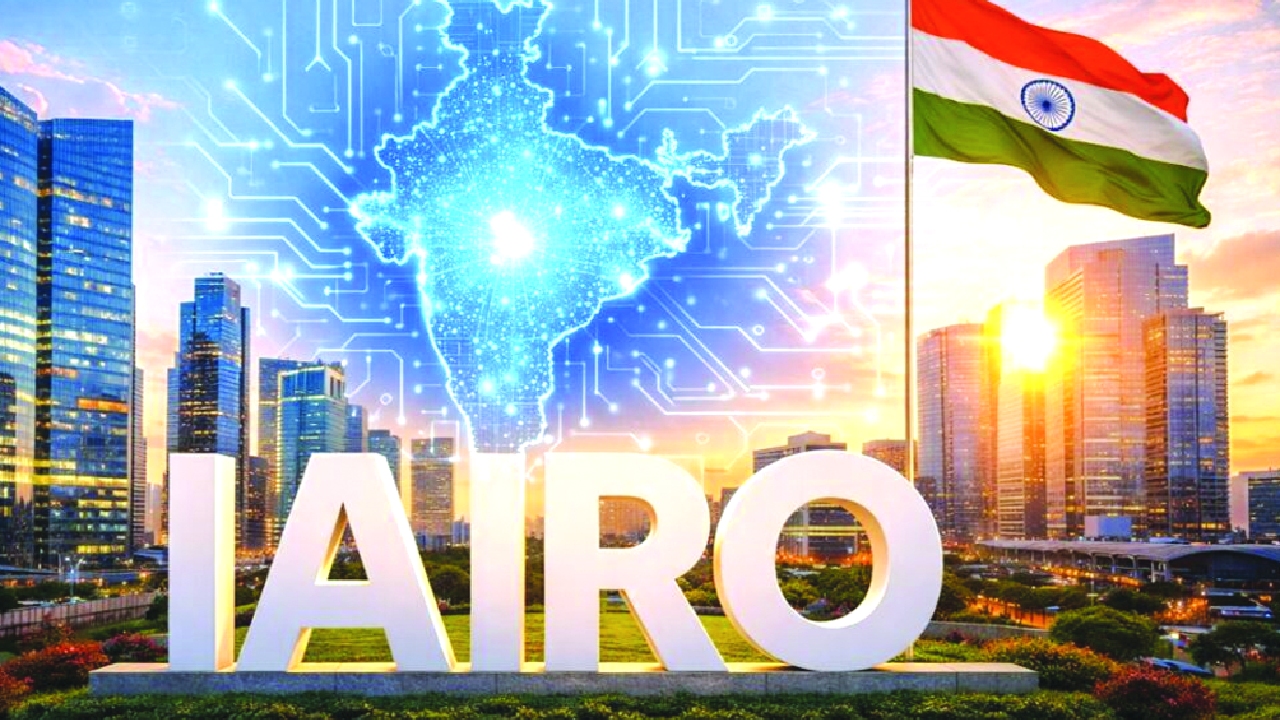
India has adopted a balanced and pragmatic approach to AI, avoiding the extremes of the lightly regulated US model and the heavily compliance-driven framework of the European Union, said an Indian AI Research Organisation official.
Indian AI Research Organisation (IAIRO), Founding Director, Amit Sheth, said India has adopted a balanced regulatory approach that enables innovation while safeguarding users.
“India is adopting a pragmatic, balanced regulatory approach, avoiding both the lightly regulated model seen in the United States, which poses high risks to society, and the heavily compliance-driven framework of the European Union, which reduces innovation. The objective is to enable innovation while safeguarding users,” Sheth told PTI in an e-mailed interview.
He said that the US leads in frontier AI research and large, proprietary, consumer-centric models, supported by deep capital markets, advanced semiconductor ecosystems, and hyperscale compute infrastructure.He said China, despite export controls on advanced chips, has demonstrated that sovereign AI capability can still be built through coordinated investment in domestic infrastructure, efficient model design, and strong talent development.
“By focusing on increasingly capable and open models, China has narrowed the performance gap while strengthening full-stack resilience across compute, models, and deployment. India’s opportunity lies elsewhere. Rather than replicating capital-intensive consumer AI, India can lead in high-value, industry- and domain-specific systems that address national priorities across sectors such as healthcare, agriculture, finance, and governance,” he said.
IAIRO members include academicians from leading universities, entrepreneurs who have built successful AI startups, and technologists from Amazon, Meta, Apple, Netflix, and Snap.
Sheth said that to build sovereign and trusted AI, India must strengthen its deep AI talent pipeline.
“While we produce strong engineers for services and applications, becoming an AI-driven product nation requires more frontier researchers, system builders and IP creators,” Sheth said.
He said IAIRO is building a platform on the IndiaAI infrastructure to generate compact, custom, task- and industry-specific models, developed frugally, deployed rapidly, and optimised for quality in defined use cases rather than as generic “jack-of-all” LLMs.
“Such SLMs are already being designed for education, healthcare, agriculture, climate, manufacturing and finance. These specialised models will form the core IP for startups and enterprises building AI solutions. Because the pre-training, post-training and knowledge-graph components are indigenous, this approach ensures technological sovereignty while delivering more robust and trustworthy AI for mission-critical applications,” he said.