India’s battery storage self-reliance a decade away: Report
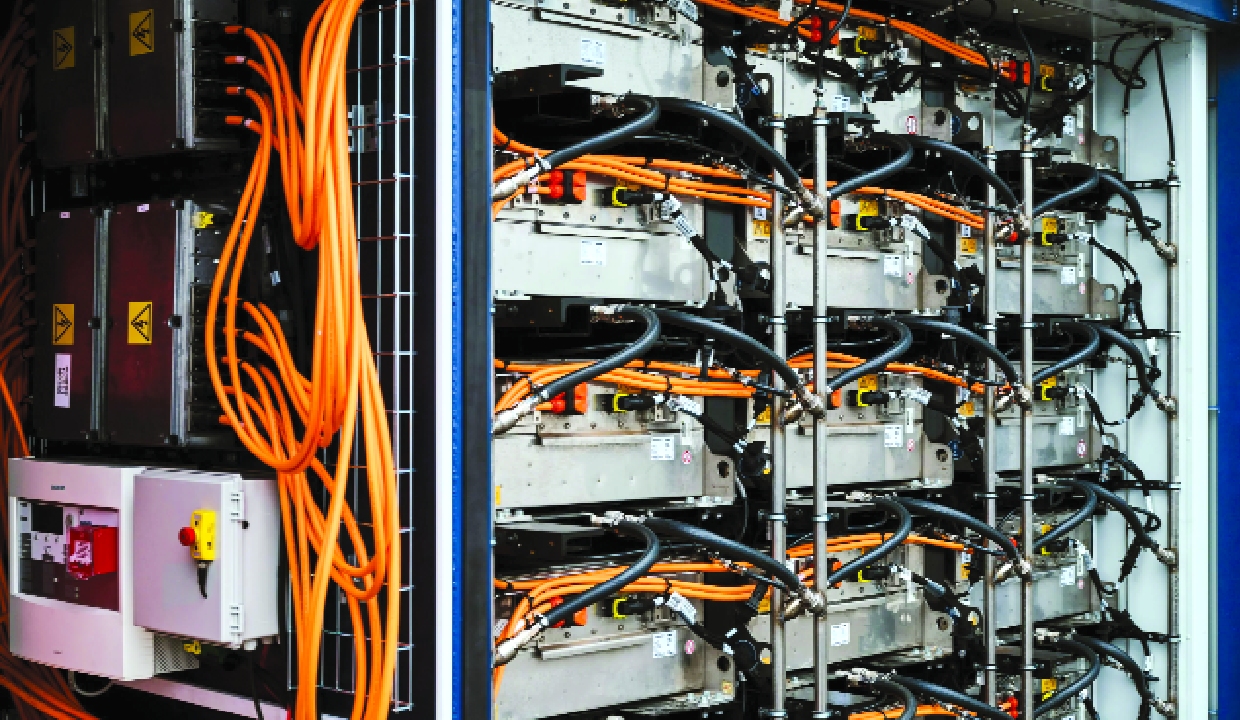
It would take another 10 years for India to achieve self-sufficiency in battery storage as there is a huge gap between the demand and current capability to manufacture essential battery cell components, according to Wood Mackenzie.
India’s domestic battery manufacturing currently accounts for less than 1 per cent (2 GWh) of its approximately 260 GWh demand pipeline from competitive tenders in 2026, the research said.
The gap leaves the country structurally dependent on imports even as policy ambition accelerates, the research, titled ‘Chasing Self-Sufficiency: Cost of Building an Indigenous Battery Storage Supply Chain in India’, said.
Despite more than 226 GWh of cell manufacturing capacity announced for construction through 2035, execution delays, financial viability challenges and deep technology dependence on Chinese and Korean licensors mean India remains 10 to 15 years from a globally competitive, self-sufficient cell industry.
India has just 2 GWh of commissioned cell manufacturing capacity as of 2026, against China’s cumulative capacity of 2,695 GWh, the report said, noting China controls between 85 per cent and 98 per cent of global capacity across every major supply chain component, from cathode to anode, separator and electrolyte.
Bridging that gap will require India to fundamentally restructure its manufacturing ecosystem, it said.
“India’s battery storage ambitions are credible, but the gap between policy intent and operational capacity is wide,” said Ankita Chauhan, director, Wood Mackenzie.
The near-term opportunity lies in downstream components such as containers and battery packs, where localisation is both technically feasible and commercially attractive, she said.
Chauhan said the harder work of building a self-sufficient cell industry will take a decade or more and requires sustained, targeted investment that goes well beyond the incentive schemes currently in place.
According to Wood Mackenzie, locally manufactured cells are expected to cost 25-40 per cent more than imported ones, driven by limited scale, higher financing costs and an underdeveloped supplier ecosystem.
Yet India’s underlying cost position is globally competitive by offering a 154 per cent cost advantage over Japan and a 9 per cent advantage over South Korea, placing it second only to China among major manufacturing destinations.
Cell manufacturing is expected to develop progressively with imported inputs over the next two to five years, while full refining capabilities will take more than ten years to establish.
India is expected to prioritise the localisation of downstream components, including containers, energy management systems, SCADA, and battery packs, over the next two to three years, supported by a 20 per cent domestic content requirement now applied to grid-scale BESS projects under new tenders.