In Memorium of General BC Khanduri
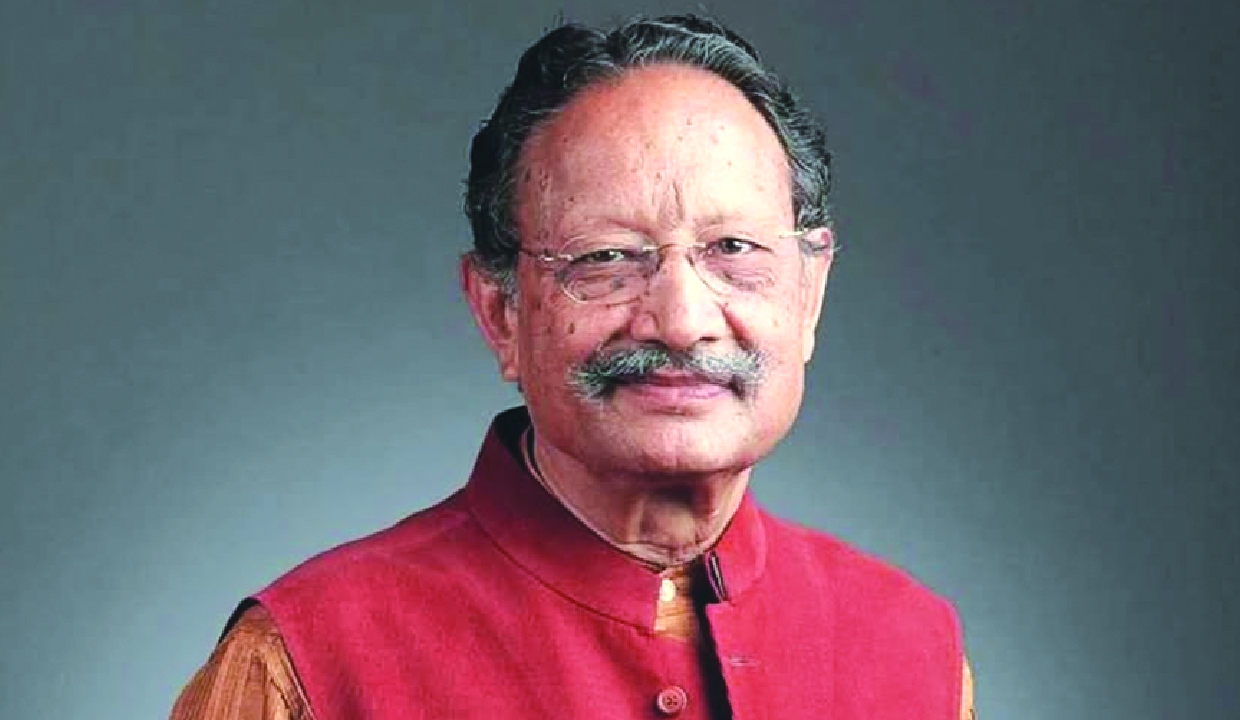
It’s a matter of profound shock and sorrow that General BC Khanduri has left his mortal frame. He was 91 years old and not in good health for quite sometime past. It’s an hour of grief and sorrow for me personally, as my association with him goes back to the time when he was first returned to the Lok Sabha. As an officer of the Lok Sabha Secretariat, I was privileged to meet him in the Committee Room number 62 of the iconic old Parliament Building, now rechristened Samvidhan Sadan, where I was assigned the duty to oversee the facilitation arrangements for the newly elected MPs of the 10th Lok Sabha in the summer of 1991. After completing the procedural formalities, we had lunch together in the Parliament House Railway Canteen, since, as a first timer, he was not familiar with the building. I found him, as against the general perception of a General, very soft spoken, laconic and abstemious. The chance meeting gradually developed into a close and abiding relationship over the many decades. Soon after, in the 10th Lok Sabha with the formation of the Government, I was appointed as OSD to a Union Minister, but I stayed in personal touch with General Khanduri as he used to enquire about the Governmental schemes and programmes which he keenly wished to publicise in his constituency so that the people could partake the benefits.
But, the turning point came when he joined the Vajpayee Government as Minister of State for Road Transport and Highways (Independent Charge) in the year 2000 and was later given the additional charge of the Ministry for Urban Development and Urban Poverty Alleviation. While I congratulated him, I could not ask him directly whether he would consider appointing me his PS in the Ministry of Urban Affairs. I broached the matter with my friend and guide, JC Mamgain, an officer of the IRS and his OSD in the Ministry of Road Transport and Highways. Mamgain conveyed my desire to the minister. I was told that General Khanduri didn’t speak but gently smiled. It was construed as a positive signal, and I was advised to meet the Minister at once. I immediately walked over from Parliament House Annexe to the Transport Bhawan across Parliament Street and reached the Minister’s office. The Minister was in a review meeting of the Golden Quadrilateral, his favourite scheme, for which he earned tremendous goodwill and fame, and for which he shall always be remembered as the pioneer of India’s expanding world-class road infrastructure. Soon after the meeting, I was ushered into his room. He asked, “Why do you want to join as PS when you are well placed as Dy Secretary in Lok Sabha?” I gave an honest, straight answer, and he gladly issued orders for my appointment as his PS in the Ministry of Urban Affairs.
It was during the course of the Parliament Session that I joined as his PS. During sessions of Parliament, Ministers remain extremely busy and preoccupied with parliamentary work. All the more, General Khanduri was given an additional portfolio of Urban Development by Vajpayee ji as a stopgap arrangement, following the resignation of Anant Kumar. The work pressure was tremendous. There was a constant barrage of questions, and other urgent parliamentary matters which he had to handle and reply in Parliament, in both the Houses by turn, and for both the Ministries. It was a Herculean task, especially with the growing interest of the MPs in the expanding work of the Golden Quadrilateral. In the Ministry of Urban Development itself, there were a great many policy issues of urban squalor, poverty alleviation, land and DDA, and there were connected allegations of irregularities and demolition of unauthorised colonies and religious structures built unauthoritatively on Government land in Delhi. There were large and pending files which his predecessor ministers did not clear or which were shuttling between the Minister’s office and the Ministry. The Secretary wanted the long-pending policy files to be cleared, but General Khanduri had clear instructions to me to return such files during the Parliament session and accept only files relating to questions, legislation and other parliamentary matters which could not brook delay. The Secretary of the Ministry was perturbed as he wanted the files to be approved. He once visited my chamber and asked me to accept all the files, but I had to abide by the orders of my Minister, incurring the insidious wrath of the Secretary, which I did face after demitting office, as the allotment of the flat allotted to me was cancelled by him.
Ministers spend a lot of time rehearsing replies to questions listed for oral answer, which generate supplementary questions. At least two briefing meetings were held for the Starred Questions of each House for each Question day. General Khanduri asked officers to anticipate at least ten possible supplementary questions and be ready with the requisite information for his consideration. He used to be on the dot at 9 am in his room in Parliament House. Once I was just a few seconds late, but before he could ask for me, I entered the room from the rear side, and he just smiled and said, “How can a parliamentary official be late?” General Khanduri studied in dept, knew his subject well and marshalled facts and figures in reply to supplementary questions with great poise and confidence, earning adulation from all sides in the House.
During his ministership as Urban Development Minister, there were some demolitions by the DDA of a religious sect built on Government land. There was hue and cry in Parliament, particularly by SC MPs, as they tabled notices for urgent discussion in both the houses of Parliament. Speaker Manohar Joshi ( of Shiv Sena) asked the Minister for Urban Development to have a meeting with the SC MPs to resolve the issue. General Khanduri held a meeting with the SC leaders in Parliament. Unfortunately, during the discussion, the DDA Land Commissioner justified the demolitions and had the temerity to say that “the demolitions were going on right now”. General Khanduri unexpectedly flew into a rage and asked the officer “to shut up” and directed that “the demolitions of religious structures be stopped forthwith”. The meeting adjourned. I had never seen him in such a state of high fury. I asked the Joint Secretary in charge of the Ministry, and his reply was “discretion is the better part of valour”, suggesting that demolition during the sessions of Parliament is sheer foolishness. In some other case, when the Directorate of Estates wanted to physically evict the occupants of a coveted bungalow, occupied for long by a certain opposition party member, but whose physical eviction could not be carried out without the approval of the predecessor ministers. The Ministry sought the order of the new Minister-General Khanduri. He reflected on the matter and asked me to remind him at approximate time to seek the advice of the PM when he attends the Cabinet Meeting as a special invitee. Vajpayee, a great leader and statesman that he was, refused to play the vendetta politics and signalled to keep the matter in abeyance. The bungalow has now become a memorial.
As a Minister, I found him very earnest, visionary, hard-working and a hard task master. He conducted the meetings in a business fashion, and officers heard him attentively in pin-drop silence. His understanding of matters was phenomenal-his intellect sharp and his disposal quick and strictly in accordance with the rules. I recollect, when a case for out-of-turn allotment of a house to a Government servant, recommended by him as an MP to his predecessor minister, was put up to him as Urban Development Minister, he concurred with the official line. I had to struggle to ensure that I was quite thorough with the file content before submitting for his approval, as his queries were sharp and penetrating. Soon after the Parliament was adjourned sine die, he relinquished the charge of Urban Development Minister as a new Minister was sworn in. I, too, relinquished the office, the post being coterminous.
But my association with General Khanduri continued and became much closer. He was CM of Uttarakhand twice, and I occasionally met him in Uttarakhand Bhawan in Chanakyapuri. It’s bad luck for Uttarakhand that he did not have a full term to serve as the CM of Uttarakhand. He was a doer, a performer, a straightforward leader, perhaps not very apt for the fissiparous politics of a small State. He served Parliament for 4 terms — the 10th, 12th, 13th, 14th and 16th Lok Sabhas.
I distinctly remember, when Ministers were being administered oath after the constitution of the 16th Lok Sabha, we were together in my office, and I noticed his anguished brow over the selection of certain members as ministers. There was some tinge of sadness over the selection and distribution of ministerial portfolios. Later, he was nominated as Chairman of the Defence Committee, and I made it a point to meet him in his office and discuss many current issues, particularly about our defence-related parliamentary subjects and the burning issues of Uttara Khand. I was then Additional Secretary in charge of the Estimates Committee, chaired by Dr Murli Manohar Joshi.
The Estimates Committee was also examining certain aspects of the Defence Estimates, and in line with the recommendations of the Defence Committee, the Estimates Committee also recommended that the budget allocated to the Defence Ministry, if not spent during the same financial year, should not lapse but should form a non-lapsable pool so that funds are available for defence purchases as and when deals are done. Besides, as Chairman, he produced many reports which were considered critical by the Government. He was not renominated as Chairman of the Defence Committee even though the election to the 17th Lok Sabha was not far behind. Nevertheless, whatever tasks were assigned to him or offices held by him, he accomplished his duties fearlessly and admirably as a gallant soldier for whom the call of duty was first and foremost. I pay my humble, respectful homage to General Khanduri. Sir, your legacy of honesty, integrity and hard work will continue to guide and inspire.
The author is former Additional Secretary, Lok Sabha and a member of Supreme Court Bar Association; Views presented are personal.
Leave a Comment
Comments (1)
The author coins his experiences with the the towering and an upright man who tailored the politics of his times with unflinching honesty and discipline of our armed forces. As Minister for Surface Transport he during his lifetime and even beyond that also he is loved by every car driver who travelled Pauri Badrinath and Kedarnath shrines by using smooth Highway much to the pleasure of pilgrims with no pot holes and travel safe . That much a traveller needs . In real term he was a public man . Gen Saab's actions speak about his works till today. Since Gen Saab is no more with us he is still remember as honest Minister that quality is largely missing in present day Ministers. I extend my sincere Condolences to our Gen Saab . Om Shanti!