How Cross-Border Play Proves Gaming Is Not an Isolating Hobby
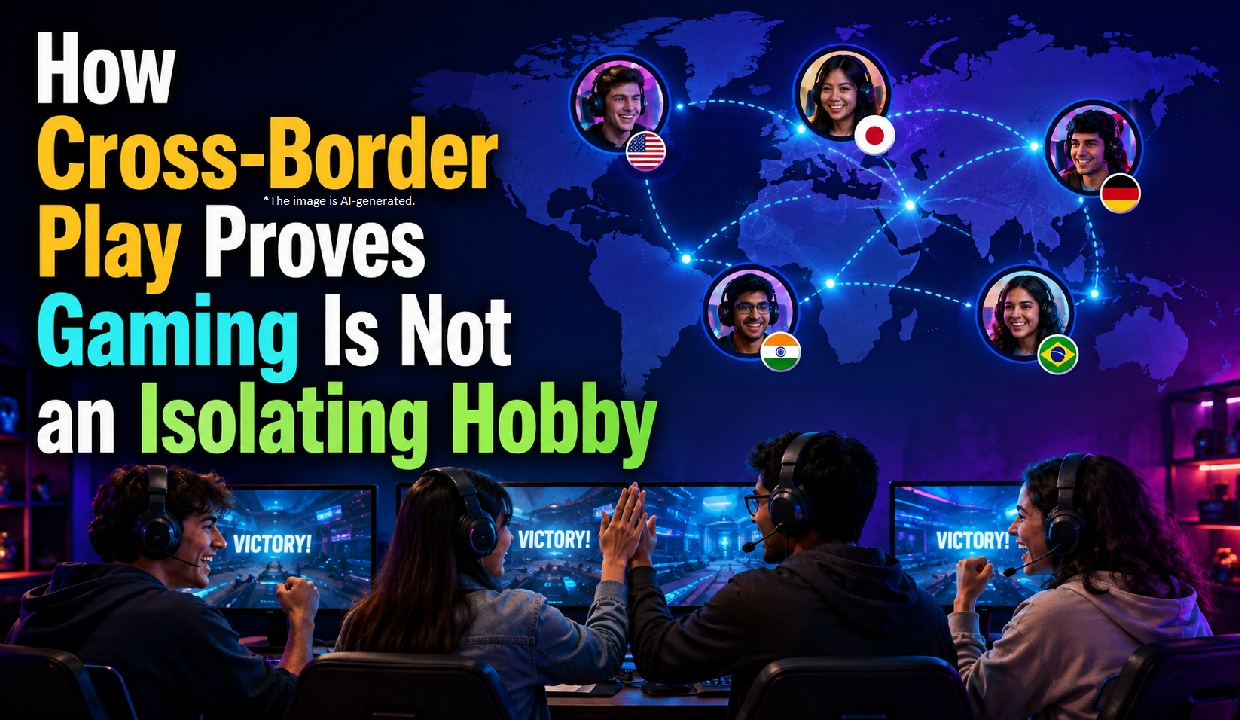
The claim that gaming isolates people starts with an incomplete picture. Solo play can be quiet, yet multiplayer spaces ask people to coordinate, talk and return for another session. Shared objectives give strangers a reason to pay attention to one another in real time. That recurring contact, rather than the screen itself, is where the stereotype falls apart.
Robux can usually be purchased through official Roblox channels or through gift cards that add credit to the account. For players planning shared Roblox activities, those who buy robux through Roblox gift-card listings can use Eneba, a digital marketplace, to browse and compare flexible options. Its product pages can show region and platform information, helping a buyer choose a product suited to the intended account.
Shared objectives build social routines
Evidence from Pew Research Center offers a clear correction for a defined group. In its 2024 survey, 89% of U.S. teen video-game players aged 13 to 17 said they played with others online or in person. Seventy-two percent cited spending time with others as a reason for playing, and 47% said a video game had helped them make an online friend. The survey was conducted in September and October 2023, so these figures should not stand in for players worldwide.
Research on gaming social capital places meaningful interaction most firmly in multiplayer games where people cooperate in teams and pursue shared objectives. Friend lists, recurring groups, forums, and voice or text communication can carry a relationship past one match. Conversation has a purpose: teams must coordinate a task and arrange the next session.
Cross-border communities widen the circle
Cross-border sessions can widen a player’s social circle beyond local routines. Participants communicate and coordinate with people they might not encounter nearby, while different time zones can shape when a group meets. Languages, humour and play styles may surface through that contact. International play offers an opportunity for exchange, though a connection across locations alone does not prove deeper cultural understanding.
Research comparing female gaming communities in Western individualist and Chinese collectivist settings found that communities could provide social support and foster community identity in both contexts. The forms of support and the language around them differed. A qualitative study of 22 Nintendo DS players in Hong Kong also described online friendships that later became offline friendships. Both findings illuminate particular settings rather than a universal outcome.
Community quality shapes connection
Gaming communities are ongoing social spaces only when their members can participate with respect. Harassment and exclusion remain documented problems, which is why cooperative groups with active moderation offer a stronger basis for connection. Clear rules and responsive community leadership help keep attention on teamwork. The social result comes from the quality of interaction, not simply from logging on.
That does not turn friendship into a guaranteed feature of a game. People still choose how they speak, include newcomers and respond when tension arises. Well-run spaces give regular participants a framework for cooperation, while a hostile exchange offers little basis for a lasting connection.
A longitudinal study of social online game players found that online gaming did not necessarily displace offline friendships or social support. That finding undercuts the assumption that every hour spent playing pulls people away from real-world ties. As friends arrange shared Roblox time, Eneba can serve as a place to compare relevant gift-card options and review platform and region details. Access supports the gathering, while respectful communities give it its social value.