Government likely to amend Women reservation Act
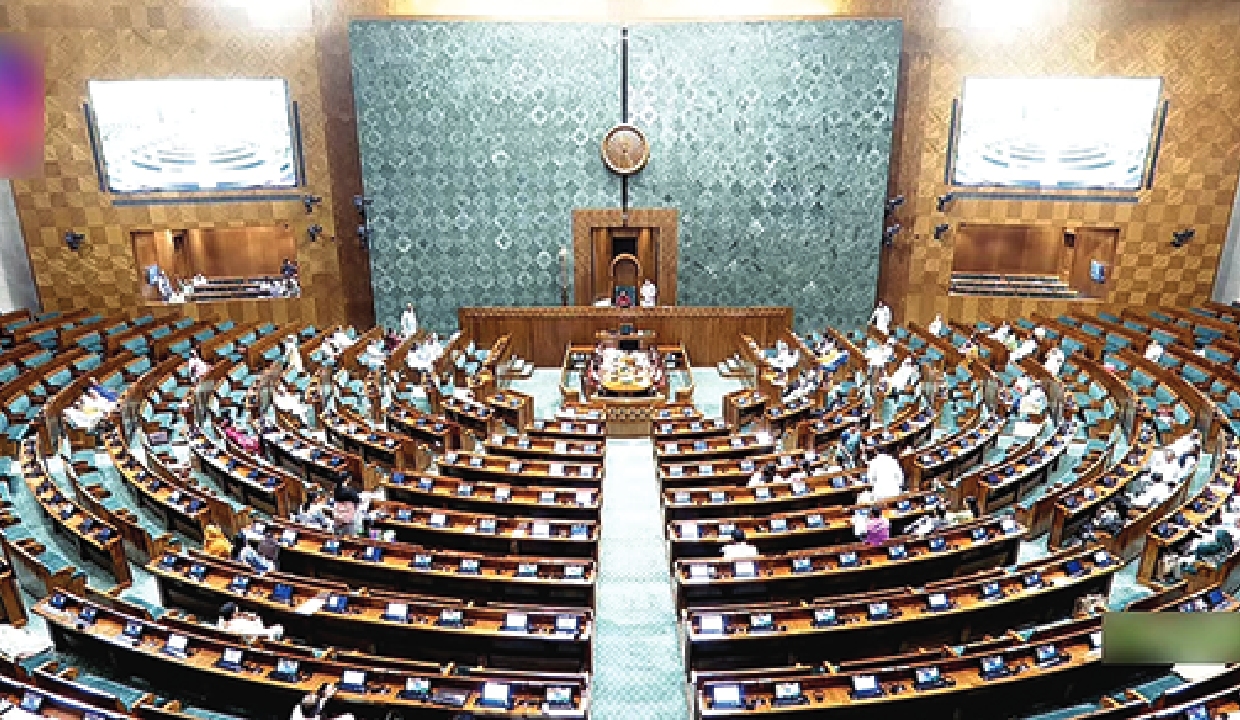
Seeking to implement the Women Reservation Act before the delimitation exercise is completed, the Government is likely to bring a bill to amend the law, most probably in the ongoing Budget session of Parliament.
Government sources said feelers have been sent to the opposition to bring them on board to ensure a smooth sailing for the Constitution amendment bill in Parliament. However, sources made it clear that the proposed measure has not been cleared by the Union Cabinet yet.
There are indications that the legislation will be brought to the Rajya Sabha first, possibly next week, once it is approved by the Cabinet, they said.
The Women's Reservation Act was passed by Parliament in 2023. The provision to provide 33 per cent reservation to women in the Lok Sabha and state Assemblies was brought by amending the Constitution, but it will come into effect after the completion of the delimitation exercise. If the proposal to implement the law even before the delimitation exercise actually materialises, another amendment to the Constitution will be required. Besides the delimitation exercise, which can decide the constituencies that can be reserved for women, as it does for the Scheduled Castes or Scheduled Tribes (by way of population in their cases), another way to decide on constituencies can be by rotation. The sources underlined that a delimitation or boundary commission is a “neutral” body mandated to redraw Lok Sabha and Assembly constituencies, and its decisions cannot be challenged even in the Supreme Court.
They said a neutral body will instill faith in the delimitation exercise.
The Election Commission is another independent institution, but it cannot be mandated to carry out a pan-India delimitation exercise. “At best, it can carry out delimitation of one or a few states, as it carried out delimitation in Assam recently,” a government functionary pointed out.
In the mid-1990s, the Geeta Mukherjee Committee had suggested the rotation of reserved seats for women in successive elections to ensure equitable representation across all constituencies over time. Under this recommendation, the reserved seats would be rotated after each general election. This cycle was designed so that after three general elections, all constituencies in the Lok Sabha and Assemblies would have been reserved at least once for women.