Beyond the Golden Triangle: Foreign Tourists Are Rewriting Rajasthan's Travel Map
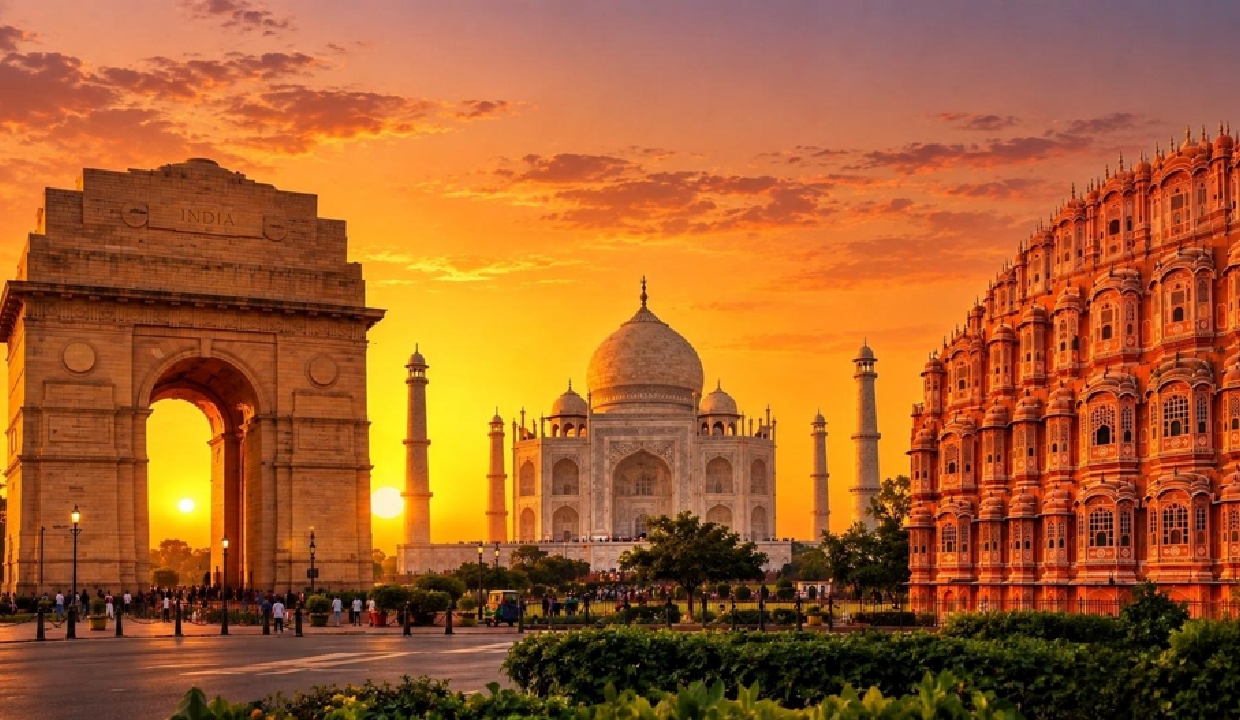
For fifty years, an India itinerary has meant Delhi, Agra, Jaipur — in that order, on that timetable. A growing number of travellers, mostly the ones on their second or third trip, are quietly tearing that timetable up and driving into the rest of Rajasthan instead.
I am standing in a lane in Bundi that is barely wide enough for two cows to pass each other, and every wall on either side of me is the same shade of blue — not painted blue exactly, more like the town decided, generations ago, that blue was simply what a wall should be. A woman above me is hanging washing from a window carved with a stone lattice so fine it looks machine-cut until you notice the small, deliberate imperfections of a hand chisel. Somewhere below the lane, invisible from where I stand, is a stepwell more than nine storeys deep, cut into the rock in the fourteenth century so a town in a state better known for its deserts would never run short of water in the dry months. There is no tour bus parked anywhere near me. There is, in fact, no one in sight who looks remotely like a tourist except me.
Ten years ago this would have been unusual. Today it is close to a pattern. I keep meeting the same kind of traveller in these smaller Rajasthan towns — someone who did Delhi, Agra and Jaipur once already, ticked the Taj Mahal and Amber Fort and City Palace off the list every guidebook hands you on page one, and came back a second time asking a version of the same question: what else is there. It is, as far as I can tell, the most interesting thing happening in Rajasthan tourism right now, and almost none of it is happening in the three cities the state is famous for.
“Rajasthan” translates roughly as “abode of kings” — raj for king, sthan for place — and the name itself is younger than most visitors assume: it was formalised only in 1949, when the newly independent Indian government began stitching together nearly twenty separate princely states, from tiny fiefdoms to grand kingdoms like Jaipur, Jodhpur, Udaipur and Bikaner, into a single administrative unit over the following few years. At just over 342,000 square kilometres, it is India’s largest state by area, bigger than Germany, split roughly down the middle by the Aravalli range — among the oldest mountain systems on Earth — with the Thar Desert sprawling across the western half and comparatively fertile plains to the east.
The “Golden Triangle” itself is not an ancient route; it is a marketing term, coined during the package-tour boom of the 1970s and 80s to describe the rough triangular shape that Delhi, Agra and Jaipur make on a map, connected by highways good enough that a coach could comfortably manage all three in a week. It became the default first-time India itinerary for an entire generation of tour operators because it worked: the Taj Mahal, the Red Fort, Amber Fort and the City Palace are, genuinely, among the most extraordinary buildings on the planet, and clustering them into one manageable loop solved both India’s size and the very real limits of a two-week holiday.
What it was never built to do is satisfy someone who has already seen it. Operators across the industry are now fielding a version of the same enquiry from repeat visitors — travellers who already know what the postcards look like and are asking to be shown somewhere the postcards don’t reach. That shift shows up in the numbers, too. Rajasthan’s foreign tourist visits climbed from under four and a half lakh in 2020 to a record 20.72 lakh in 2024, a rise the state tourism ministry has put at over 300 percent across six years — and in a year when India’s overall foreign arrivals fell by more than twelve percent, Rajasthan’s dropped by less than half that, which suggests whatever is drawing people here is holding up better than the national trend.
Rajasthan, At A Glance
|
Fact |
Detail |
|---|---|
|
Area |
342,239 sq km — India’s largest state, bigger than Germany |
|
Formed |
1949–56, from the merger of nearly 20 princely states |
|
Golden Triangle city |
Jaipur is Rajasthan’s only stop on the classic Delhi–Agra–Jaipur circuit |
|
Terrain |
Thar Desert (west) and the Aravalli Range (central spine) |
|
Foreign tourist visits, 2024 |
~20.72 lakh (2.07 million) — a record year |
|
A well-built “beyond the triangle” loop |
Bundi → Shekhawati → Jawai → Kumbhalgarh/Ranakpur → Nagaur |
THE GOLDEN TRIANGLE IS A TOBLERONE. EVERYONE HAS HAD ONE, EVERYONE KNOWS EXACTLY WHAT IT TASTES LIKE — AND THAT IS PRECISELY WHY, ON THE SECOND OR THIRD TRIP, PEOPLE START ASKING WHAT ELSE IS IN THE SHOP.
Getting There — No Flights, No Permits, Just A Longer Drive
None of the towns rewriting Rajasthan’s map require a flight or a special permit — that is, if anything, the quiet advantage they hold over India’s Himalayan circuits. Every one of them sits within half a day’s drive of Jaipur, Jodhpur or Udaipur, the three airports most Rajasthan itineraries already fly into, which means a “beyond the triangle” loop is less a separate expedition than an extension bolted onto a route a traveller was likely planning anyway.
|
Destination |
From |
Drive time |
|---|---|---|
|
Bundi |
Jaipur |
~3.5 hrs |
|
Bundi |
Kota (nearest railhead) |
~35 min |
|
Shekhawati (Mandawa) |
Jaipur |
~3 hrs |
|
Shekhawati (Mandawa) |
Delhi |
~5.5 hrs |
|
Jawai |
Udaipur or Jodhpur |
~3–3.5 hrs |
|
Kumbhalgarh |
Udaipur |
~2 hrs |
|
Ranakpur |
Udaipur |
~2.5 hrs |
|
Chand Baori (Abhaneri) |
Jaipur |
~1.5–2 hrs |
|
Nagaur |
Jodhpur |
~2.5 hrs |

Approximate drive times by private car from the nearest major Rajasthan hub (2026).
When To Go
October through March is peak season for a reason — daytime temperatures sit between roughly 10°C and 27°C, the light is clear, and November in particular pairs comfortable weather with the run-up to winter festivals. Summer, April through June, is genuinely brutal in the desert towns, regularly crossing 45°C, and it is not the season to attempt Jawai or Nagaur on a tight schedule. Monsoon — July to September — is the season almost no itinerary considers, and that is precisely its appeal for towns like Bundi and the hill station of Mount Abu, which turn green in a state better known for being the colour of sand; desert towns such as Jaisalmer and Bikaner stay comparatively dry even in the wet months. Rates across the state typically drop 30 to 50 percent outside the November–February window.
|
Season |
Conditions |
Notes |
|---|---|---|
|
Nov–Feb |
10–27°C, dry, clear |
Peak season; Nagaur Fair (Jan/Feb) needs booking months ahead |
|
Mar |
Warming, Holi season |
Pleasant early in the month, crowds thin by month’s end |
|
Apr–Jun |
Up to 45°C+ |
Off-season; desert towns are brutal, hill towns more bearable |
|
Jul–Sep |
28–35°C, scattered rain |
Monsoon; Bundi, Udaipur and Mount Abu turn green; 30–50% lower rates |
|
Oct |
18–30°C, clearing |
Shoulder season; good value, thinning crowds |
JAWAI ISN’T A CONSOLATION PRIZE FOR TRAVELLERS WHO COULDN’T GET A TIGER SAFARI BOOKED. IT’S THE TASTING MENU VERSION OF A LEOPARD SAFARI — EVERY COURSE ARRIVES, NOTHING IS PADDED OUT, AND YOU LEAVE FULL.
Things to do beyond the Golden Triangle...
Bundi’s Blue Lanes and Nine-Storey Stepwell. Bundi sits an easy half-day’s drive from Jaipur and feels, on arrival, like a version of Jodhpur’s famous Blue City with the crowds subtracted. The Garh Palace climbs directly out of the old town, its murals still holding colour after four centuries, and Raniji ki Baori — one of more than fifty stepwells scattered through the town — drops some fourteen storeys underground in tiers of carved sandstone. Rudyard Kipling is said to have written part of Kim while staying here, which tracks: this is a town built for wandering without a fixed itinerary.
Shekhawati’s Open-Air Fresco Gallery. Mandawa, Nawalgarh and Fatehpur, strung along roughly forty kilometres of the Shekhawati region, hold one of India’s most underrated art collections — hundreds of havelis built by nineteenth-century Marwari merchant families and painted floor to roofline with frescoes covering everything from Hindu mythology to, memorably, early motorcars and hot-air balloons, the merchants’ way of showing off what they’d seen on their trading routes. Many havelis are locked and privately owned, which sounds like an obstacle until a local caretaker with a key turns the whole exercise into a genuinely personal tour rather than a ticketed one.
Jawai’s Leopard Hills and the Rabari Who Share Them. Every other big-cat habitat in India sits inside a defined reserve boundary. Jawai, in Rajasthan’s Pali district, doesn’t — its leopards live openly across granite hills and scrubland shared with Rabari herding communities who have coexisted with the cats for generations, and sighting rates here are frequently cited above 90 percent, rivalling reserves many times its size. Suján Jawai, the benchmark camp, runs just ten tents and pairs tracked leopard drives with birdwatching and walks alongside the Rabari, a genuinely different rhythm from a standard jeep-and-waterhole safari.
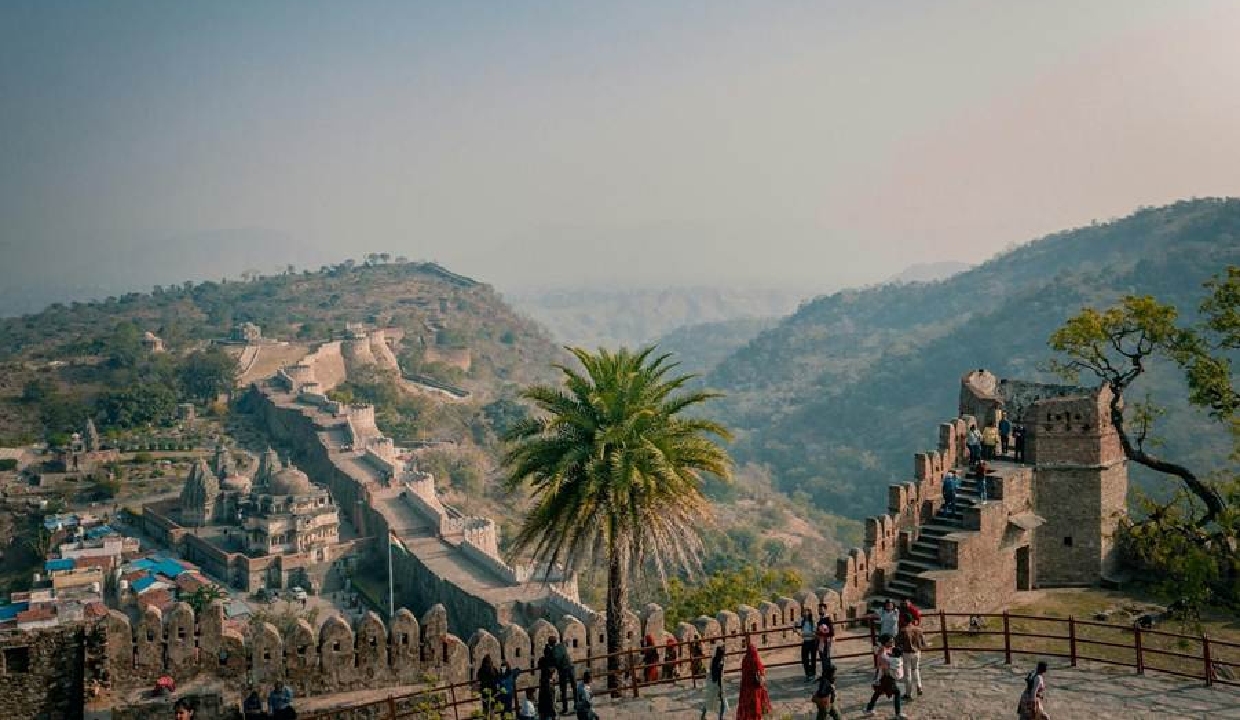
Kumbhalgarh’s Wall and Ranakpur’s Forest of Marble. Kumbhalgarh’s perimeter wall runs 36 kilometres — the second-longest continuous wall on Earth after the Great Wall of China — enclosing a fifteenth-century fort that was also, fittingly, the birthplace of the warrior-king Maharana Pratap. Half an hour away, Ranakpur’s Jain temple complex holds 1,444 marble pillars, no two carved identically, supporting 24 pillared halls and 80 domes in a building most visitors admit they weren’t braced for.
Chand Baori’s Thirteen Levels and Bhangarh’s Empty Streets. Chand Baori, in the village of Abhaneri, descends thirteen storeys through 3,500 perfectly symmetrical steps, built in the ninth century by King Chanda and still one of the deepest stepwells anywhere. An hour further on sits Bhangarh, a seventeenth-century fort town abandoned and, according to local legend, cursed — a reputation the Archaeological Survey of India neither confirms nor plays into, beyond enforcing standard visiting hours like at any other protected monument.
Nagaur’s Cattle Fair, Without Pushkar’s Crowds. Held every January or February, Nagaur’s camel and cattle fair draws around 25,000 camels alongside horses and cattle, a red chilli bazaar stacked in towering piles, and Manganiyar and Langa folk musicians playing through the dust — a version of Pushkar’s far more famous fair with a fraction of the marketing and, correspondingly, a fraction of the crowd.
Narlai and Bhainsrorgarh’s Working Heritage Hotels. Both are former family seats turned hotel, and both still feel like it. Rawla Narlai sits inside its namesake village and serves a candlelit dinner beside a thousand-year-old stepwell; Bhainsrorgarh Fort perches on a clifftop over the Chambal river and is still run, ten years after conversion, by the family that owned it as a fort.
The Numbers Behind The Shift
It is worth being precise about how recent this is. Rajasthan’s foreign tourist numbers were still recovering from the pandemic as recently as 2022 — and the climb since then has been steep enough that state tourism officials now describe it as a 336 percent rise across six years.
|
Year |
Foreign tourist visits (lakh) |
|---|---|
|
2020 |
4.46 |
|
2021 |
0.35 |
|
2022 |
3.97 |
|
2023 |
17.00 |
|
2024 |
20.72 |
|
2025 |
19.45 |

1 lakh = 100,000. Figures as reported by Rajasthan’s tourism department and state officials, 2026 — worth treating as directionally accurate rather than exact, given the department revises these periodically.
NAGAUR DOESN’T TRY TO BE PUSHKAR’S POLISHED COUSIN. IT’S THE HOME-COOKED THALI NO ONE PHOTOGRAPHS FOR INSTAGRAM — LESS GARNISH, MORE FLAVOUR, AND YOU LEAVE HAVING ACTUALLY EATEN SOMETHING.
Things not to do beyond the Golden Triangle...
Don’t Treat the Thar as a Backdrop. The desert stretches around Jaisalmer, Khuri and Osian look gentle in photographs and are not gentle in person — carry more water than feels necessary, and treat any overnight camp as genuinely off-grid rather than a hotel with sand outside.
Don’t Accept “Exclusive” Palace Access From a Stranger. The most consistent scam across Rajasthan’s tourist towns starts with an unusually friendly local offering guided access to a restricted area, or a can’t-miss gem or carpet investment over several days of manufactured friendship. Neither claim is real, and the giveaway in both cases is the same: nobody legitimate needs to approach you first.
Don’t Photograph Kuldhara Expecting a Ghost Tour. Kuldhara, the abandoned Paliwal Brahmin village near Jaisalmer, is genuinely atmospheric and genuinely ASI-protected, which means fixed visiting hours and no legitimate after-dark access — an offer of one is the scam, not a hidden feature of the site.
Don’t Assume a Signal Bar Means Signal. Jio has the best rural reach of any Indian network and is the safer choice heading into these towns, but the Thar’s dunes and overnight safari camps routinely have none at all — download maps and anything else needed before leaving cell coverage, not after.
Don’t Rush a Bishnoi Village Visit. The Bishnoi communities around Jodhpur have protected blackbuck and native trees for centuries under a set of twenty-nine environmental principles that predate the word “conservation” by roughly three hundred years — treat a visit as a conversation, ask before photographing people directly, and it becomes one of Rajasthan’s more genuine cultural exchanges rather than a drive-by curiosity stop.
Staying Connected And Carrying Cash
|
Topic |
What to know |
|---|---|
|
SIM / data |
Jio offers the widest rural reach; tourist SIMs and eSIMs are available at Jaipur, Jodhpur and Udaipur airports |
|
ATMs |
Widely available in every town on this route; expect a ~₹200–300 fee per international-card withdrawal |
|
Signal in the desert |
Reliable in town centres; expect none at overnight dune camps or deep in the Thar |
|
Language |
Hindi and Rajasthani are widely spoken; English is common in tourist-facing stays, thinner in small-town markets |
Where To Stay
The strongest properties on this route share one trait: most are still run, at least in part, by the families who owned the buildings before they became hotels, which tends to show up in small ways — a genuine willingness to talk about the family’s history rather than a scripted version of it, staff who have worked there for a decade rather than a season.
|
Town |
Property |
Note |
|---|---|---|
|
Bundi |
Haveli Braj Bhushanjee |
Family-run for four generations; book direct rather than through a reseller |
|
Shekhawati |
Castle Mandawa / Piramal Haveli Bagar |
Restored fort vs. restored haveli — both solid, different registers |
|
Jawai |
Suján Jawai |
Ten tents; the benchmark leopard-country stay |
|
Narlai |
Rawla Narlai |
Former hunting lodge; the stepwell dinner is worth planning a night around |
|
Bhainsrorgarh |
Bhainsrorgarh Fort Hotel |
Clifftop over the Chambal; still family-operated |
|
Nagaur |
Ranvas Nagaur |
A restored zenana palace; book fair-week dates months, not weeks, ahead |
Travelling Beyond The Triangle Responsibly
A LifeStraw bottle or filter is worth packing on this route specifically — small-town Rajasthan doesn’t have the bottled-water infrastructure of Jaipur or Udaipur, and cutting plastic waste in towns without much waste management matters more here than it does in the cities. Spending locally carries more weight too: a night at a family-run haveli or a meal at a Bundi dhaba puts money directly into the town in a way a branded chain hotel usually doesn’t. In craft villages like Bagru or on a Bishnoi visit, ask before photographing people, not just livestock or architecture — and in temple towns and stepwells, the same modest-dress conventions that apply in Pushkar’s meat- and alcohol-free centre are worth carrying into every smaller town on this list, whether or not a sign says so. Golden Triangle with Jodhpur & Jaisalmer Tour Package offers the best of Delhi, Agra, Jaipur, Jodhpur, and Jaisalmer on one unforgettable journey through India’s iconic heritage, vibrant culture, and golden desert landscapes.
Before you go...
Most of this only works well with a private vehicle and a driver who already knows which stepwell gate opens at 6am versus which one waits for the 9am tour-bus crowd — self-driving between these towns is uncommon, and road quality varies enough that a first Rajasthan trip isn’t the place to learn the state’s driving culture unsupervised. This is more or less exactly the trip BizareXpedition builds for repeat Rajasthan travellers: a private circuit stitched around whichever three or four of these towns suit the time available, routed so the drives themselves become part of the experience rather than dead time between stops.
|
Checklist item |
Detail |
|---|---|
|
Visa |
A standard e-Tourist visa covers every town in this piece; no special permits needed |
|
Currency |
Carry cash for smaller towns and craft villages; cards work at city hotels |
|
Dress |
Modest dress at temples and rural villages; pack a scarf or shawl |
|
Health |
Standard India precautions; carry water and sun protection through desert stretches |
|
Transport |
Private car with driver is strongly recommended over self-drive or public transport |
What It Costs
|
Tier |
Per person, per day |
What it covers |
|---|---|---|
|
Backpacker |
₹2,500–4,000 |
Budget guesthouses, street food, shared or public transport |
|
Mid-range |
₹6,000–12,000 |
Heritage boutique stays, private car, sit-down meals |
|
Luxury |
₹18,000–35,000+ |
Suján Jawai / Rawla Narlai-tier stays, fully private circuit |

Per-person, per-day estimates including stay, food and private transport where applicable (2026).
Itinerary Options
|
Duration |
Route |
Best for |
|---|---|---|
|
5 nights / 6 days |
Jaipur → Bundi (2N) → Shekhawati (2N) → Jaipur |
A first “beyond the triangle” add-on |
|
7 nights / 8 days |
Udaipur → Kumbhalgarh/Ranakpur (1N) → Jawai (2N) → Jodhpur |
Heritage and wildlife combined |
|
10 nights / 11 days |
Jaipur → Shekhawati (2N) → Bundi (2N) → Chand Baori day trip → Kumbhalgarh/Ranakpur (1N) → Jawai (2N) → Jodhpur/Nagaur |
The complete circuit |
What Nobody Tells You
The Kota-Bundi Airport Isn’t Open Yet. The Union Cabinet approved a new airport at Kota-Bundi in October 2025, and it will eventually shorten the drive into this region considerably — but it isn’t operational, and it’s worth not planning a trip around a flight that doesn’t exist yet.
Chand Baori Gets a Tour-Bus Crush by Late Morning. Day-trippers from Jaipur tend to arrive from around 11am; arriving at opening instead means the same 3,500 steps with almost no one else in frame.
Kuldhara’s “Haunted After Dark” Reputation Is Folklore, Not a Feature. The site is ASI-managed with fixed hours, closing at 6pm — there is no legitimate after-hours ghost tour to book, whatever a tout outside the gate implies.
Nagaur’s Fair-Week Rooms Sell Out Fast. Unlike Pushkar, Nagaur doesn’t have a deep bench of hotels — fair-week dates need booking months, not weeks, ahead.
Not Every “Bagru” Block-Printing Workshop Is Actually in Bagru. Some Jaipur-based “village visits” are staged demonstrations closer to the city; the real village sits roughly twenty kilometres out, and it’s worth asking directly whether that’s where you’re being taken.
An Honest Safety Section
Rajasthan’s tourist-facing towns — Jaipur, Udaipur, Jodhpur, Pushkar and, increasingly, Bundi — carry solid safety records and well-worn infrastructure for solo and female travellers, but it is fair context that Rajasthan’s broader social indicators for women lag the national picture, and that gap does not disappear simply because the tourism circuit is comfortable. Practically, the same approach that works in the well-known cities works in the smaller towns too: a private car rather than negotiating fresh transport in every new place, daylight exploration once off the main tourist streets, and a booked driver rather than an unbooked one. The scams actually worth worrying about are the low-stakes, high-frequency kind — an inflated taxi fare, a stranger offering “exclusive” fort access, a gem or carpet “investment” pitched over several friendly days — rather than anything more serious, and nearly all of them are avoidable by simply not transacting with anyone who approached first.
Quick Answers
Do I need extra permits for these towns? No — a standard e-Tourist visa covers all of them; none require the special permits that Himalayan border regions sometimes do.
Can I do this as a self-drive trip? Technically, but it isn’t common practice among either domestic or foreign travellers, and road quality between smaller towns varies enough that a private driver is the more comfortable choice for a first pass through the region.
Is Jawai only worth it for the leopards? No — the birdlife (300-plus recorded species) and the Rabari community walks are close to equally strong reasons to visit, and several guests end up remembering those as much as the leopard sightings.
How many of these towns fit into one trip? It depends on nights available — the itinerary table above sketches three realistic shapes, from a five-night add-on to an eleven-night complete circuit.
Is this route suitable with children? Bundi and Shekhawati work well for most ages; desert camps and long fort walks are more comfortable from around age seven or eight upward.
The Golden Triangle will keep working, for exactly the reason it always has — three extraordinary buildings, one manageable week. But Rajasthan was never only three cities, and the travellers finding that out for themselves, one blue lane or one leopard hill at a time, are the ones rewriting what an India trip actually looks like.
— BizareXpedition™ Services Pvt. Ltd