Government considering revival of shared taxi rides
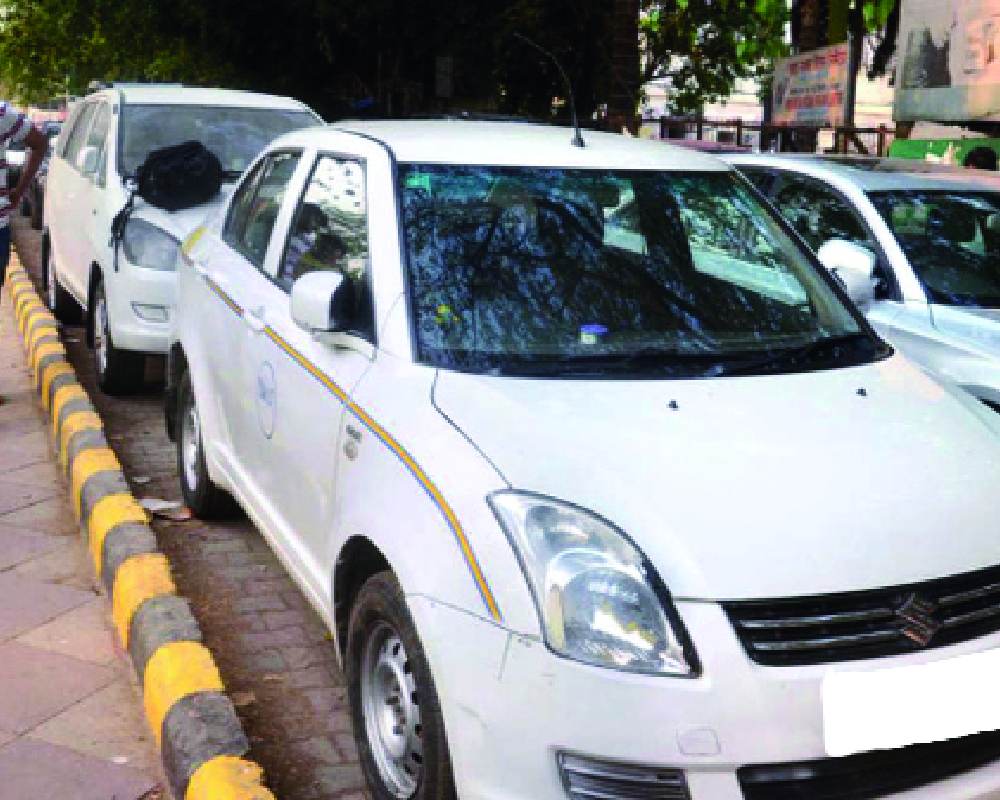
To curb air pollution, the Delhi government is considering reviving shared rides provided by ride-hailing services that were discontinued during the COVID-19 pandemic. Shared taxi services, which were available in Delhi before the COVID-19 pandemic but were discontinued, are now being considered for revival to provide affordable and convenient transport options to commuters.
Chief Minister Rekha Gupta informed that the upcoming meeting with transportation network companies will deliberate on restarting shared taxi services, increasing the number of women drivers, and exploring the integration of private electric vehicles into taxi services.
She said that the government is seriously deliberating on ways to ensure that fewer vehicles can safely, conveniently and affordably transport a larger number of passengers, thereby reducing road congestion and pollution levels.
According to the Chief Minister, this policy is not only a response to present-day traffic challenges but also an important step towards a long-term, sustainable and environment-friendly transport model for Delhi. The Government also aims to increase the number of women drivers in the city’s taxi services to provide women passengers with safer and more reliable travel options.
The chief minister said her government is continuously working towards multi-level reforms in the transport sector to control air pollution and reduce traffic congestion in the Capital.
She also said the government believes that effective pollution control is not possible without reducing the number of vehicles on the roads; keeping this in view, shared transport and electric mobility are being actively promoted. The Delhi Government is also increasing the number of automated commercial vehicle fitness testing stations to ensure that no vehicle operating in the capital contributes to pollution.
In order to provide better passenger services to the people of Delhi, the Government will soon hold a special meeting with transportation network companies, Rekha Gupta said.
The core objective of the Delhi Government’s transport policy is to reduce the number of vehicles on the roads while ensuring that passengers do not face any inconvenience in their daily commute. The Government aims to enable a limited number of vehicles to serve a maximum number of passengers, thereby ensuring smooth traffic flow and effective pollution control.
She stated that the Government is in continuous dialogue with transportation network companies such as Ola and Uber and expects them to prioritise shared rides, increase the participation of women drivers, and promote environmentally friendly services.
The Chief Minister said that the fitness centre at Jhuljhuli is already operational and is testing around 70,000 vehicles annually, while the fitness centre at Burari is being upgraded.
Two similar centres at Nand Nagri and Tehkhand are expected to become operational by March next year. Collectively, these four centres will be able to conduct fitness tests for approximately 2.5 to 3 lakh commercial vehicles annually. She further stated that the Government has decided to install five additional automated vehicle fitness testing stations at various DTC depots, all of which have received the necessary approvals. These stations will be established at Bawana, Ghazipur, Savda Ghevra, GTK Depot and Dichau Kalan.
The Chief Minister noted that various research reports have clearly established vehicular emissions as a major contributor to air pollution. Keeping this in view, the Delhi Government is continuously investing in strengthening public transport.
Metro rail, buses and electric mobility have been made the foundation of the Government’s long-term transport policy.
In this direction, certain corridors of Delhi Metro Phase-5A have received in-principle approval from the Central Government, enabling further expansion of the Metro network.
This expansion will reduce pressure on road traffic and provide a sustainable solution to pollution control.
The Chief Minister categorically stated that effective control of air pollution cannot be achieved through short-term measures alone. The Government is therefore working simultaneously on sustained, coordinated and long-term policies.
Alongside transport reforms, the Delhi Government is consistently implementing measures such as dust control, strict monitoring of construction sites, regular mechanical cleaning of roads, effective prevention of open burning, and deployment of mist spray systems and anti-smog guns in identified hotspot areas.
Various research reports have clearly established vehicular emissions as a major contributor to air pollution, she said. Certain corridors of Delhi Metro Phase-5A have received in-principle approval from the Central Government, enabling further expansion of the metro network.
This expansion will reduce pressure on road traffic and provide a sustainable solution to pollution control.